Mold-Free Storage: The Complete Anti-Mold Guide for Canvas + Leather Bags
Meta Description: Canvas absorbs moisture. Leather feeds mold. Learn OSAMIC's complete anti-mold protocol to protect your inventory from warehouse disasters.
Introduction: The 48-Hour Countdown
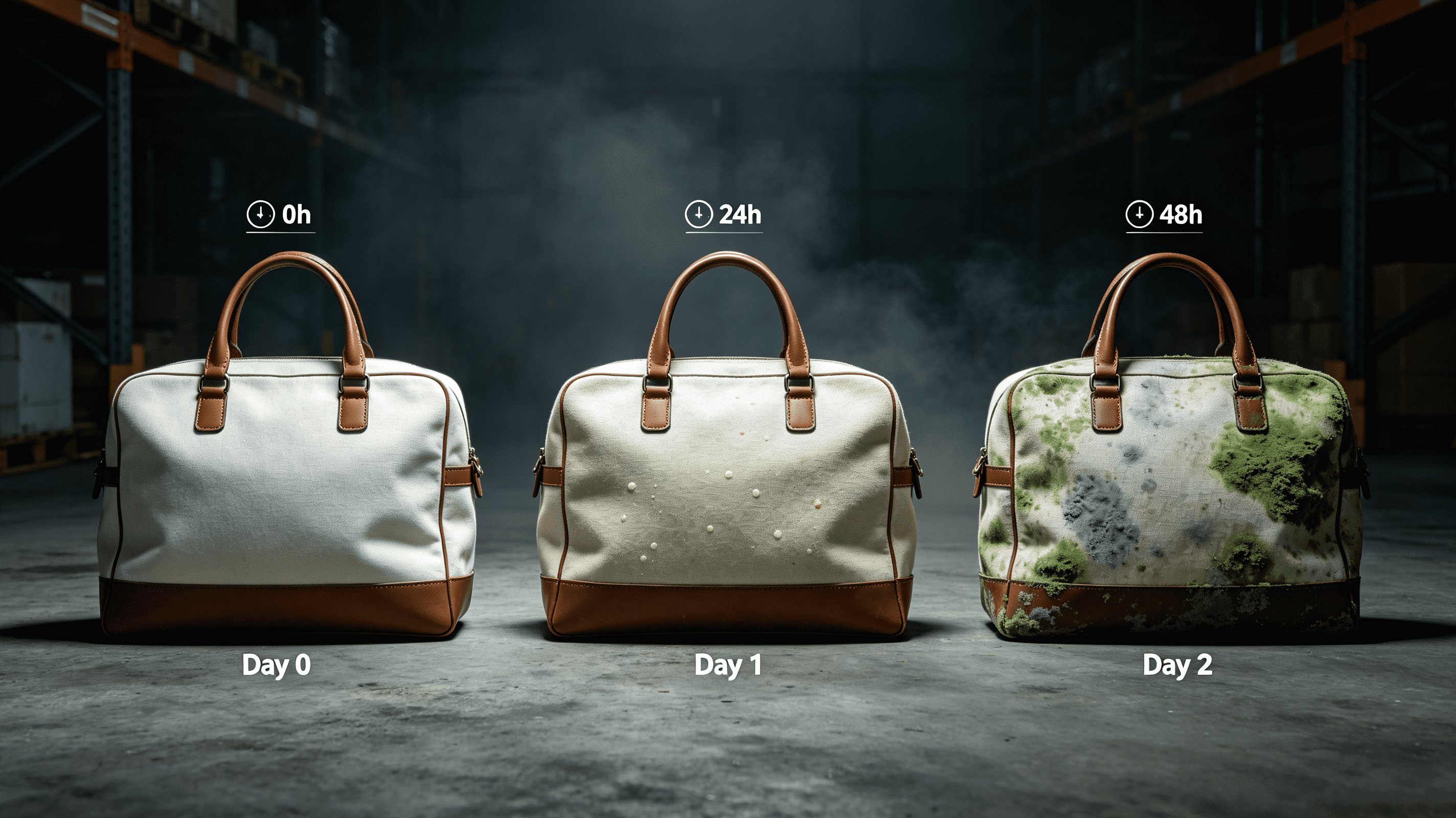
It starts invisibly. A warehouse with relative humidity above 60%. Canvas fibers slowly absorbing moisture from the air. Leather surfaces becoming damp to the touch. Then, within 48 hours, the first gray-green spots appear.For canvas + leather bags, mold is not a minor inconvenience—it is a catastrophic event. A single contaminated batch can mean:
- Entire inventory written off
- Export shipments delayed or rejected
- Customer complaints and chargebacks
- Long-term reputational damage
The good news? Mold is entirely preventable with the right combination of pre-treatment, packaging, and storage controls.
Part 1: Why Canvas + Leather Is Vulnerable
| Material | Vulnerability | Mechanism |
|---|
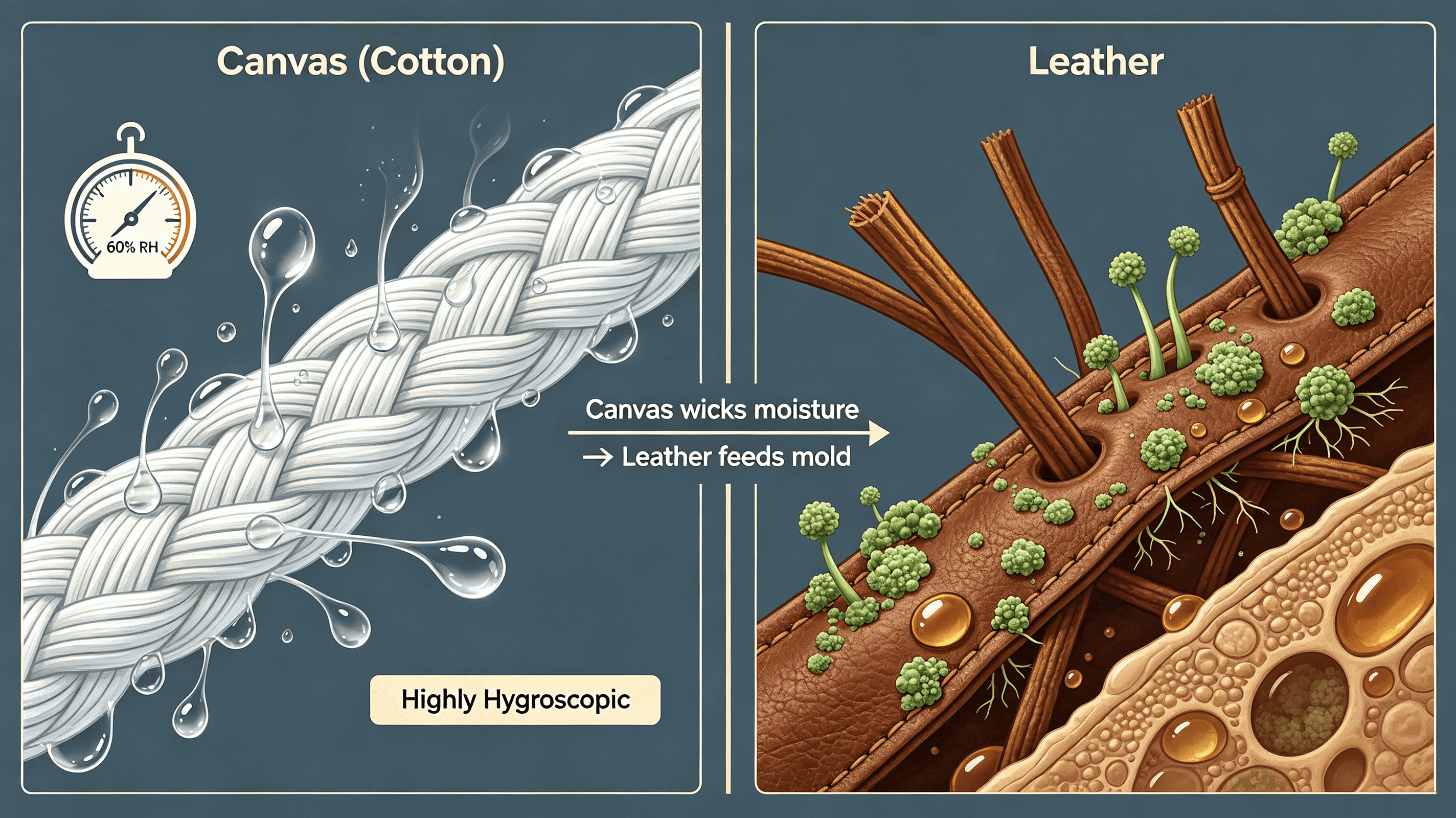
| Canvas (Cotton) | Highly hygroscopic | Absorbs moisture from humid air. Once wet, provides ideal substrate for spore germination. |
| Leather | Contains natural oils and proteins | Organic nutrients feed mold colonies. Moisture activates dormant spores. |
| The Combination | Dual risk factors | Canvas wicks moisture toward leather. Leather feeds the mold. Accelerated growth cycle. |
Critical Threshold: When ambient humidity exceeds 60% RH for 48 consecutive hours, visible mold growth begins.
Part 2: OSAMIC's Three-Layer Anti-Mold Protocol
Layer 1: Pre-Treatment Before Shipment
| Material | Treatment Method | Compliance Required |
|---|
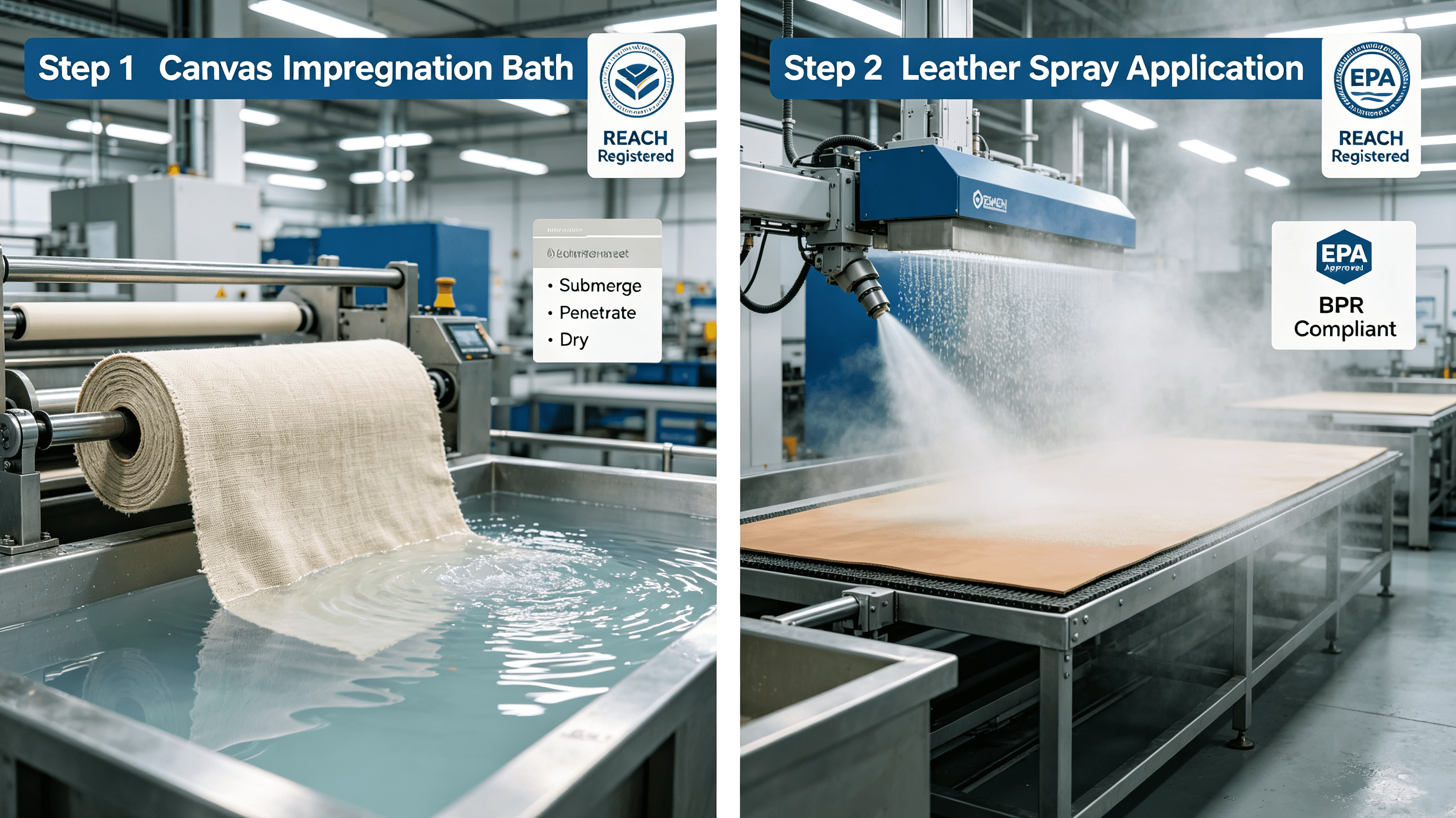
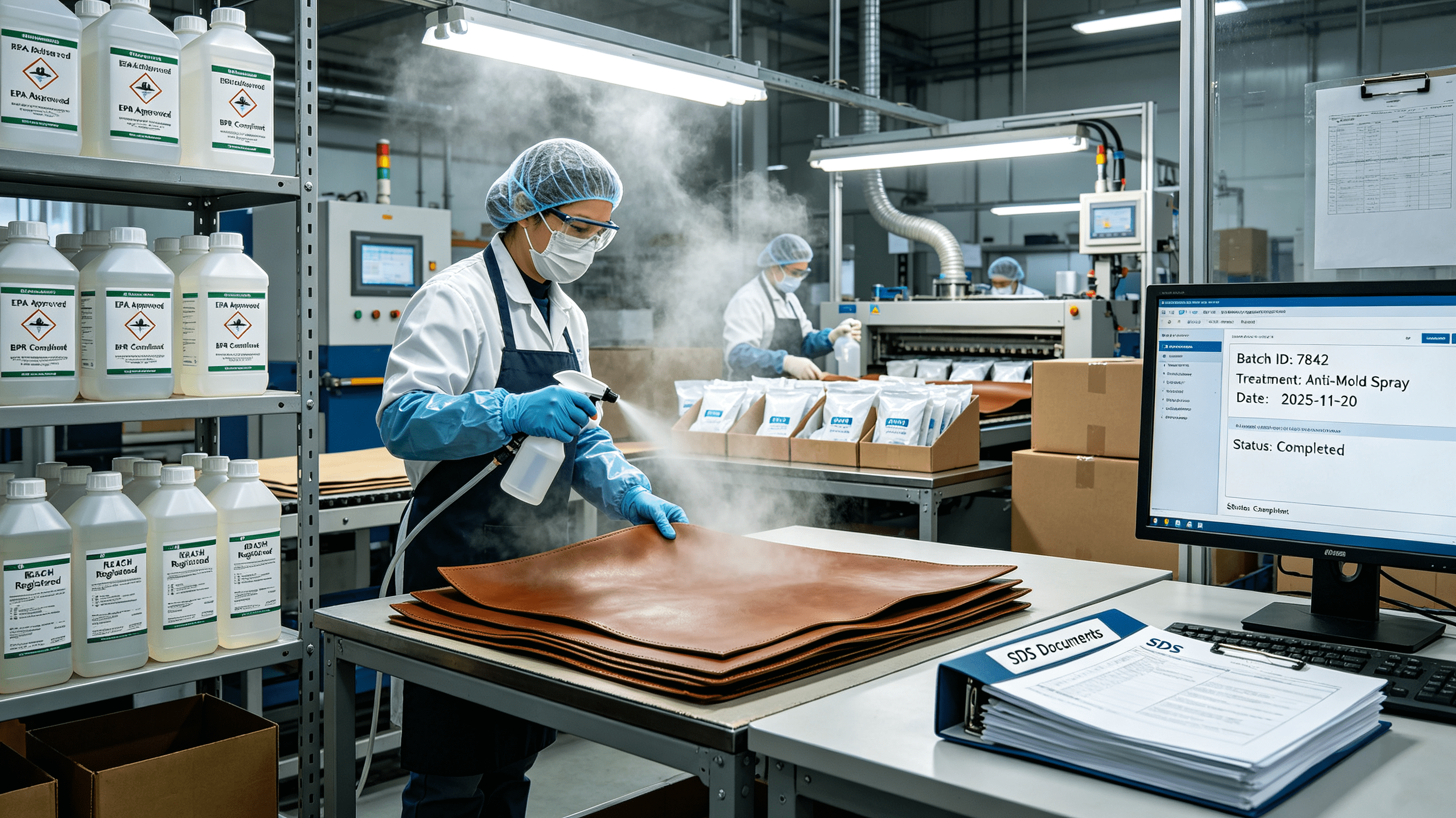
| Canvas | Anti-mold impregnation bath | EU REACH pre-registered, EU BPR, US EPA approved |
| Leather | Dedicated leather anti-mold spray | Must not contain restricted biocides (check REACH SVHC list) |
| Both | Full curing time before packing | 24-48 hours to ensure treatment bonds to fibers |
Why Compliance Matters: Unapproved anti-mold chemicals can trigger customs holds, product recalls, and fines in EU and US markets. Always request the Safety Data Sheet (SDS) and confirm compliance before treatment.
Layer 2: Packaging Protection
| Component | Specification | Critical Rule |
|---|
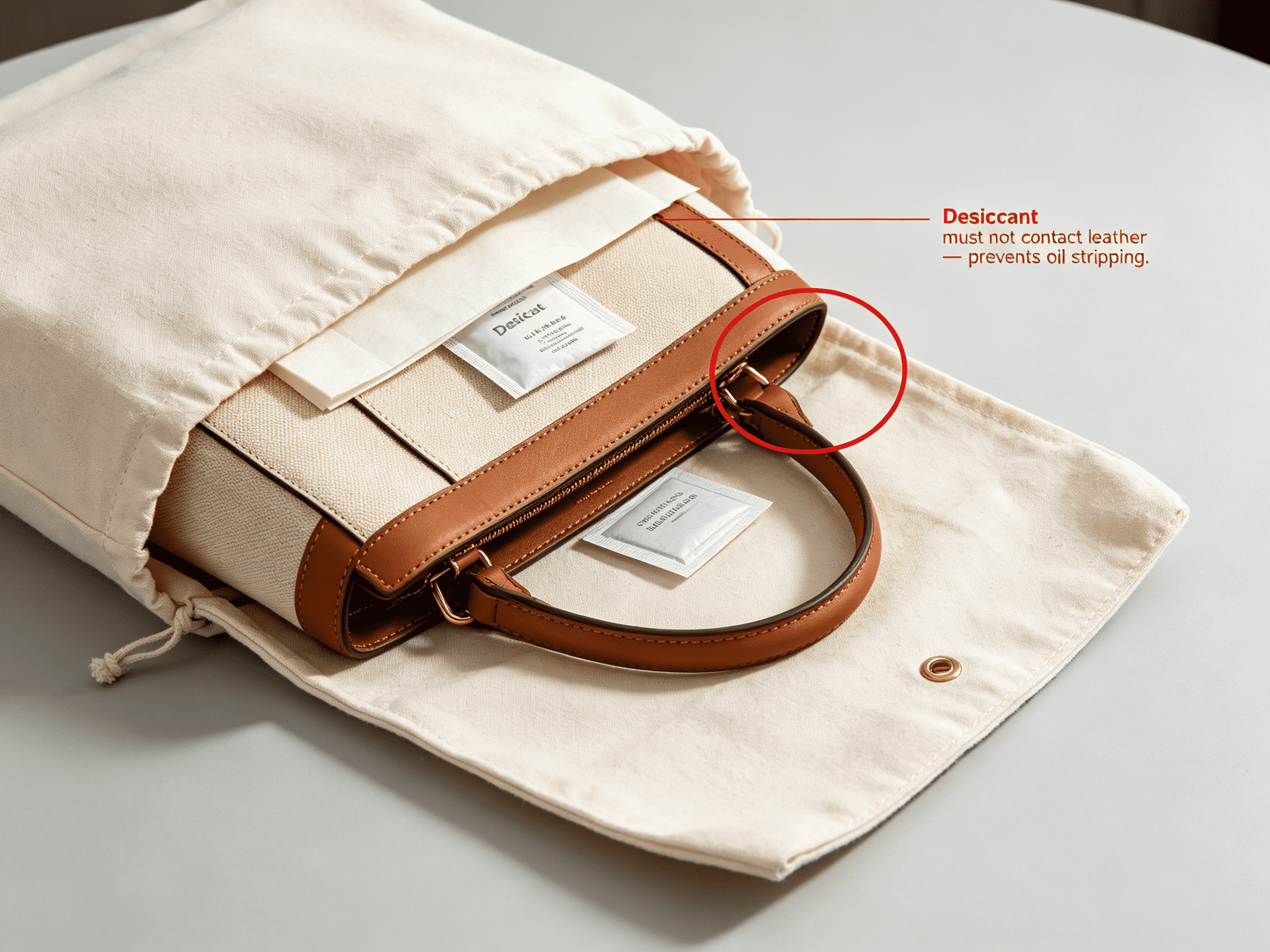
| Desiccant (Silica Gel) | Food-grade, REACH-compliant | Must not directly contact leather. Place in separate sachet compartment or wrap in tissue paper. Direct contact wicks natural oils, causing leather to dry and crack. |
| Anti-Mold Sheet (Optional) | Volatile corrosion inhibitor (VCI) type for enclosed spaces | Effective for high-value orders. Place inside bag cavity, not touching surfaces. |
| Primary Packaging | Breathable cotton dust bag | Never use sealed plastic bags. Trapped moisture creates localized high-humidity microclimate. |
Layer 3: Storage Environment Control
| Parameter | Standard | Monitoring Method |
|---|
| Target Humidity | 45-55% RH | Continuous digital hygrometers with auto-alert |
| Dehumidification | Automatic activation when RH exceeds 58% | Industrial dehumidifiers with humidity controllers |
| Temperature | 18-25°C (64-77°F) | Stable, avoid condensation cycles |
| Air Circulation | Moderate airflow, no dead zones | Fans or HVAC system |
Storage Layout Rules:
- Separation: Store different production batches in designated zones. Do not mix.
- Isolation: Any bag showing mold signs must be removed immediately and isolated in a sealed container. Mold spores spread rapidly through air currents.
- Shelving: Use slatted shelves (not solid) to allow air circulation beneath each bag.
- Floor Clearance: Keep all cartons at least 15cm (6 inches) above floor level.
Part 3: Implementation Checklist
Monthly Anti-Mold Audit
| Check Item | Frequency | Record |
|---|
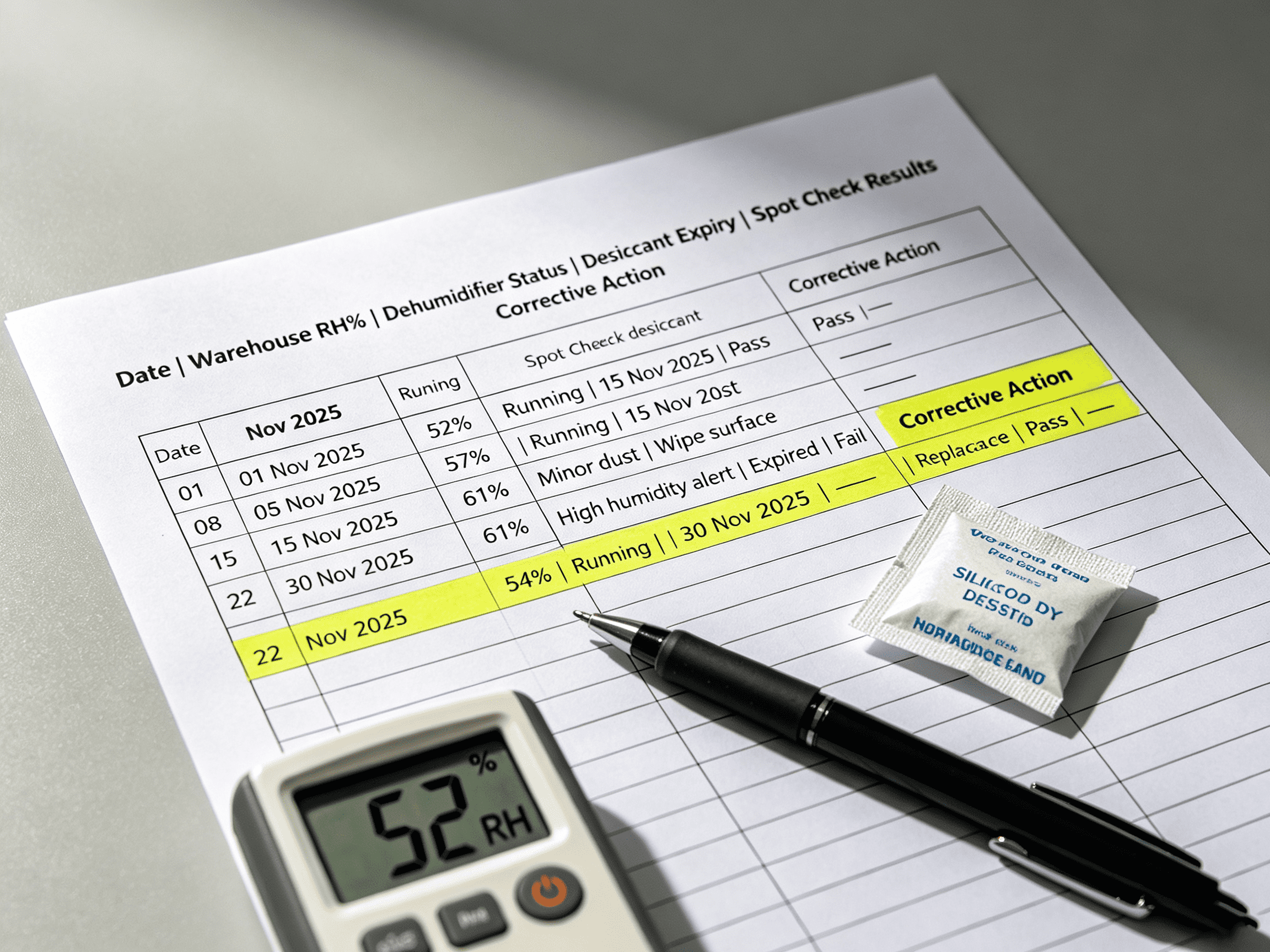
| Warehouse humidity log | Daily (digital recording) | Date, time, RH%, corrective action if exceeded |
| Desiccant expiration check | Monthly | Replace if expired or fully saturated |
| Spot-check bags for early mold signs | Monthly | Visual inspection of 5% of inventory |
| Dehumidifier filter cleaning | Monthly | Clean or replace per manufacturer spec |
| Anti-mold treatment batch records | Per production run | Chemical name, batch number, application date, curing time |
Documentation Required for Export Compliance
| Document | Purpose |
|---|
| Anti-mold treatment SDS | Proof of REACH/EPA compliance |
| Treatment application record | Traceability for each production batch |
| Warehouse humidity log | Evidence of proper storage conditions |
| Desiccant specification sheet | Confirms food-grade, compliant materials |
The OSAMIC Advantage: End-to-End Mold Prevention
| Capability | Detail |
|---|
| Compliant Chemistry | All anti-mold treatments meet EU REACH, BPR, and US EPA standards. We provide full SDS documentation. |
| Dual-Material Protocol | Separate treatment formulas for canvas (impregnation) and leather (spray), optimized for each substrate. |
| Packaging Engineering | We design desiccant placement and breathable packaging to prevent both mold and leather dehydration. |
| Warehouse Consulting | On-site or remote audit of your storage facility with actionable recommendations. |
| Full Traceability | Batch-level records of treatment, packaging, and storage conditions for export compliance audits. |
Your Next Step: Protect Your Inventory Before It's Too Late
Mold does not announce itself. By the time you see it, the damage is done.Quick Self-Assessment:
- Is your warehouse humidity monitored continuously or checked occasionally?
- Are your anti-mold treatments certified for EU/US export?
- Do your desiccants directly contact leather surfaces?
- Do you have batch-level traceability for anti-mold treatment?
If you answered "occasionally," "not sure," "yes," or "no" to any question, your inventory is at risk.Contact OSAMIC for a complimentary Anti-Mold Risk Assessment. Share your current packaging and storage setup. We'll identify vulnerabilities and provide a complete prevention protocol tailored to your climate and export markets.