


New Product Series
Product Classificaiton
Meta Description: Thicker leather is not always better. Learn how to match leather thickness to bag type for optimal performance and cost savings.
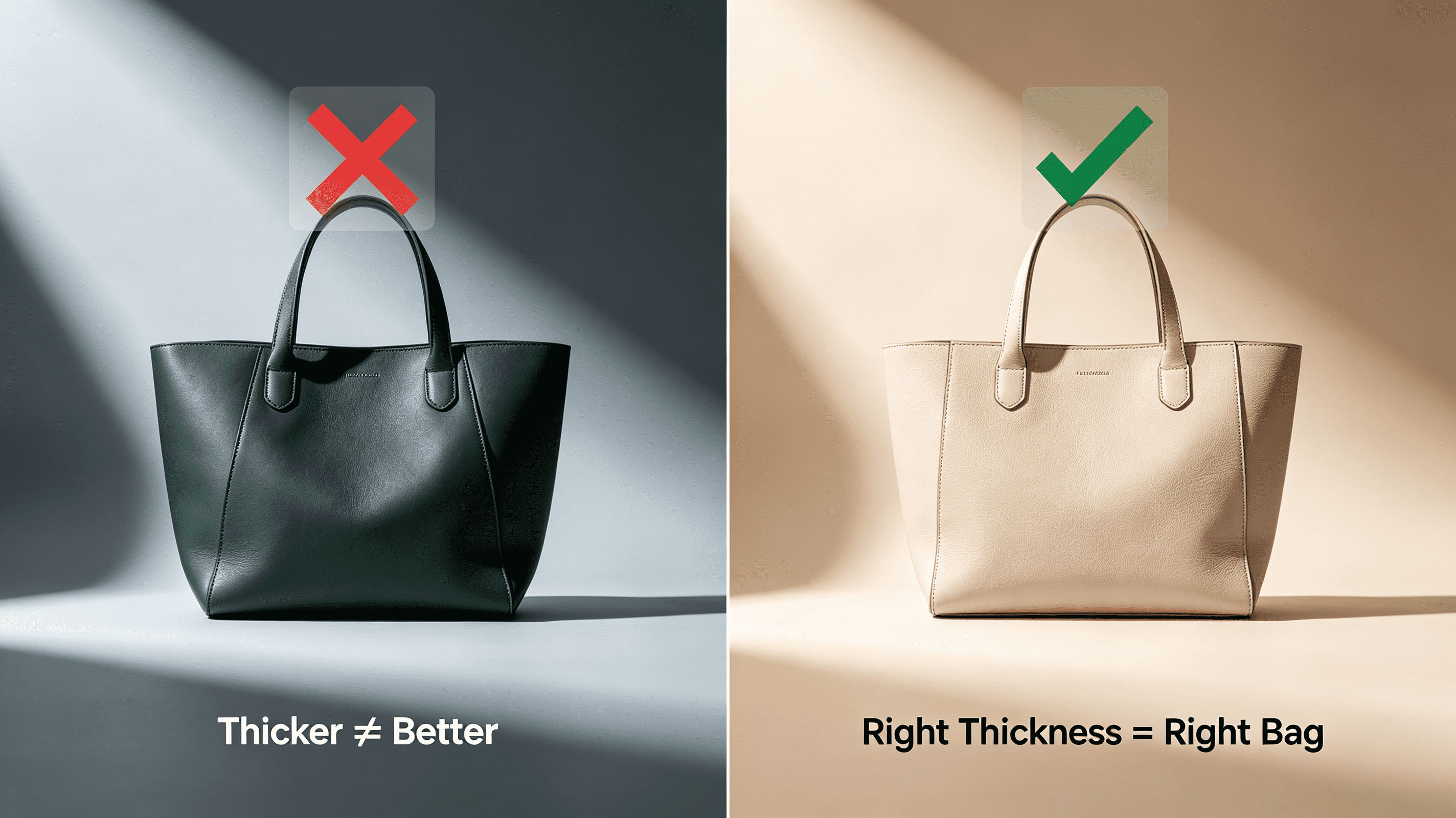
There is a persistent belief in the leather goods industry: thicker leather equals better quality.It sounds logical. More material must mean more value, right?Wrong.This misconception leads brands to overspend on unnecessarily thick leather, resulting in bags that are heavier, stiffer, harder to manufacture, and ultimately less comfortable for the end user. Meanwhile, thinner, properly selected leather often performs better and costs less.This guide debunks the "thicker is better" myth and provides a science-based framework for selecting the right leather thickness for each product category.
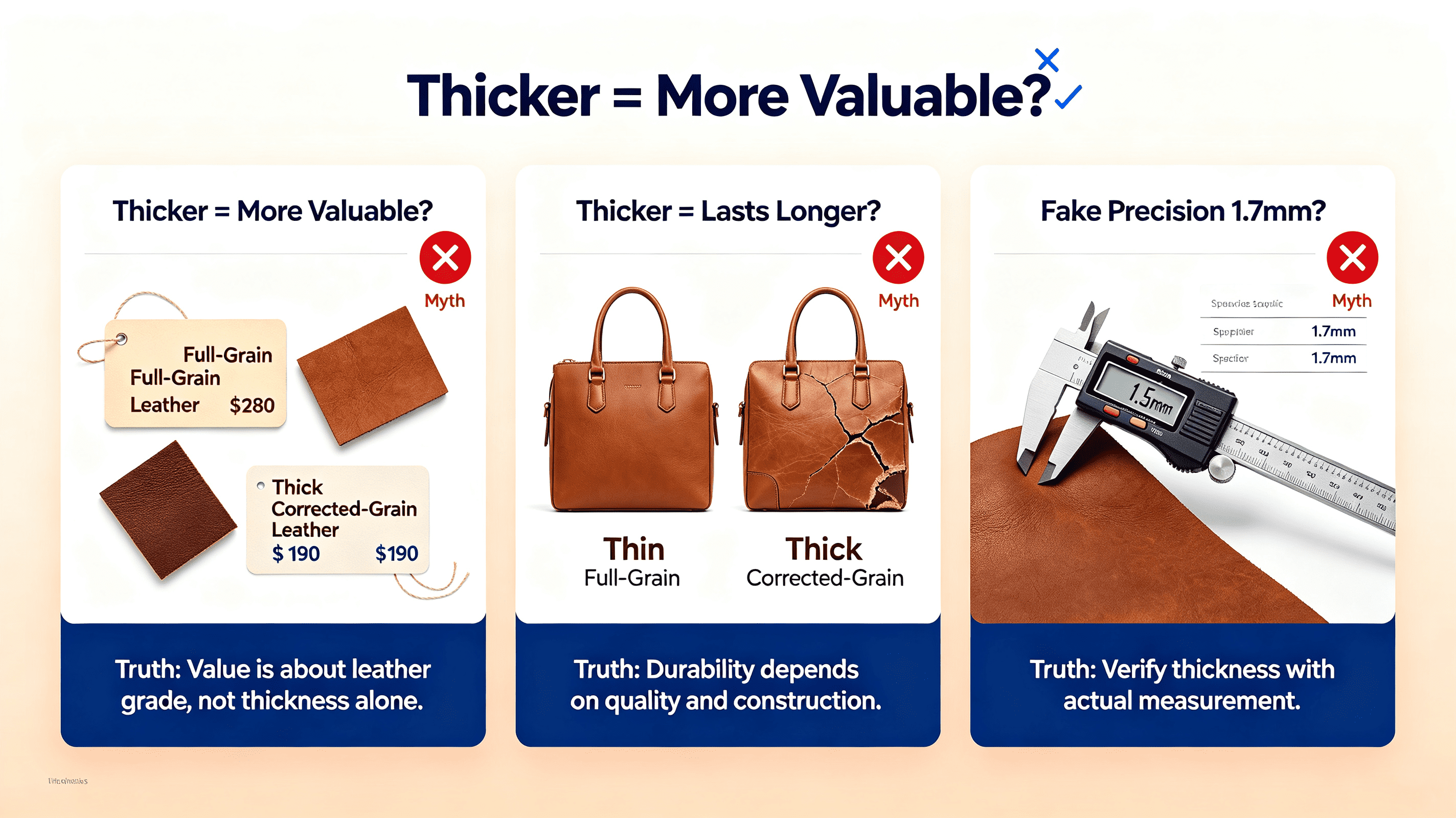
| Claim | Reality |
|---|---|
| "1.7mm leather is premium" | Industry standard thicknesses fall in round increments (1.0, 1.2, 1.4, 1.6, etc.). Numbers like 1.7mm or 2.1mm are often marketing fiction—manufacturers rounding up or inventing specs. |
| "Thicker leather costs more" | Thin full-grain leather requires more precise splitting and finishing, often costing more per square foot than thick corrected-grain leather. |
| "Customers can feel the difference" | Most consumers cannot distinguish between 1.4mm and 1.8mm leather by touch alone. The difference is marginal. |
Durability depends more on leather grade, tanning quality, and construction than on thickness. A well-made 1.2mm full-grain bag will outlast a poorly constructed 2.0mm corrected-grain bag.
Excessive thickness can actually harm aesthetics:
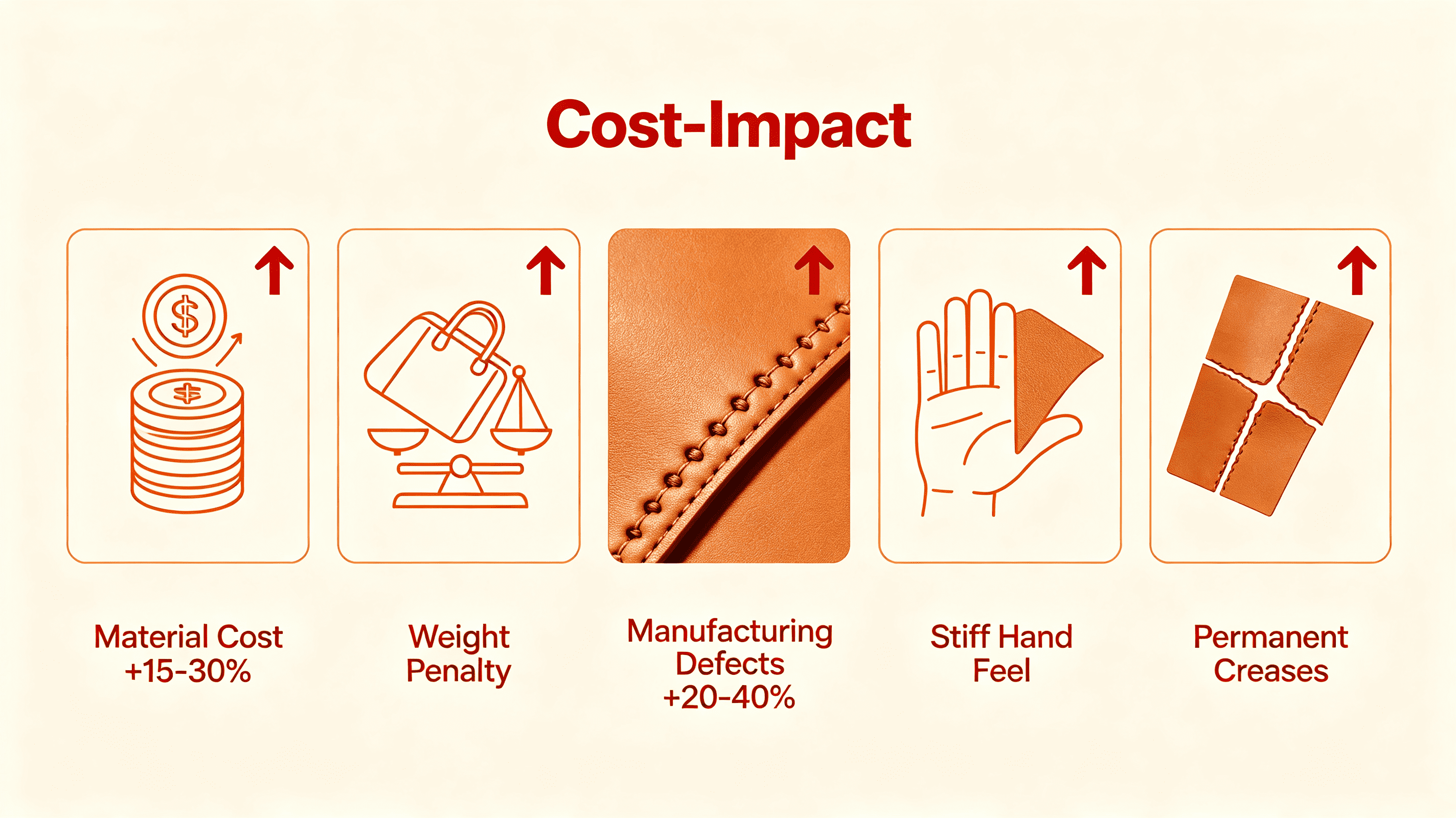
| Cost Factor | Impact of Using Excessively Thick Leather |
|---|---|
| Material Cost | 15-30% higher per square foot for thicker hides |
| Weight Penalty | Bags exceed comfortable carry weight (especially for commuter/tote styles) |
| Manufacturing Difficulty | Edge folding, corner turning, and stitching become significantly harder. Defect rate increases 20-40%. |
| Hand Feel | Stiff, rigid finished product. Users complain about discomfort. |
| Long-Term Performance | Thick leather can develop permanent creases and cracks at stress points rather than flexing naturally. |
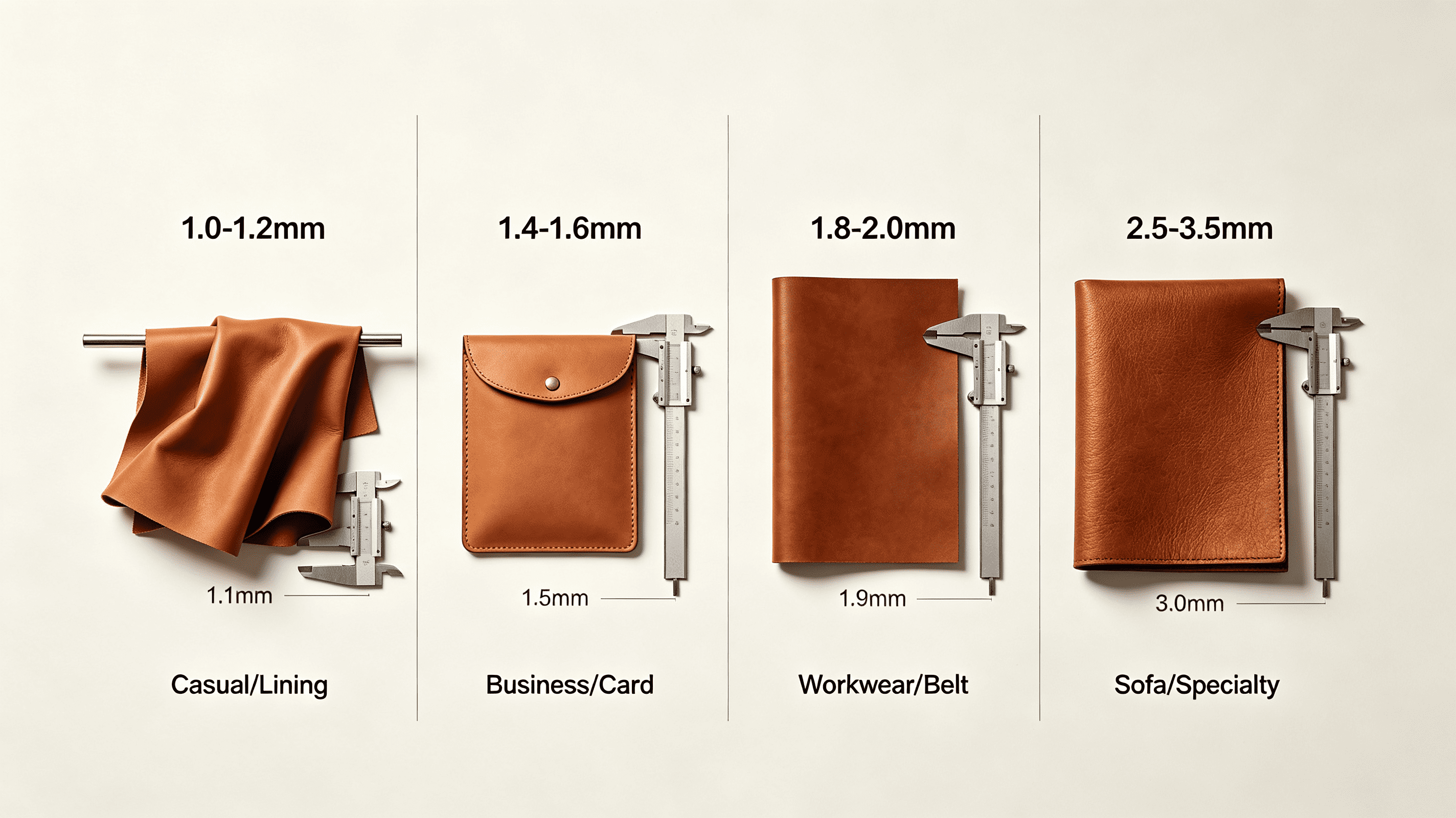
| Application | Examples |
|---|---|
| Women's soft shoulder bags | Hobo bags, slouchy totes |
| Canvas + leather hybrid bags | Mixed-material designs |
| Linings and interior components | Card slots, pocket panels |
| Wallets and small accessories | Card holders, coin purses |
Advantages:
| Application | Examples |
|---|---|
| Business briefcases | Structured attaché cases |
| Leather cardholders | Premium card wallets |
| Commuter backpacks | Semi-structured daily carry |
| Tote bags with shape retention | Open-top shopping totes |
Advantages:
| Application | Examples |
|---|---|
| Heavy-duty tool bags | Work belts, utility pouches |
| Leather carving / tooling projects | Decorative panels, Western-style bags |
| Load-bearing straps and belts | Waist belts, guitar straps |
| Large tote bag base panels | Bottom reinforcement panels |
Note: This thickness is suitable only for bags with strong structural requirements. Using it on soft silhouettes creates a rigid, unappealing "plastic" feel.
| Application | Examples |
|---|---|
| Furniture upholstery | "Big black cow" sofa leather |
| Vintage heavy-duty handbags | Retro workmanship statement pieces |
| Motorcycle gear | Belt holsters, saddle bags |
Warning: This thickness range is unnecessary for 95% of bag applications. It adds weight, stiffness, and cost without proportional benefit.
Industry-standard leather thicknesses follow round increments: 1.0, 1.2, 1.4, 1.6, 1.8, 2.0mm.
| Red Flag | What It Means |
|---|---|
| Supplier quotes "1.7mm" | Likely rounding up from 1.5-1.6mm or inventing a spec |
| Supplier quotes "2.1mm" | Not a standard measurement. Probable marketing exaggeration. |
| Supplier cannot provide caliper measurement | No actual thickness control in process |
Rule: If the number doesn't end in .0, .2, .4, .6, or .8, question it.
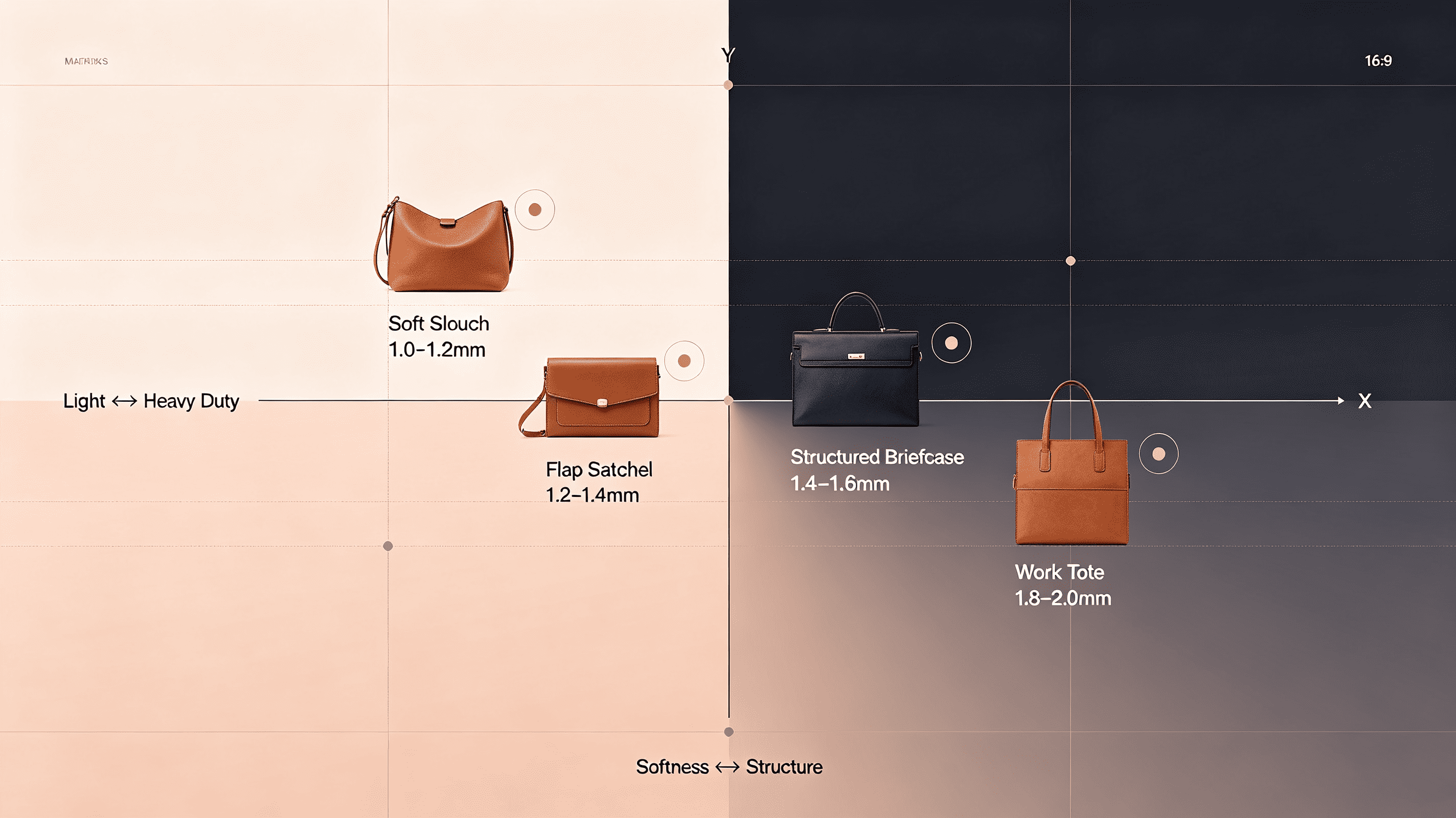
| Bag Type | Recommended Thickness | Rationale |
|---|---|---|
| Soft, unstructured slouch bag | 1.0-1.2mm | Needs drape and flexibility |
| Structured briefcase | 1.4-1.6mm | Needs shape retention without stiffness |
| Heavy-duty work bag | 1.8-2.0mm | Needs load-bearing strength |
| Classic flap-over satchel | 1.2-1.4mm | Balance of structure and softness |
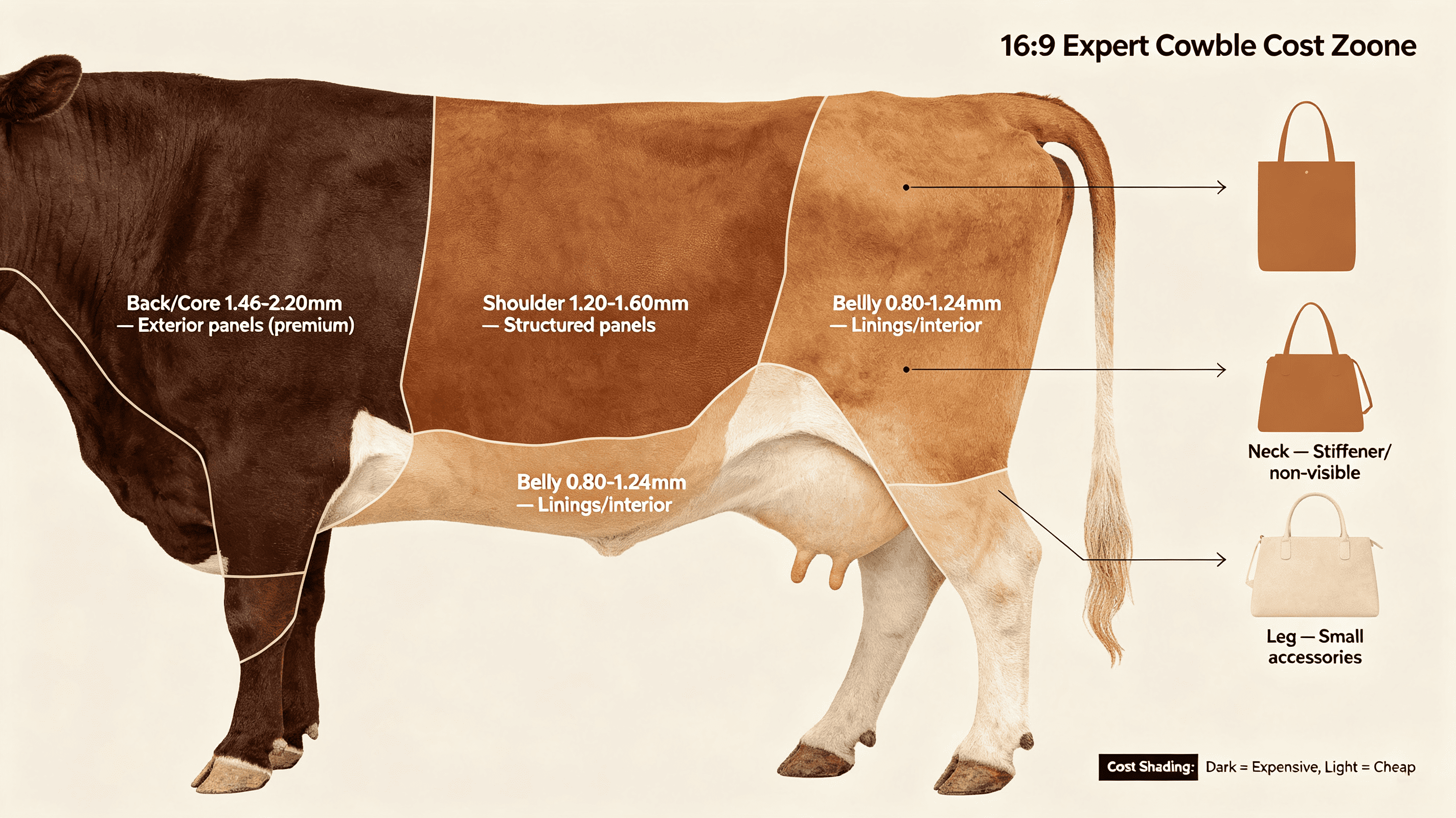
| Hide Section | Typical Thickness Range | Best Use | Cost Implication |
|---|---|---|---|
| Back / Butt (Core) | 1.46-2.20mm | Luxury bags, visible exterior panels | Highest yield, premium pricing |
| Shoulder | 1.20-1.60mm | Mid-range bags, structured panels | Good balance of quality and cost |
| Belly | 0.80-1.24mm | Linings, soft interiors, small accessories | Lowest cost, suitable for non-visible use |
Strategy: Use core area leather for visible exterior panels. Use belly leather for linings and internal components. This can reduce overall leather cost by 10-20%.
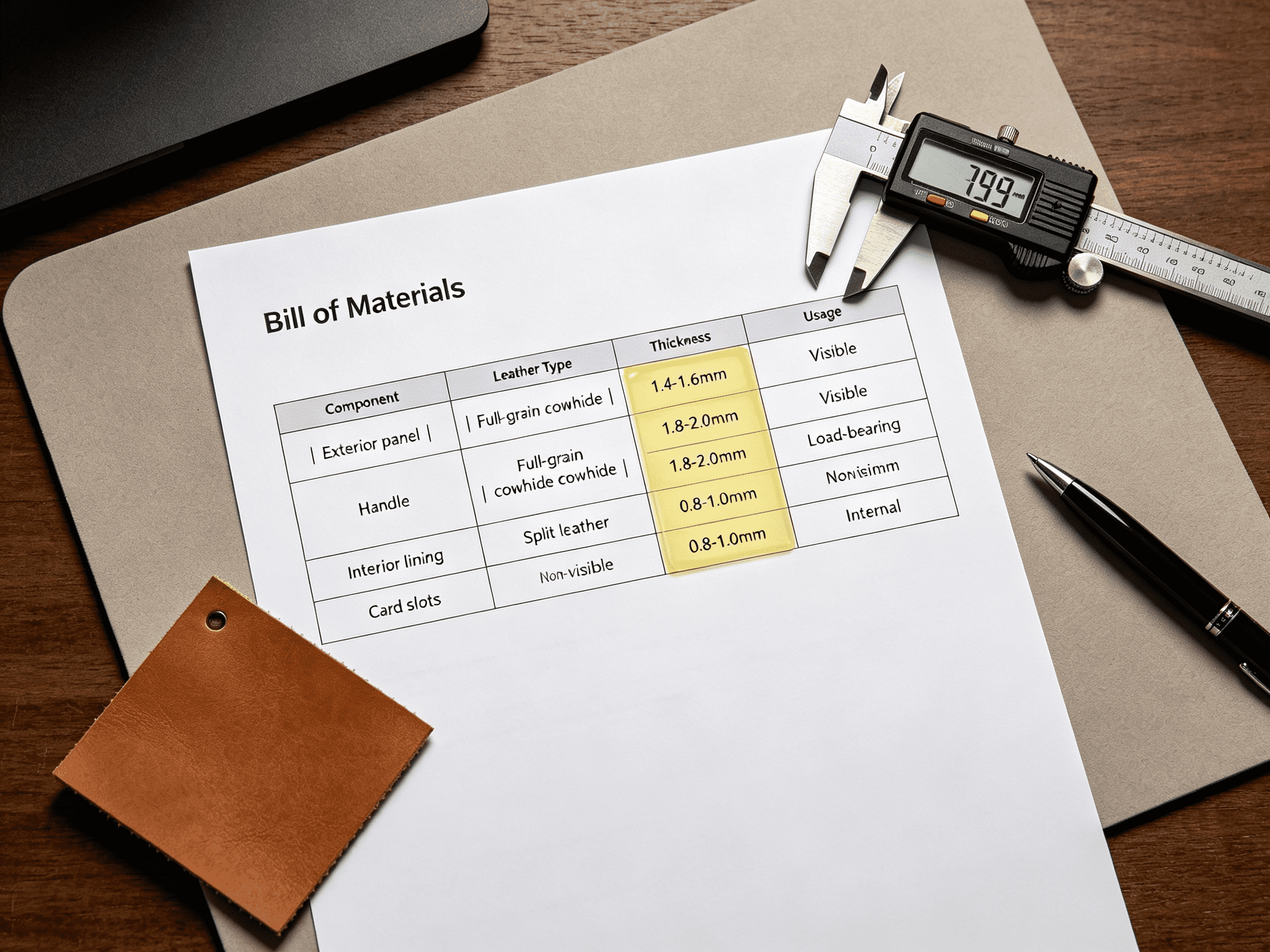
| BOM Element | Specification Example |
|---|---|
| Exterior panels | Full-grain cowhide, 1.4-1.6mm |
| Handle / strap | Full-grain cowhide, 1.8-2.0mm |
| Interior lining leather | Split leather, 0.8-1.0mm |
| Card slot panels | Full-grain calfskin, 0.8-1.0mm |
Benefit: Prevents procurement teams from defaulting to thicker, more expensive leather when thinner options would perform equally or better.
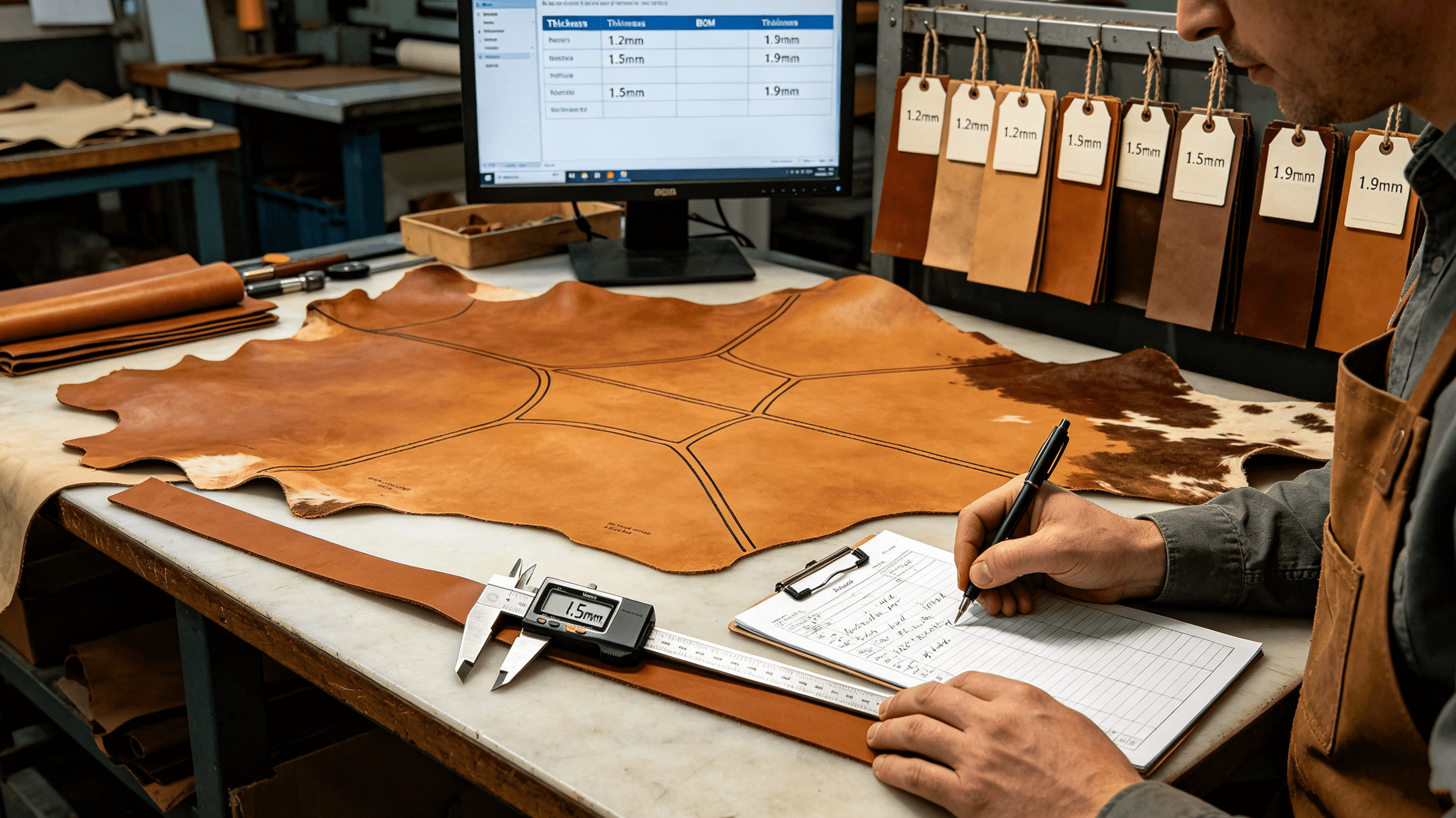
At OSAMIC, we treat leather thickness as a design parameter, not a quality indicator.
| Capability | Detail |
|---|---|
| Thickness Splitting | In-house splitting capability to achieve exact specifications ±0.1mm |
| Hide Section Mapping | We map each hide and recommend optimal placement for each bag component |
| BOM Integration | Thickness specs are embedded in your Bill of Materials for repeat orders |
| Sample Verification | Every production sample is caliper-measured and documented |
| Cost Optimization | We proactively suggest thickness adjustments that save cost without sacrificing performance |
Quick Self-Assessment:
If you answered "tradition" or "no" to any question, you are likely overspending on leather.Contact OSAMIC for a complimentary Thickness Optimization Review. Send us your current BOM and target price points. We'll analyze your leather thickness specifications and recommend adjustments that could save 10-20% on material costs while maintaining or improving product performance.