Canvas Too Thick, Leather Too Slippery? Stitching Guide for Mixed Materials
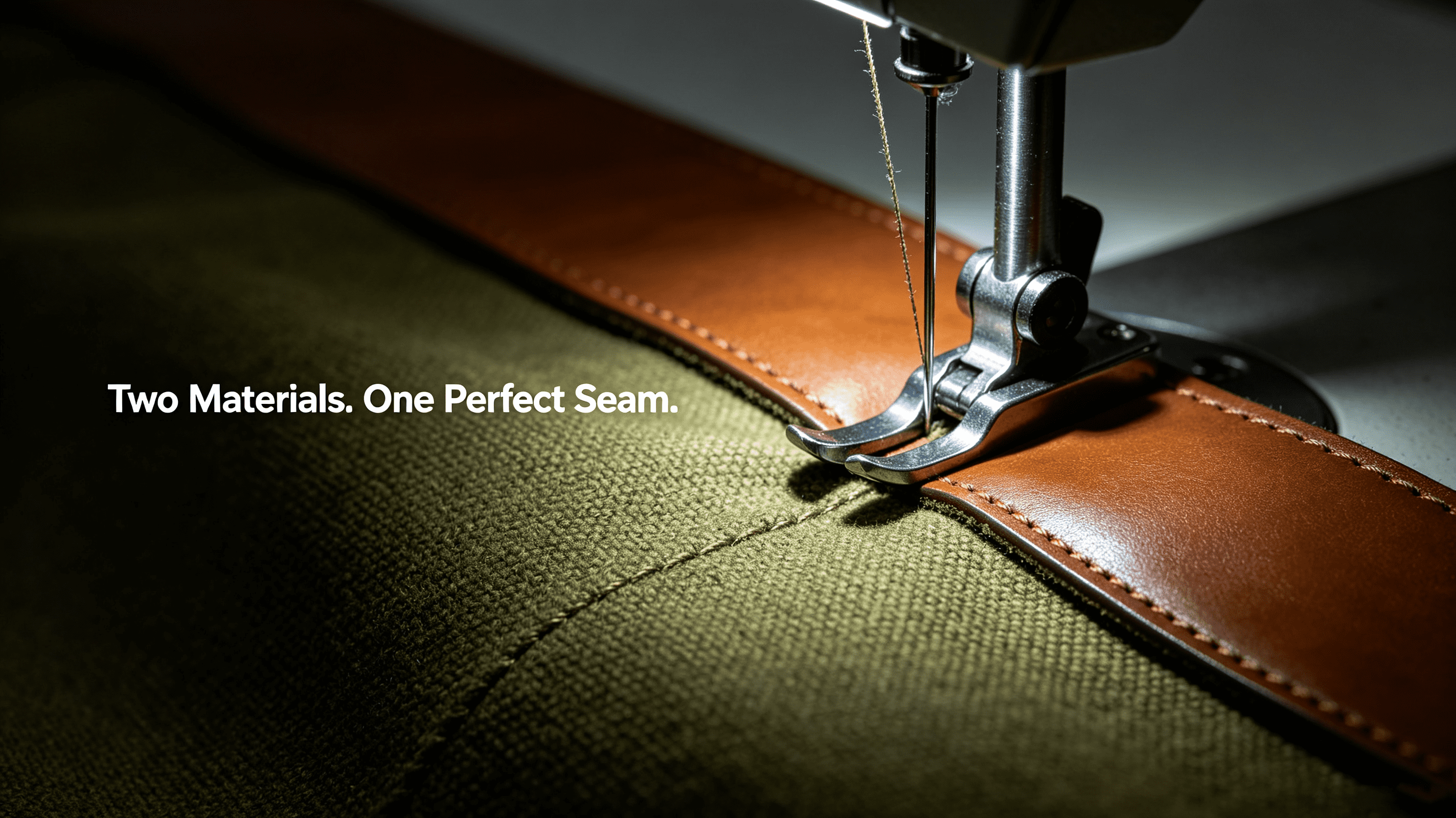
Meta Description: Mixing canvas and leather in one bag? Their different properties make stitching a challenge. Here's OSAMIC's technical guide to perfect seams on mixed-material bags.
Introduction: The Seamstress's Nightmare
You've designed the perfect hybrid bag: rugged canvas body, premium leather trim. The sketch is beautiful. The materials are sourced. Then your production team hits a wall.The canvas is too thick for the needle to punch through cleanly. The leather is too slippery for the presser foot to grip. The seam puckers where the two materials meet. Stitches skip at the transition point. By the time you solve one problem, another appears.This is the reality of stitching mixed materials. Canvas and leather have fundamentally different properties—thickness, friction, stretch, and compressibility—that demand specialized techniques. This guide provides the technical framework to master this challenging but rewarding construction method.
Part 1: Understanding the Material Conflict
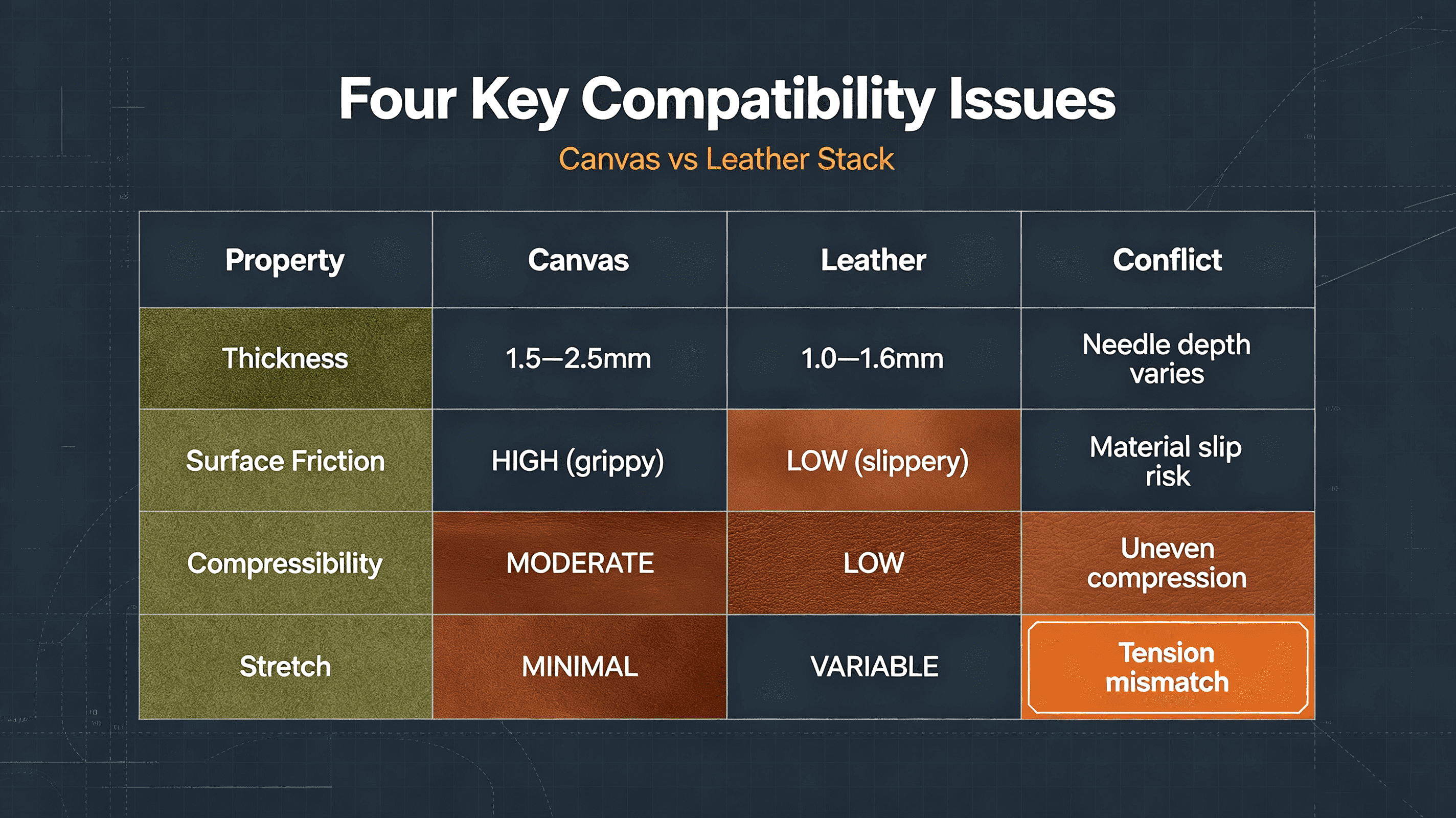
| Property | Heavy Canvas | Leather | The Conflict |
|---|
| Thickness | 1.5-2.5mm (16oz+) | 1.0-1.6mm | Needle must penetrate both without deflection |
| Surface Friction | High (grippy) | Low (slippery) | Feed dogs move canvas faster, causing misalignment |
| Compressibility | Moderate | Low | Pressure foot compresses canvas but not leather |
| Stretch | Minimal (warp/weft) | Variable (fiber direction) | Differential stretch causes puckering |
Part 2: Pre-Production Setup – Tool Selection
Getting the right tools on the machine is half the battle.
1. Presser Foot Selection
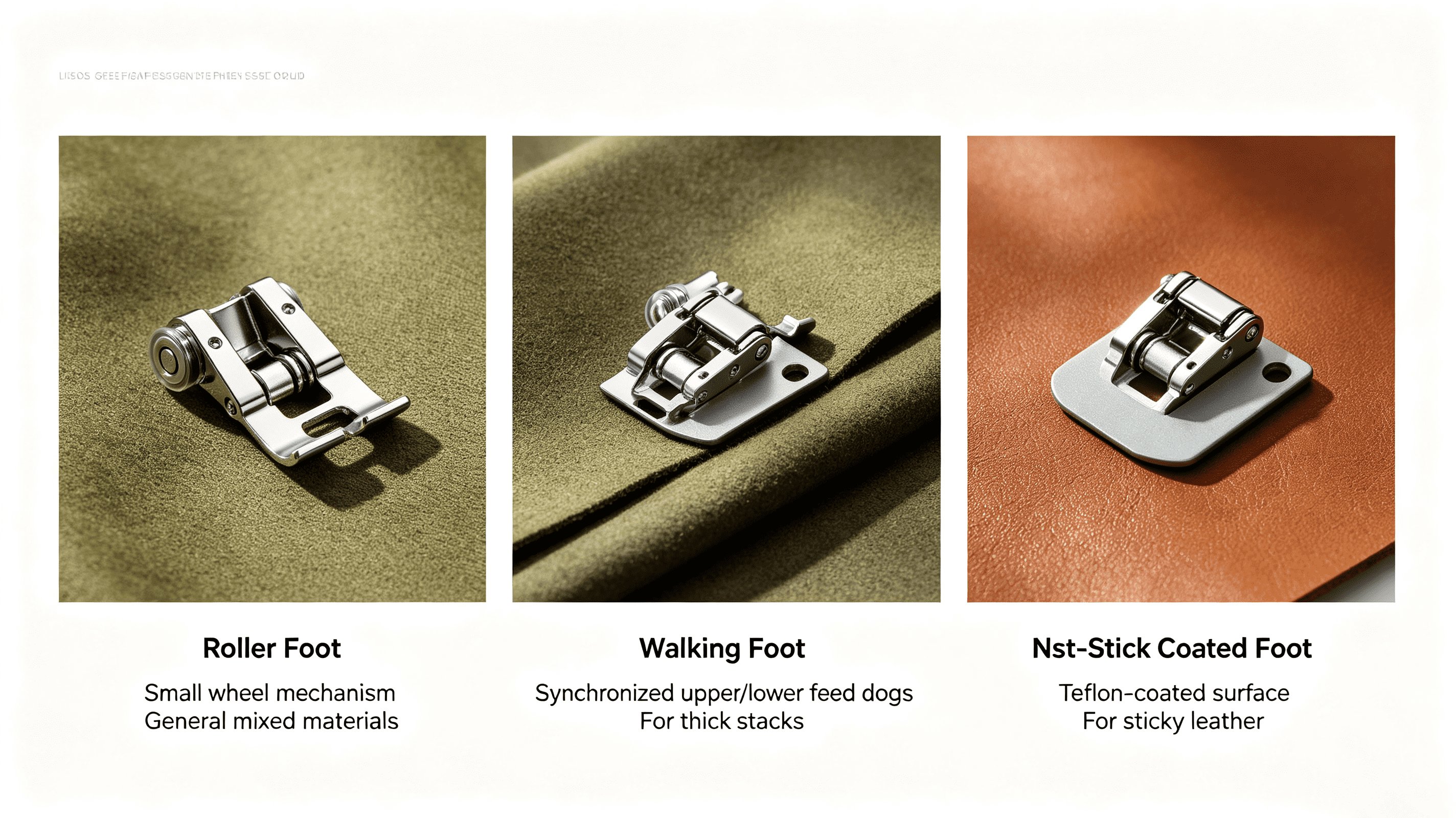
| Foot Type | Application | Benefit |
|---|
| Roller Foot | General mixed-material stitching | Rolling action grips leather without dragging; feeds canvas evenly |
| Walking Foot | Thick canvas + leather stacks | Synchronized upper/lower feed eliminates layer shifting |
| Non-Stick Coated Foot | Sticky or tacky leather surfaces | Teflon coating prevents leather from sticking to the foot |
Recommendation: For most canvas + leather combinations, start with a roller foot. Upgrade to a walking foot for very thick stacks (e.g., strap attachment points).
2. Needle Selection
- Type: Leather point needle (triangular chisel tip). The three-sided point pierces leather cleanly without tearing fibers.
- Size: 12-16 (metric), depending on total stack thickness.
- Size 12: For thin leather (0.8-1.0mm) + medium canvas.
- Size 14: Standard for most combinations.
- Size 16: For heavy canvas (18oz+) + thick leather (1.4mm+).
3. Thread Selection
| Thread Type | Recommended Spec | Why |
|---|
| Bonded Polyester | Tex 27-40 (0.45-0.8mm diameter) | High tensile strength, UV resistant, minimal stretch |
| Waxed Polyester (Round Braid) | 0.5-0.7mm | Sintered finish resists fraying; glides through both materials |
| Avoid: Cotton | Any | Absorbs moisture, weakens over time, frays on rough canvas edges |
Part 3: Parameter Calibration – Stitch Length & Tension
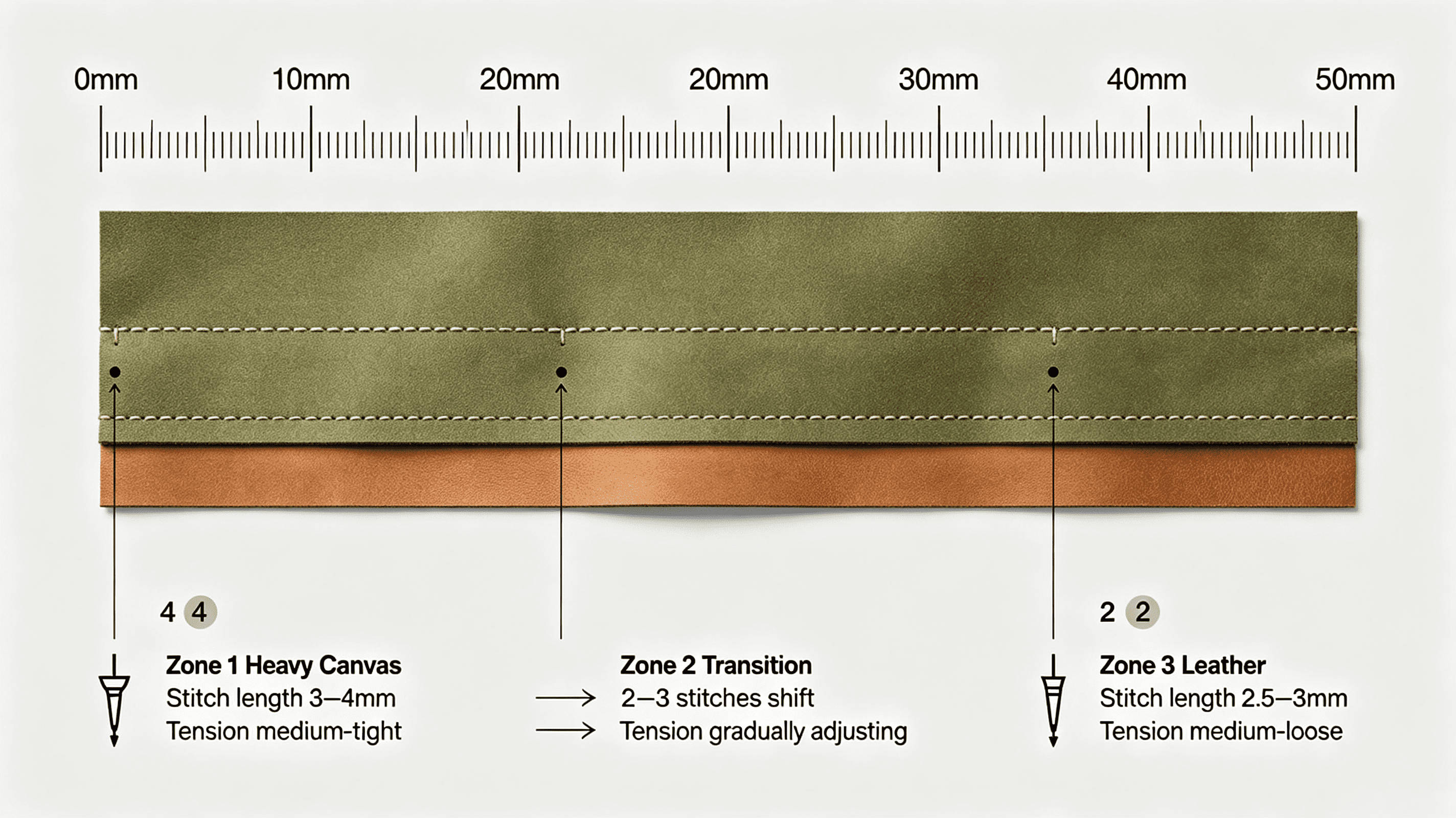
| Material Zone | Stitch Length | Upper Thread Tension | Notes |
|---|
| Heavy Canvas Section | 3-4mm (6-8 SPI) | Medium-tight (3.5-4.5) | Prevents puckering on thick fabric |
| Leather Section | 2.5-3mm (8-10 SPI) | Medium-loose (2.5-3.5) | Prevents perforation damage and distortion |
| Transition Zone | 3mm gradual shift | Transition over 2-3 stitches | Avoids sudden tension change that causes skipped stitches |
Key Principle: The transition is the most critical point. Do not change tension abruptly. Gradually adjust over 2-3 stitches as you cross the material boundary.
Part 4: Practical Techniques for Common Challenges
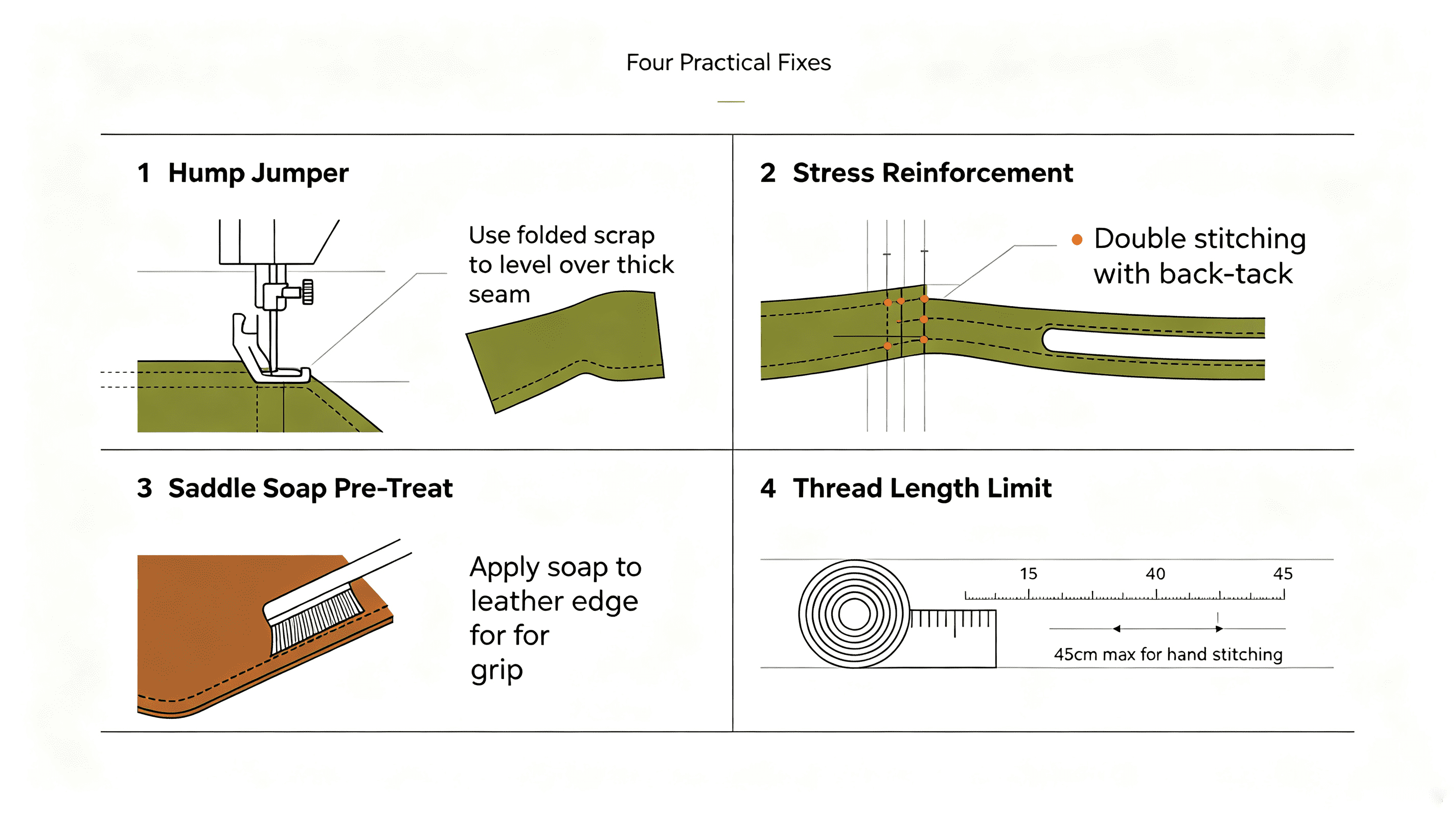
Challenge 1: Crossing a Thick Seam Junction
When stitching over a pre-existing seam (e.g., attaching a strap over a side panel seam):
- Solution: Use a "hump jumper" accessory or a folded piece of scrap canvas of matching thickness placed under the presser foot before the bump. This keeps the foot level and prevents needle deflection or breakage.
Challenge 2: Stress Point Reinforcement
For straps, handles, and bottom corners:
- Technique: Double-stitch with back-tacking (reverse stitching) at start and end. This distributes load across two parallel stitch lines and locks the thread ends.
- Recommended: 3-4 back-tack stitches at each stress point.
Challenge 3: Leather Slipperiness
When the leather shifts under the presser foot:
- Solution: Pre-treat the leather edge with saddle soap. Apply sparingly along the seam line and let dry for 10 minutes. This increases surface friction temporarily without staining.
- Alternative: Apply a strip of low-tack painter's tape along the seam line, stitch through it, then peel away.
Challenge 4: Thread Length Control (Hand Stitching)
For hand-stitched accents or repairs:
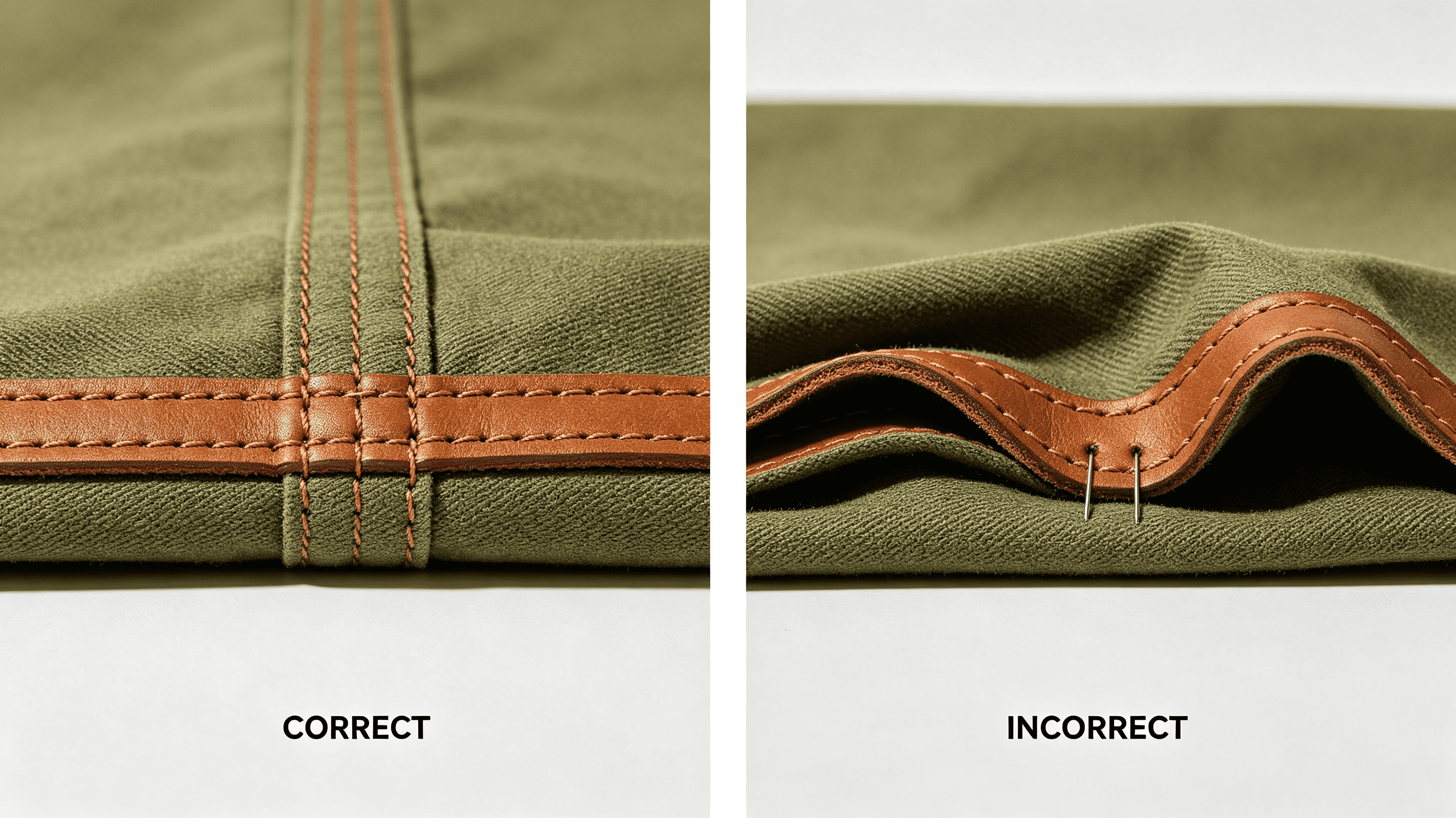
Part 5: Finished Product Inspection Criteria
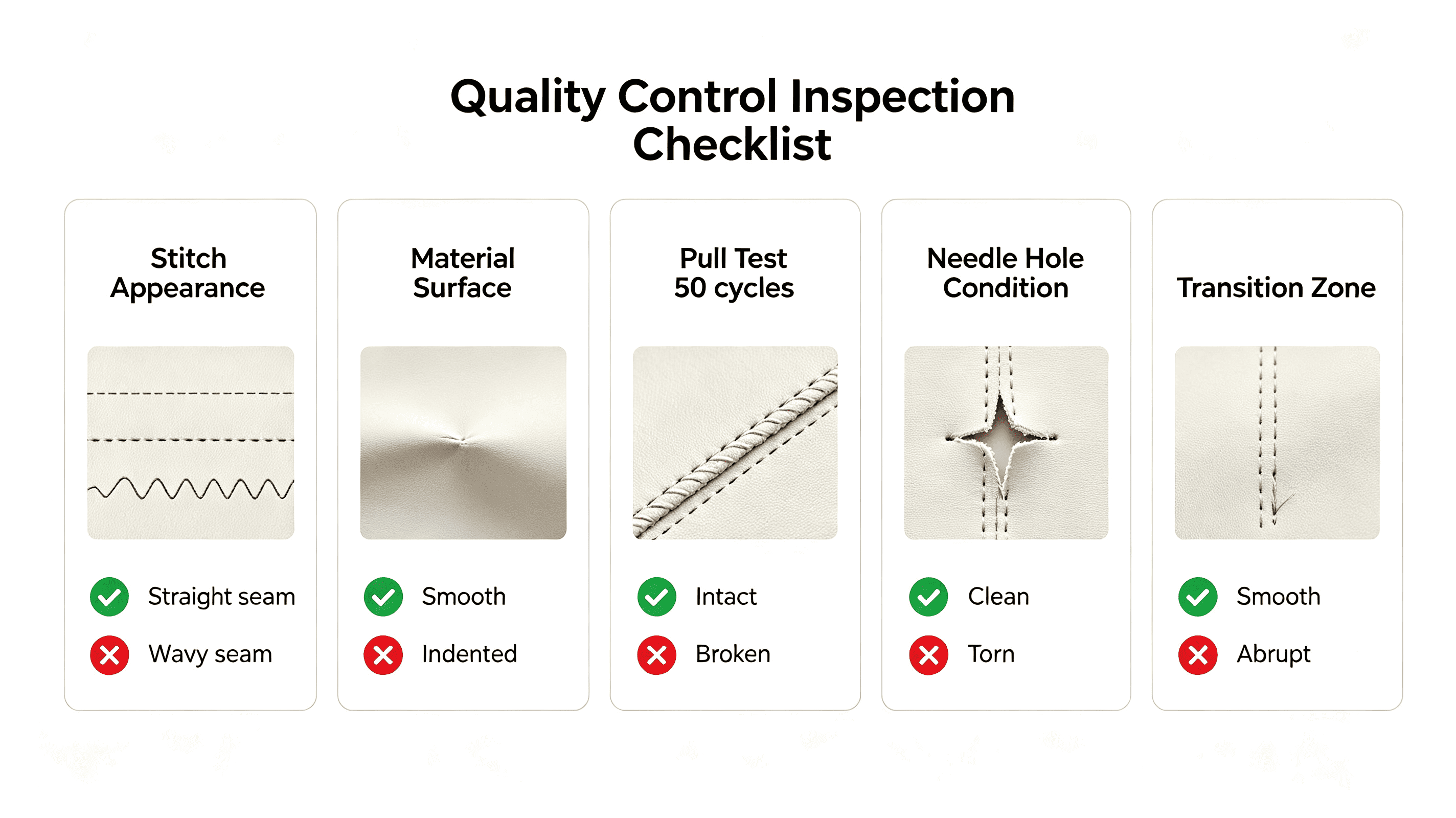
Before approving a mixed-material bag for shipment, verify these five points:
| Criterion | Acceptable | Reject If |
|---|
| Stitch Appearance | Straight, even, no floats or skips | Puckered, wavy, or distorted seams |
| Material Surface | No wrinkling, no compression marks | Visible presser foot indentations on leather |
| Pull Test (50 cycles) | No breakage, no delamination | Thread breaks or layers separate |
| Needle Hole Condition | Clean penetration, no tearing | Elongated holes or edge tearing at stitch line |
| Transition Zone | Smooth, gradual change | Abrupt stitch length change, skipped stitches |
The OSAMIC Standard: Mastery of Mixed Materials
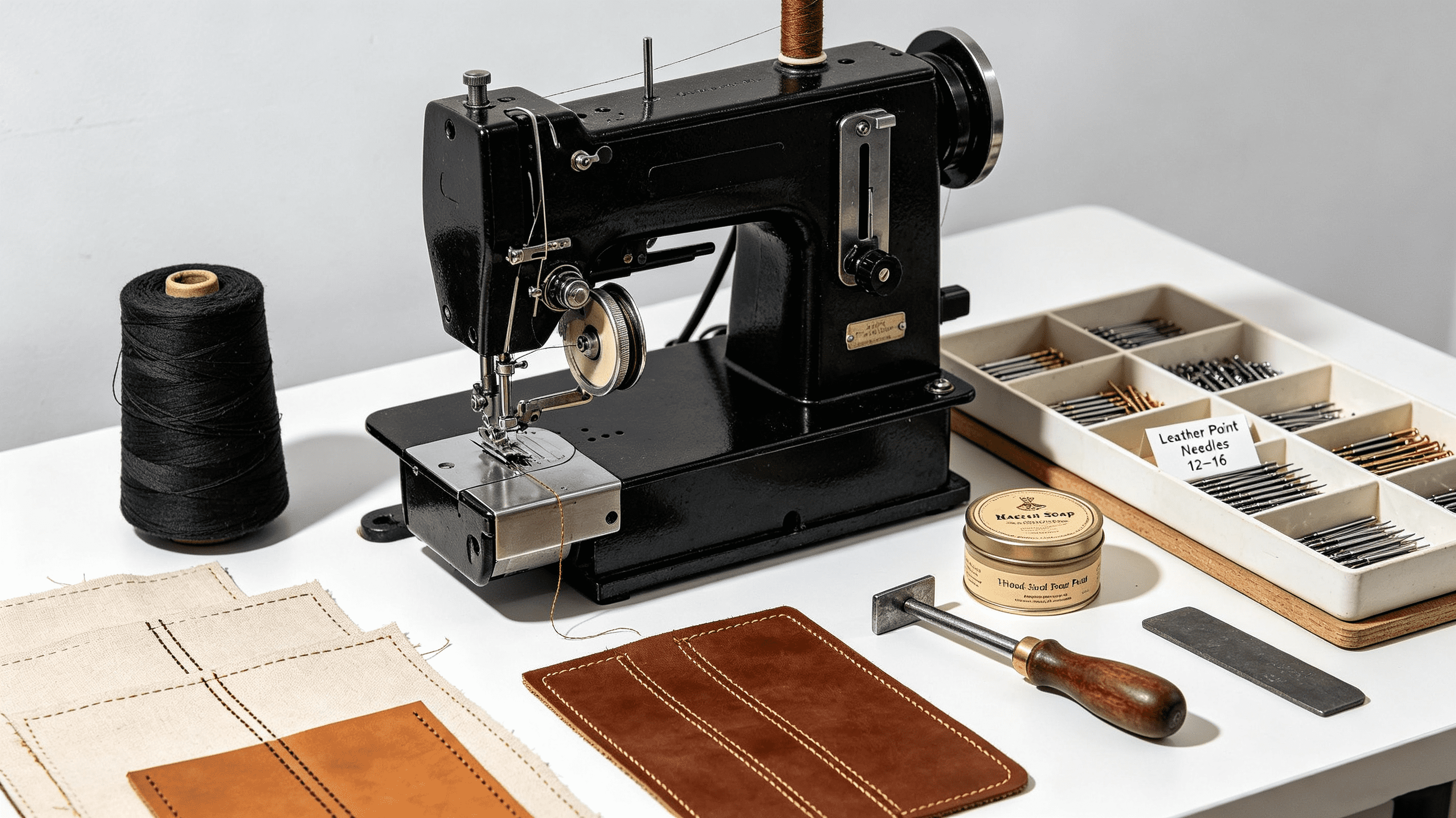
At OSAMIC, we treat canvas + leather stitching as a specialized craft, not an afterthought.
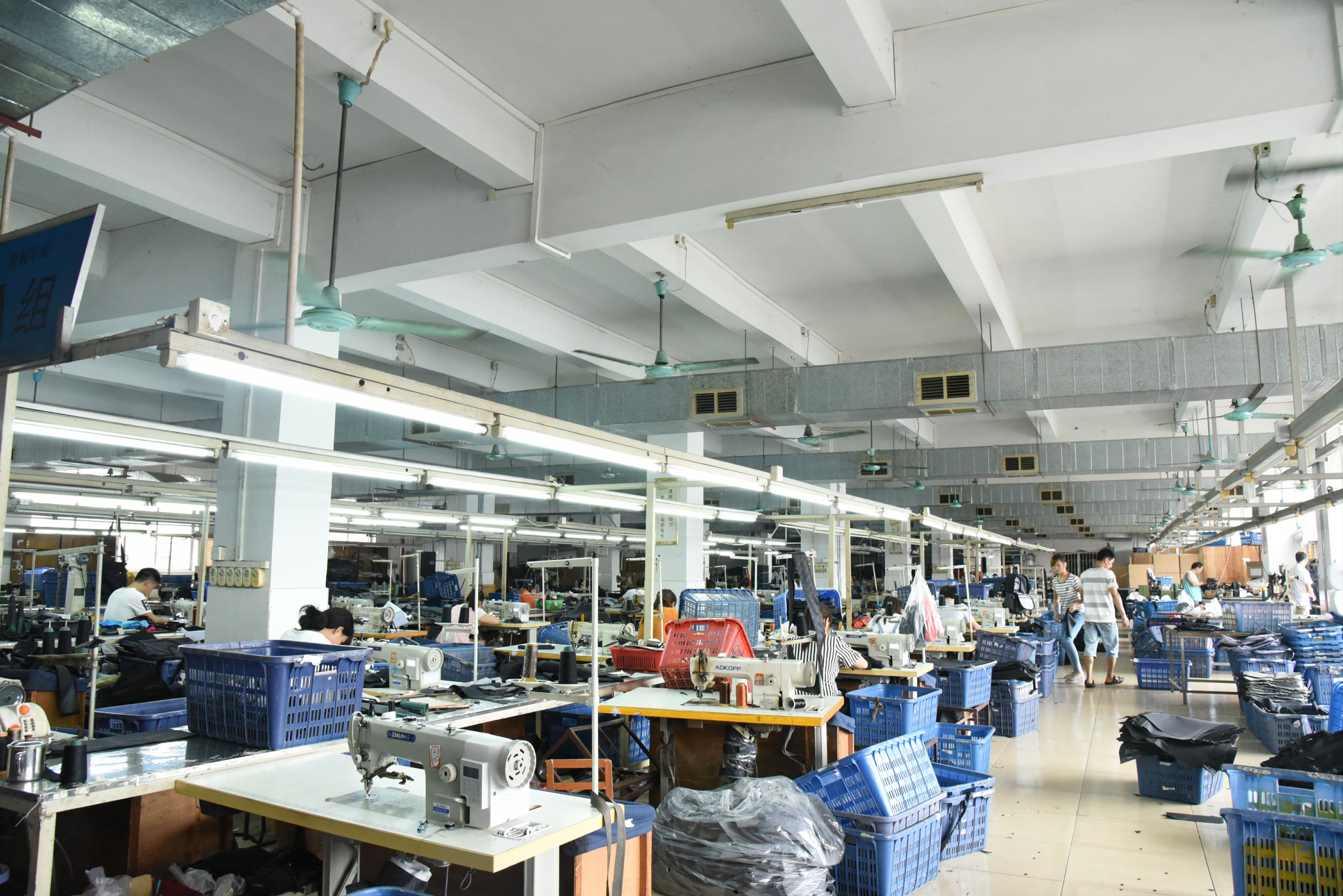
- Dedicated Workstations: Machines calibrated specifically for mixed-material production, with adjustable feed mechanisms and pressure settings.
- Pre-Production Sampling: Every mixed-material design goes through a trial run to dial in needle size, tension, and stitch length before production.
- Operator Training: Our sewing operators are trained in the specific techniques for managing material transitions.
- In-Process Inspection: Every seam is checked at the transition point during production, not just at final QC.
Your Next Step: Perfect Your Mixed-Material Construction
Canvas + leather bags offer unmatched aesthetic appeal and durability—but only if the stitching is executed correctly.Quick Diagnostic:
- Do your current mixed-material bags show puckering at the seam junction?
- Have you experienced needle breakage when crossing thick seams?
- Do your leather panels show visible needle hole distortion?
If yes, your stitching technique needs upgrading.Contact OSAMIC for a complimentary Mixed-Material Stitching Assessment. Send us your current design files and material specifications. We'll provide a detailed recommendation on needle, thread, tension, and stitch parameters optimized for your specific combination.