



New Product Series


Product Classificaiton
Meta Description: Can a thin leather bag feel luxurious? Absolutely. Learn how OSAMIC achieves premium quality with lightweight leather through smart material selection and precision craftsmanship.
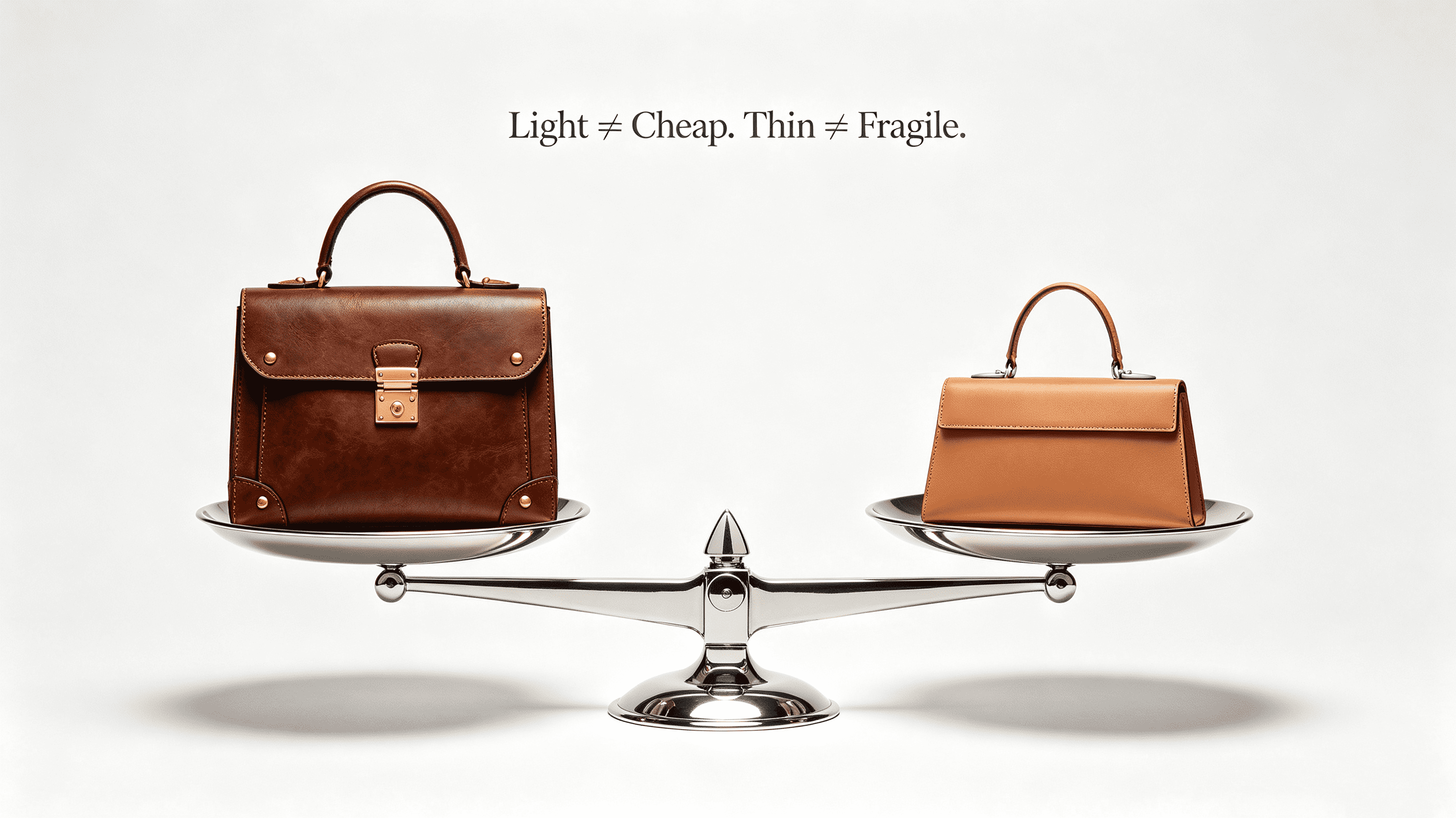
There's a persistent belief in the bag industry: heavier leather equals better quality. Walk into any leather goods store and you'll hear customers equate heft with durability, weight with worth.But this assumption is outdated. Modern tanning technology and innovative construction techniques now make it possible to create leather bags that are lightweight yet genuinely premium —thin without being fragile, supple without being flimsy.For small and mid-size brands, this opens up exciting possibilities: lower shipping costs, more comfortable everyday carry, and a distinct market position. This guide explains how to achieve that balance without compromising on quality or longevity.
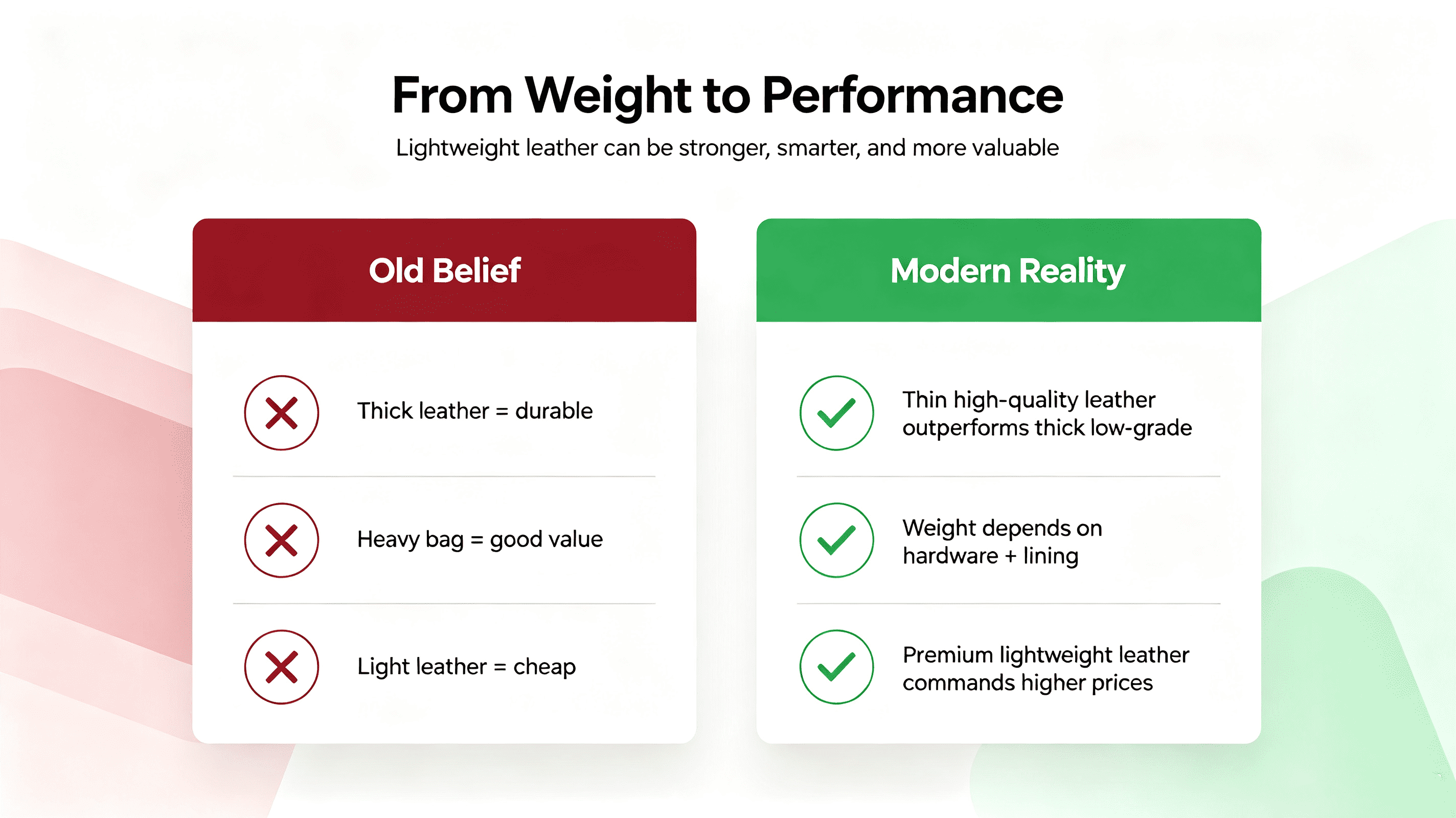
| Old Belief | Modern Reality |
|---|---|
| "Thick leather = durable" | Thin, high-quality leather with proper construction can outperform thick, low-grade leather. |
| "Heavy bag = good value" | Weight is a function of hardware and lining, not leather quality alone. |
| "Light leather = cheap" | Premium lightweight leather (e.g., nappa, lambskin) commands higher prices in luxury markets. |
The Shift: Premium is no longer defined by weight. It is defined by feel, finish, and construction integrity.
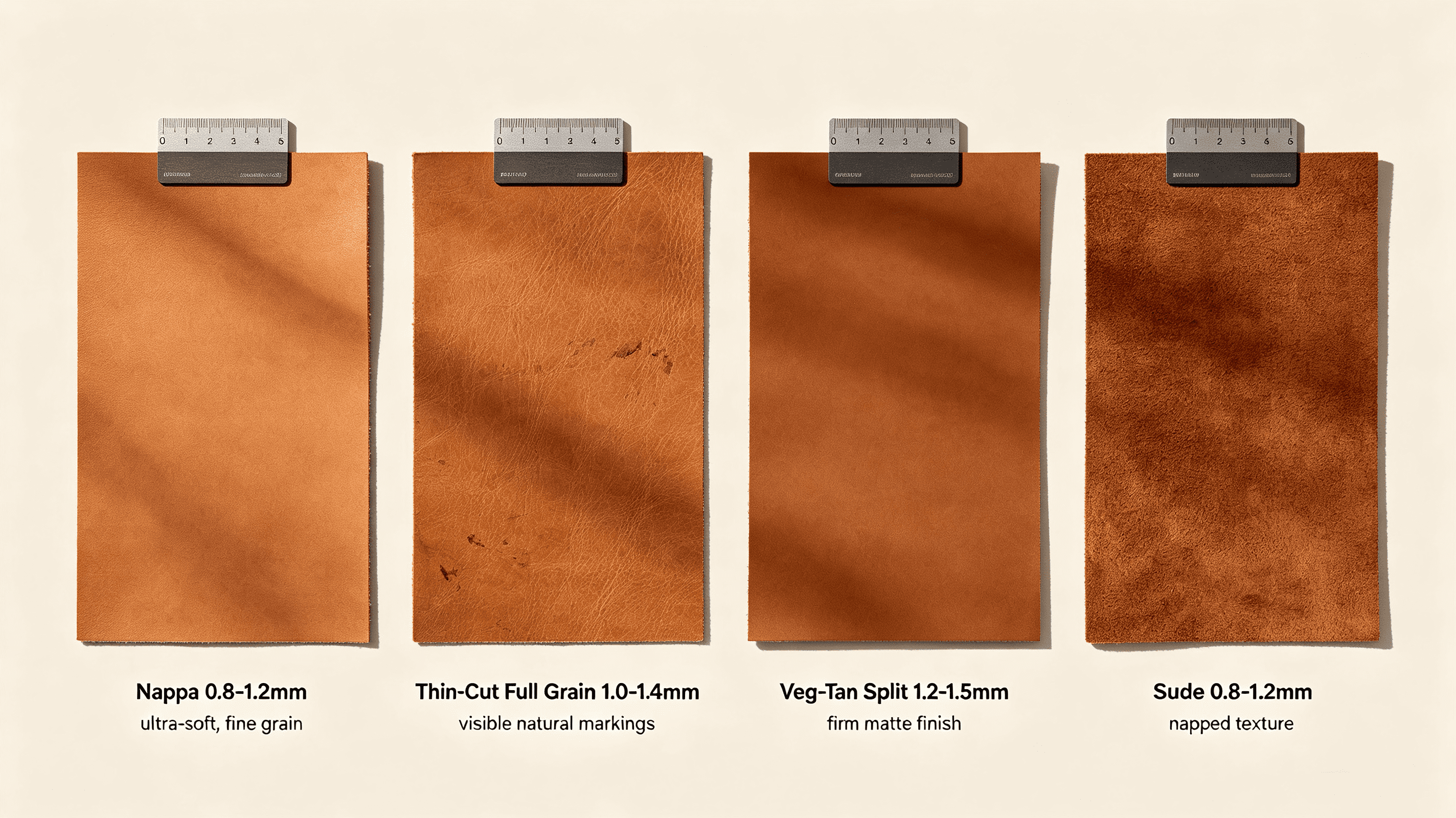
Not all thin leathers are created equal. The key is choosing hides that retain strength despite reduced thickness.
| Leather Type | Thickness Range | Characteristics | Best For |
|---|---|---|---|
| Nappa Leather | 0.8-1.2mm | Exceptionally soft, fine grain, uniform texture. Derived from young calf or lamb. | Luxury totes, clutches, soft shoulder bags. |
| Thin-Cut Full Grain | 1.0-1.4mm | Full grain structure retained, split to thinner gauge. Stronger than nappa. | Structured bags, crossbody styles. |
| Vegetable-Tanned Split | 1.2-1.5mm | Firm but lightweight. Develops beautiful patina. | Backpacks, messenger bags requiring shape retention. |
| Suede / Reverse Leather | 0.8-1.2mm | Napped finish, extremely lightweight. | Casual bags, linings, accents. |
Rule of Thumb: For a bag under 400g (14oz) finished weight, aim for leather thickness between 0.8mm and 1.2mm, paired with lightweight lining and minimal hardware.
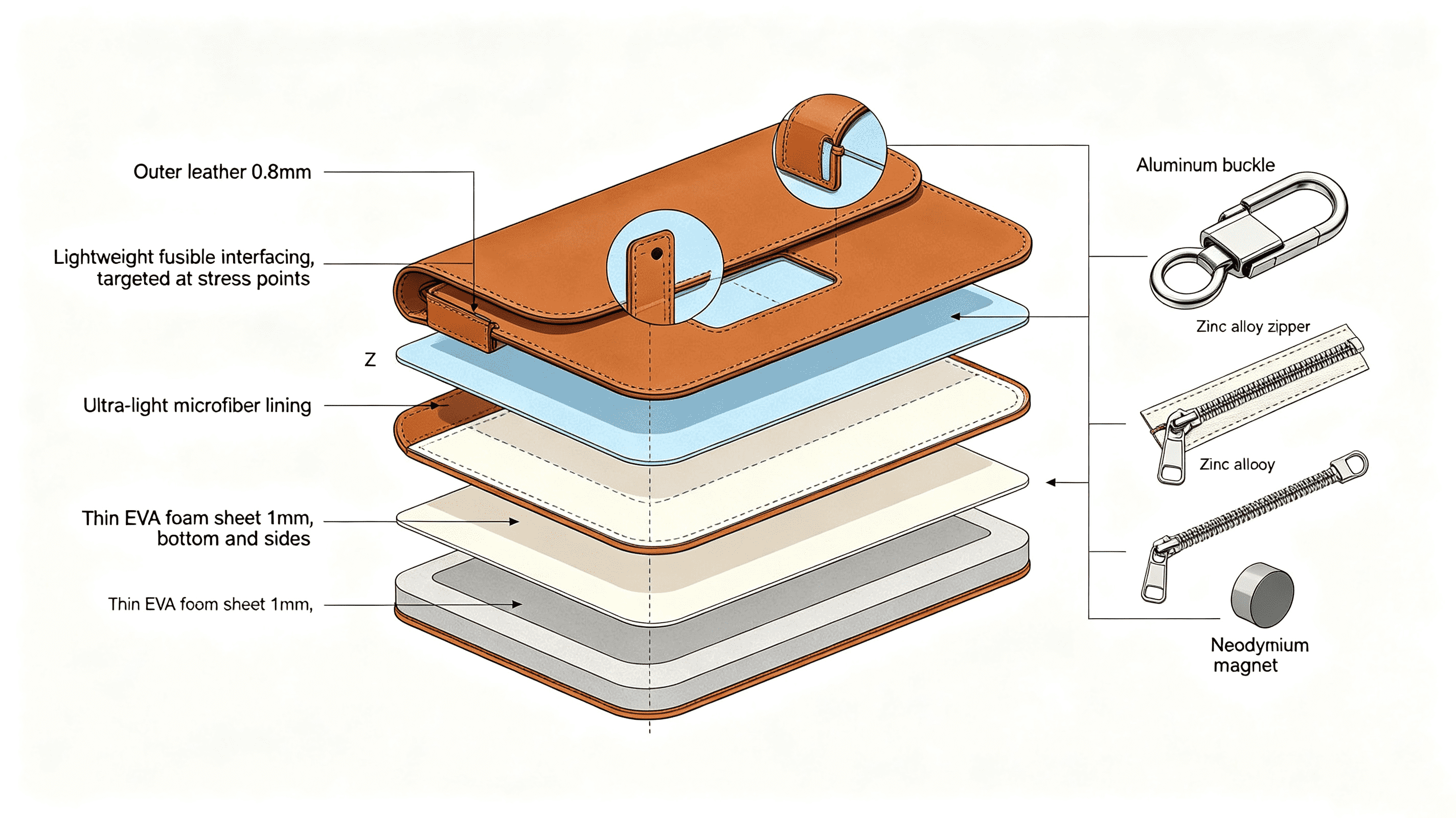
Thin leather demands different handling than its heavier counterparts.
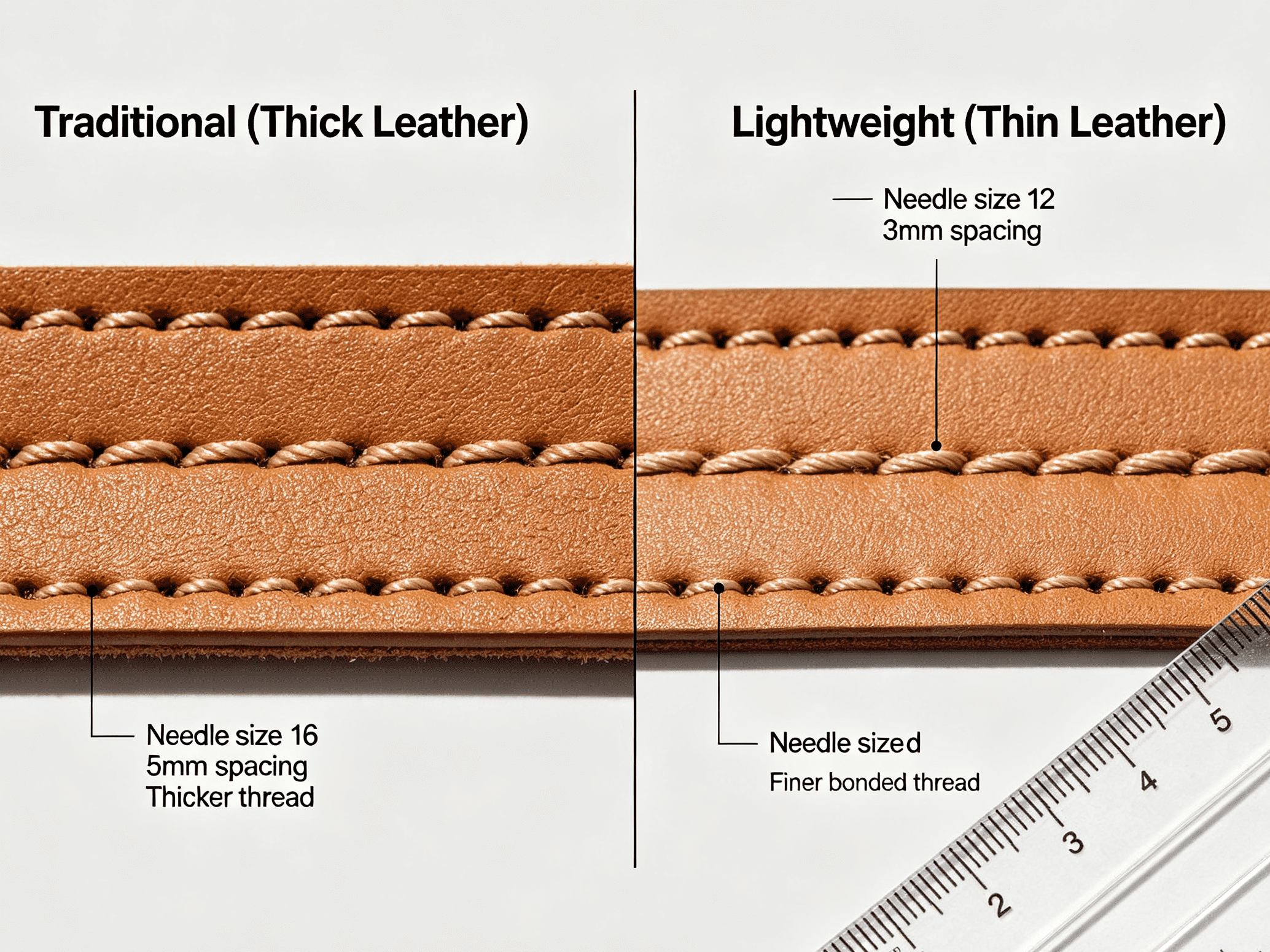
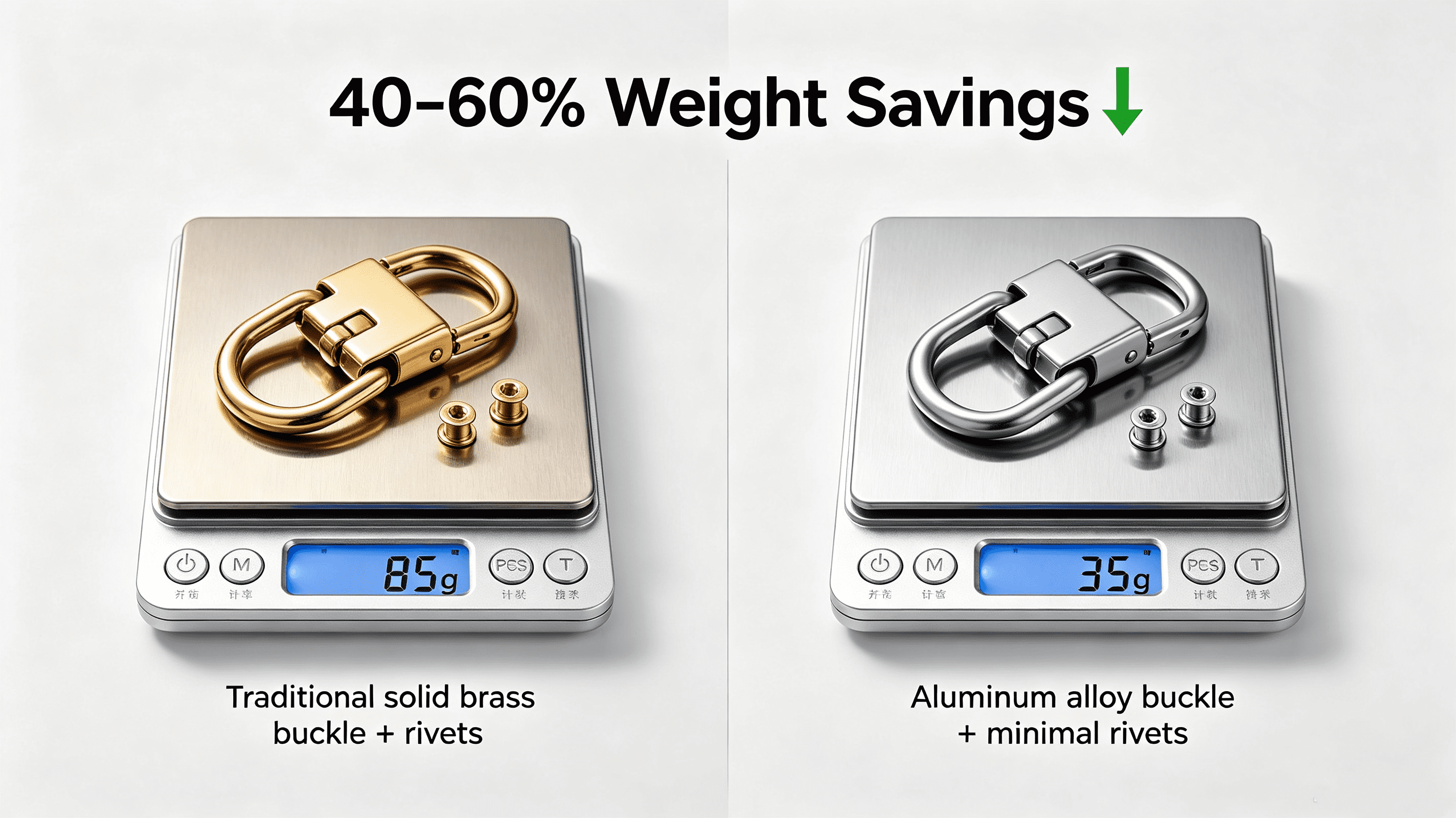
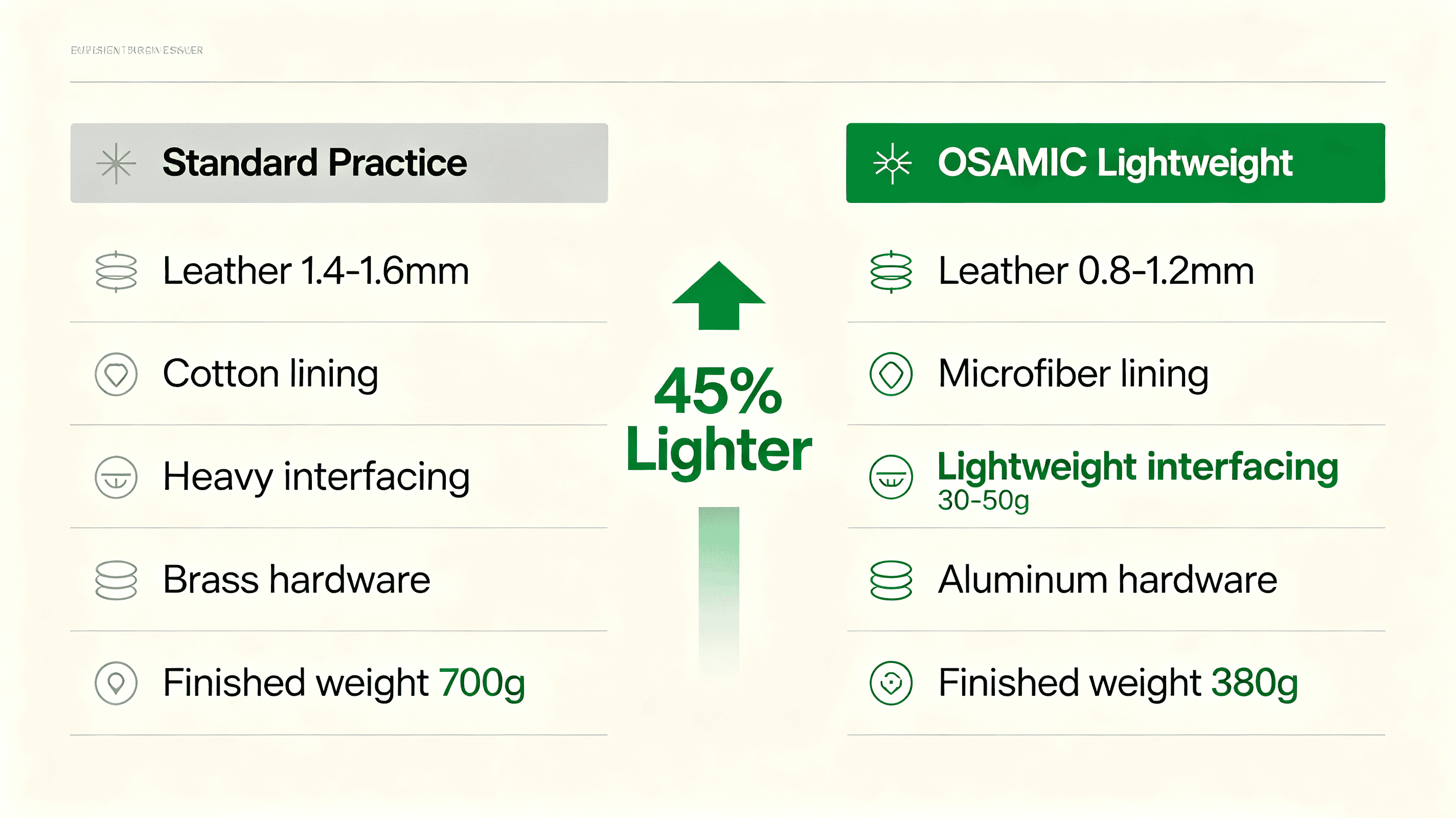
| Stage | Standard Practice | OSAMIC Lightweight Approach |
|---|---|---|
| Material Selection | Default 1.4-1.6mm leather | Precision-selected 0.8-1.2mm leather with verified tensile strength |
| Lining | Standard cotton/polyester | Ultra-lightweight microfiber or silk-blend lining |
| Interfacing | Heavy woven fusible | Lightweight non-woven (30-50g/m²) targeted at stress zones |
| Hardware | Brass (heavy) | Aluminum or zinc alloy (40-60% lighter) |
| Finished Weight (medium tote) | 600-800g | 350-450g |
Result: A bag that is 40% lighter than conventional construction, with equivalent or superior durability.
"Will thin leather tear easily?"
Properly selected thin leather (especially nappa and thin-cut full grain) has excellent tensile strength. Tears occur due to poor construction, not thinness alone. Our reinforced stitching and targeted interfacing prevent this.
Durability comes from construction integrity—stitch quality, reinforcement placement, and hardware security—not leather thickness alone. A well-made thin leather bag will outlast a poorly made thick one.
Yes. Structure comes from internal framing (lightweight EVA or thermoplastic mesh), not leather thickness. We can achieve defined shapes with leather as thin as 0.8mm.

At OSAMIC, we have developed a dedicated Lightweight Leather Program that combines:
Lightweight leather is not a compromise. It is a design choice that reflects modern sensibilities: comfort, efficiency, and refined simplicity.Quick Assessment:
If yes, lightweight leather could be your competitive advantage.Contact OSAMIC for a complimentary Lightweight Leather Feasibility Study. Send us your current design specs, and we'll provide a comparison showing weight reduction potential, cost implications, and sample recommendations for your next collection.