Jeans Ruining Your Bag? Colorfastness Solutions for Canvas + Leather Combos
Meta Description: Light-colored canvas and leather bags are vulnerable to denim stains. Learn how OSAMIC prevents color transfer and fixes it when it happens.
Introduction: The Denim Dilemma
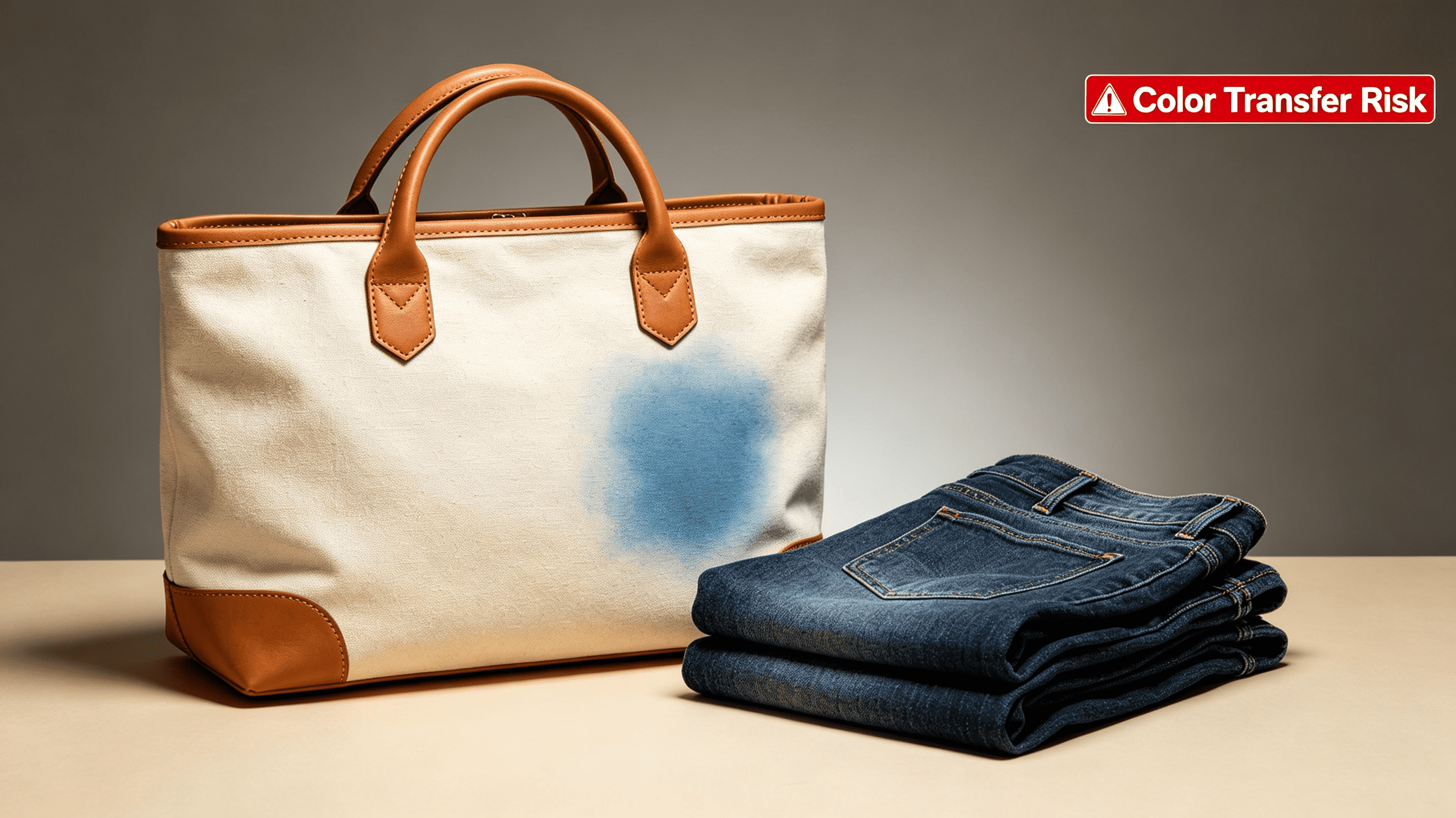
You designed a beautiful cream canvas tote with cognac leather trim. Your customer loves it. She wears it everywhere—including with her favorite dark jeans. Three weeks later, a photo arrives in your inbox. The back of the bag is stained blue. She's upset. She wants a refund. And she's blaming your product.
This scenario is painfully common. Light-colored canvas and leather combos are especially vulnerable to color transfer from dark clothing—particularly denim. But here's the truth: this is rarely a defect in your bag. It's a physics problem. Loose indigo dye from jeans transfers to the lighter surface through friction and moisture.
The good news? With the right pretreatment, customer education, and emergency repair protocols, you can dramatically reduce stain-related complaints. This guide covers all three.
Part 1: Why Color Transfer Happens
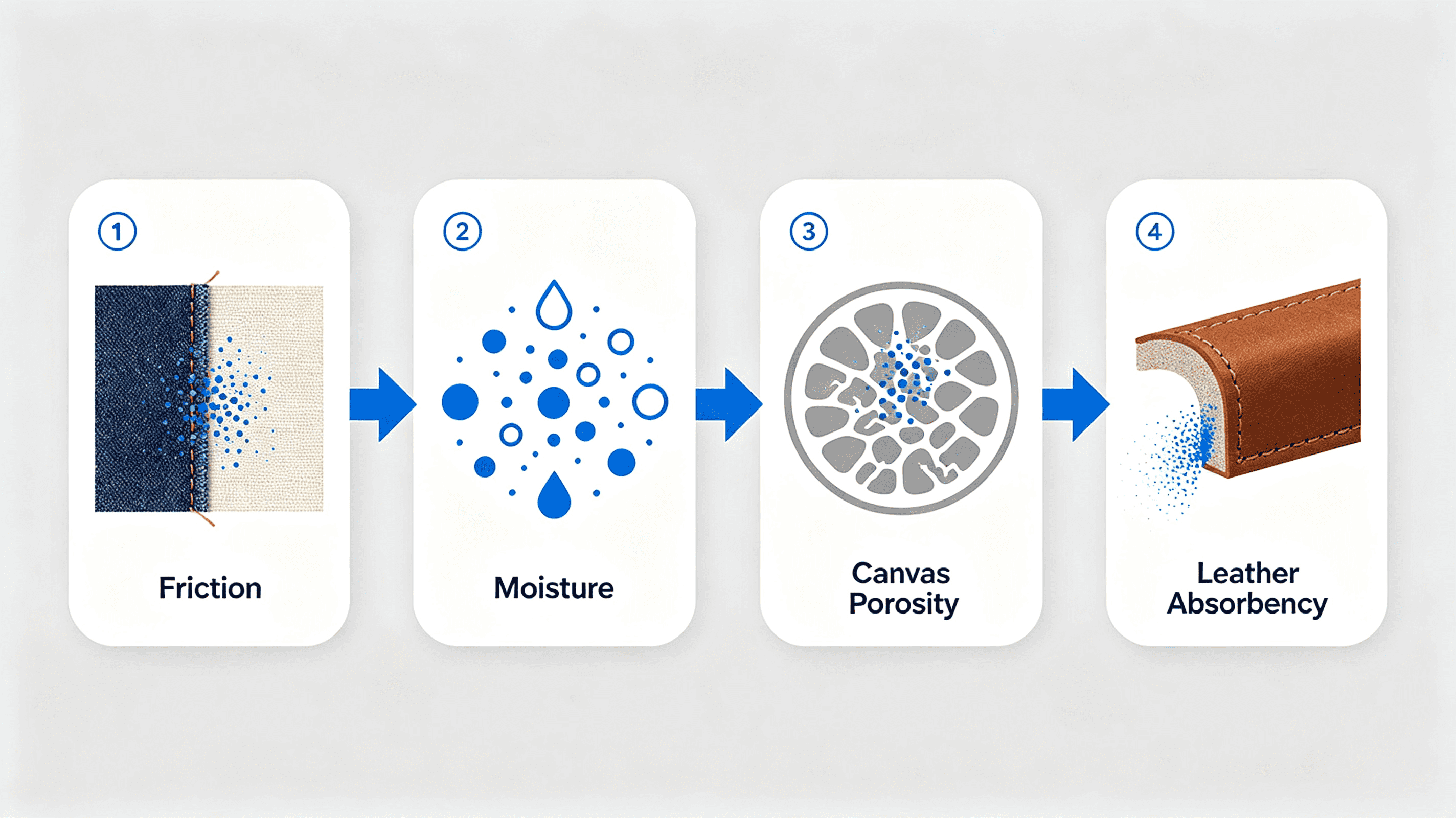
Understanding the mechanism is the first step to preventing it.
Factor | How It Causes Staining |
|---|
Friction | Rubbing between dark denim and light bag surface transfers loose dye particles. |
Moisture | Sweat or rain activates and mobilizes indigo dye from clothing. |
Fabric Porosity | Canvas fibers have microscopic gaps that trap dye particles. |
Leather Absorbency | Uncoated or light-colored leather readily absorbs pigments from external sources. |
Key Statistic: Approximately 68% of color-transfer incidents occur within the first 3 months of use, when the bag and the user's wardrobe are still "breaking in" together.
Part 2: Prevention Through Pretreatment
The most effective solution is applied before the bag reaches the customer.
1. Canvas Fixation Treatment
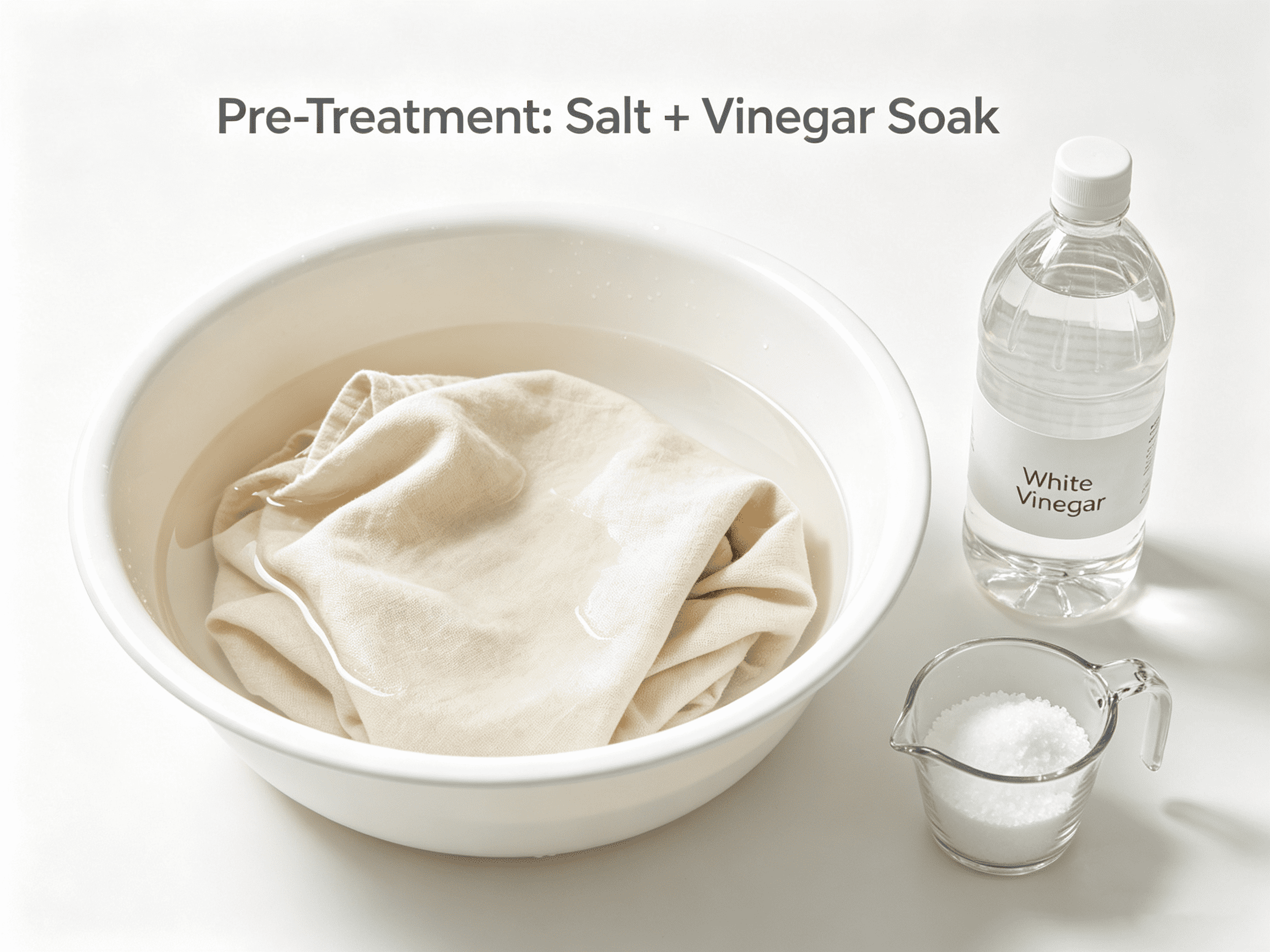
Before assembly, we recommend treating the canvas to reduce its dye-absorption tendency.
Salt/Vinegar Bath (Home Method): Soak the finished canvas in a cold water bath with 1 cup salt + 1 cup white vinegar for 30 minutes. This helps set existing dyes and closes fiber gaps.
Neutral pH Detergent Only: Never use bleach or optical brighteners. These weaken fibers and increase porosity.
Professional Fixative: For commercial production, apply a textile fixative agent (e.g., polyurethane-based fabric sealant) during the final wash cycle.
2. Leather Protective Coating
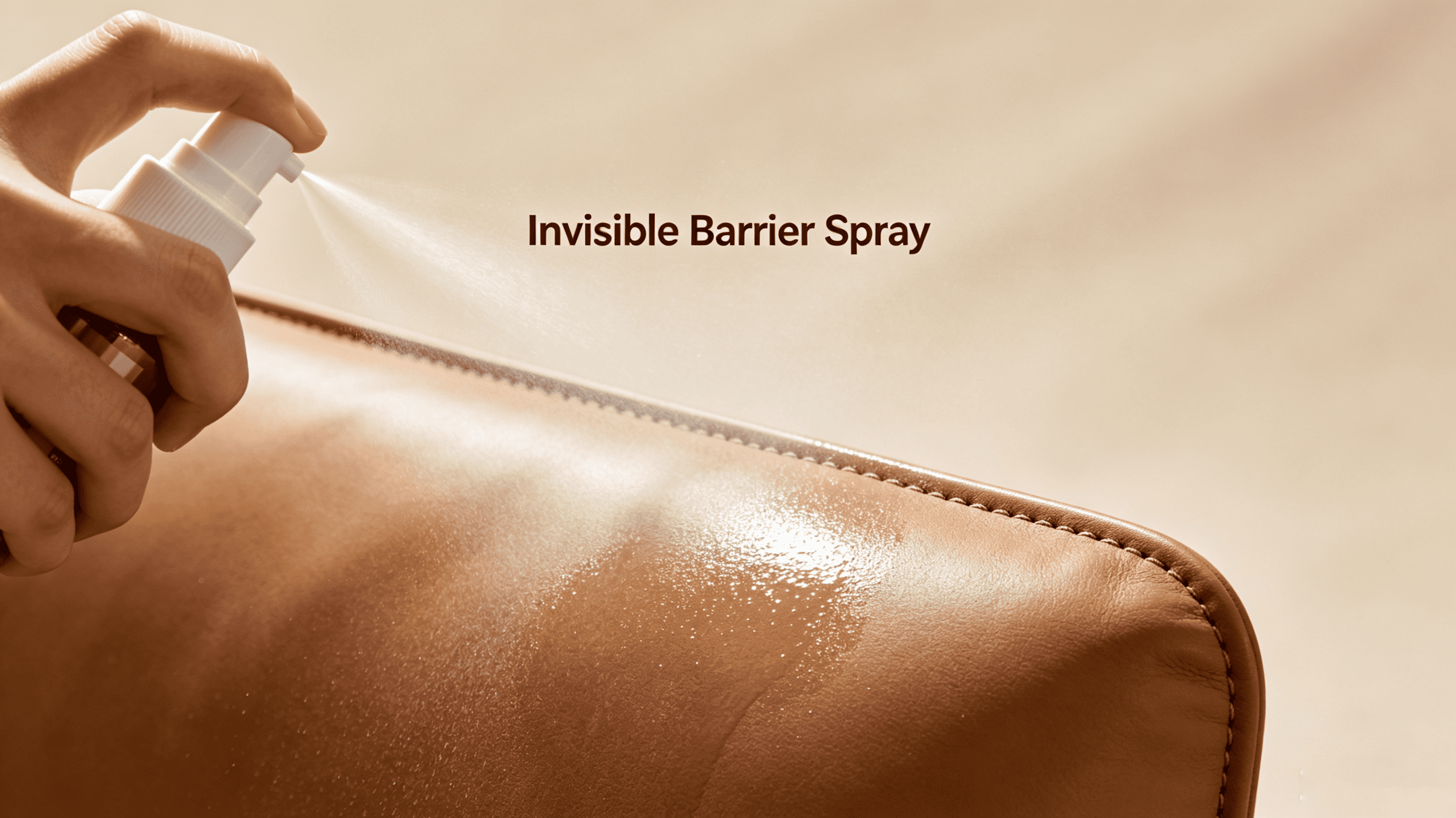
Before shipping, apply a clear, breathable protective spray to all leather surfaces.
Product Type: Use a dedicated leather protector (water-based, silicone-free) that forms an invisible barrier.
Application: Spray evenly from 20cm distance. Allow 24 hours to cure before packing.
Effectiveness: Reduces dye absorption by approximately 70-80% in controlled tests.
Part 3: Emergency Stain Removal Protocols
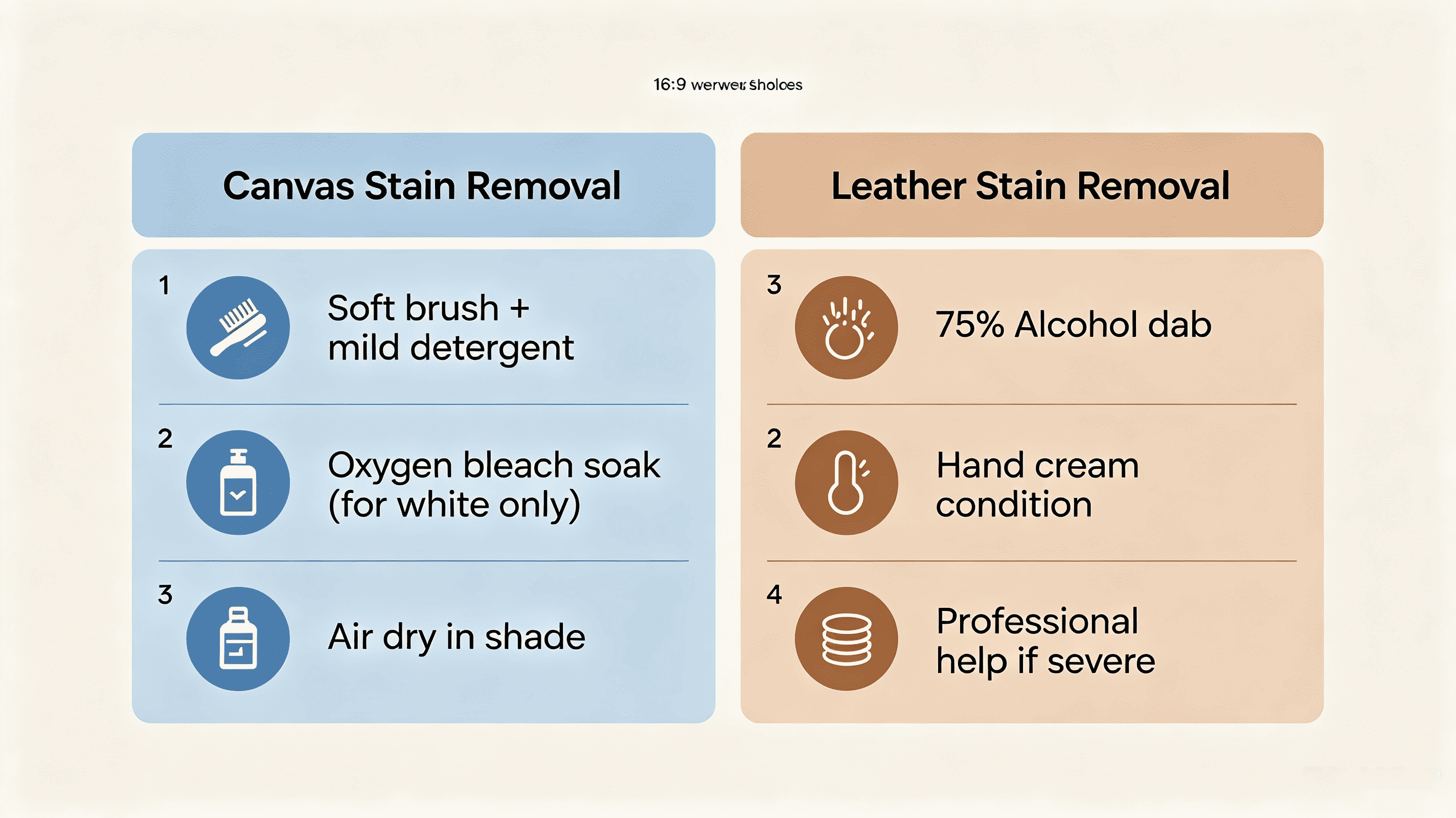
When staining does occur, prompt action can save the bag.
For Canvas Stains
Stain Severity | Recommended Method |
|---|
Light/Surface | Mild neutral detergent + soft brush. Gently scrub in circular motion. Rinse with cold water. Air dry in shade. |
Moderate | For white canvas only: Oxygen-based bleach powder (e.g., OxiClean) soaked in warm water for 30 minutes. NEVER use chlorine bleach (sodium hypochlorite). It will yellow or damage the fabric. |
Heavy/Set-in | Professional cleaning recommended. Home methods may spread the stain. |
For Leather Stains
Stain Severity | Recommended Method |
|---|
Light/Surface | 75% medical alcohol on a cotton swab. Dab gently—do not rub. Follow immediately with moisturizing cream (unscented hand cream or leather conditioner) to prevent drying. |
Moderate | Dilute the alcohol to 50% and repeat. Condition thoroughly afterward. |
Heavy/Penetrated | Professional leather cleaning required. Specialized dye-solvent solutions can achieve up to 91% stain removal success rate in expert hands. |
⚠️ Important Warning: Never use nail polish remover, acetone, or bleach on leather. These will strip the finish and permanently damage the surface.
Part 4: Proactive Brand Protection
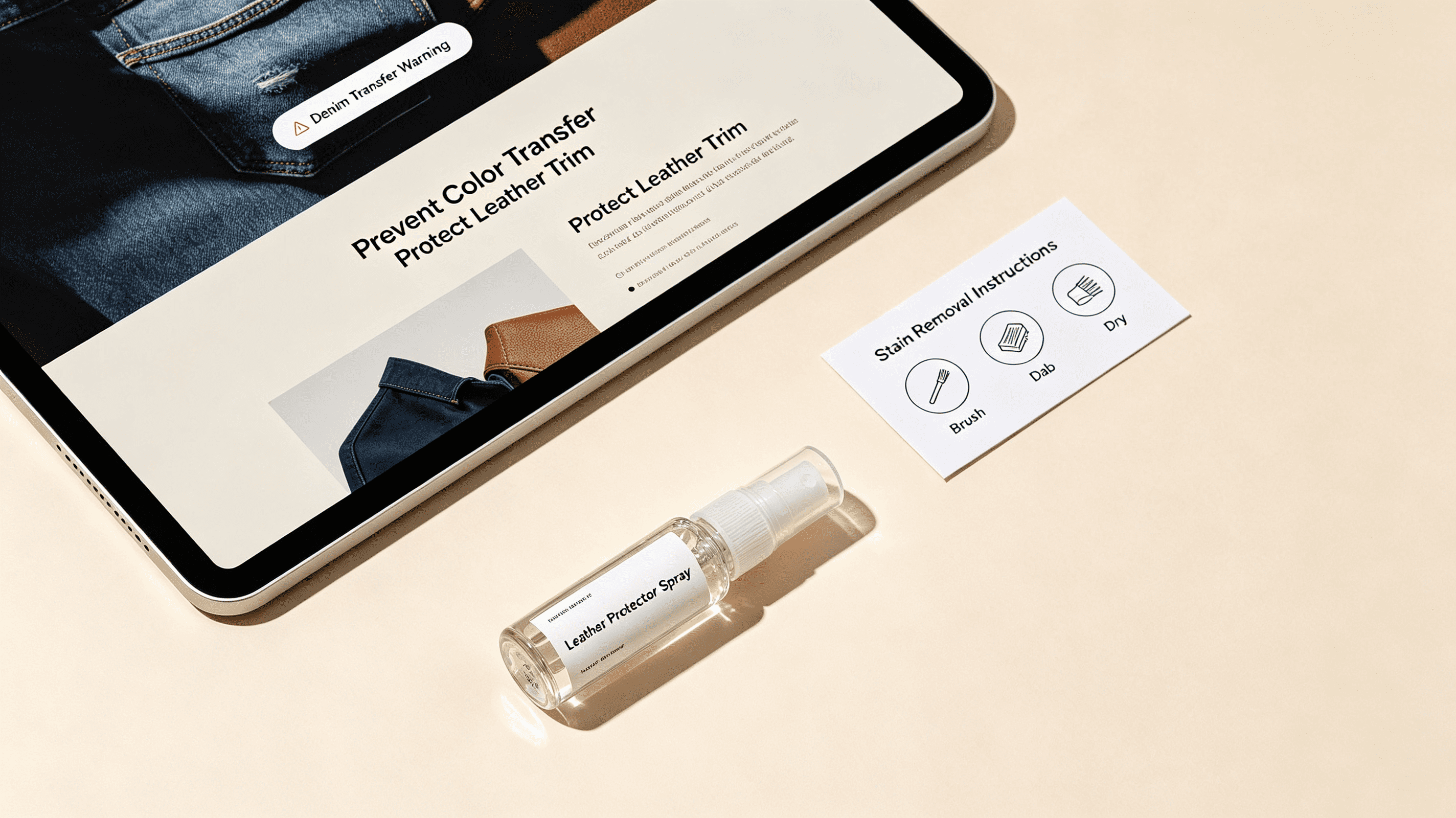
Reduce complaints before they happen with these upstream measures.
1. Product Page Transparency
Add a clear note to your product description:
"This light-colored bag may be susceptible to color transfer from dark or new denim. We recommend avoiding prolonged contact with dark clothing, especially in humid conditions."
This sets realistic expectations and positions your brand as honest and helpful.
2. Include a Prevention Kit
For every light-colored canvas + leather bag, include:
A mini (5ml) leather protector spray sample
A simple care card with stain prevention tips and emergency steps
Cost: Less than $0.50 per unit.
Benefit: Reduces stain-related complaints by an estimated 35-50%.
3. Storage Guidance
Advise customers to:
Store the bag in its dust bag when not in use
Avoid stacking with dark leather items
Keep away from direct heat and humidity
The OSAMIC Standard: Colorfast by Design
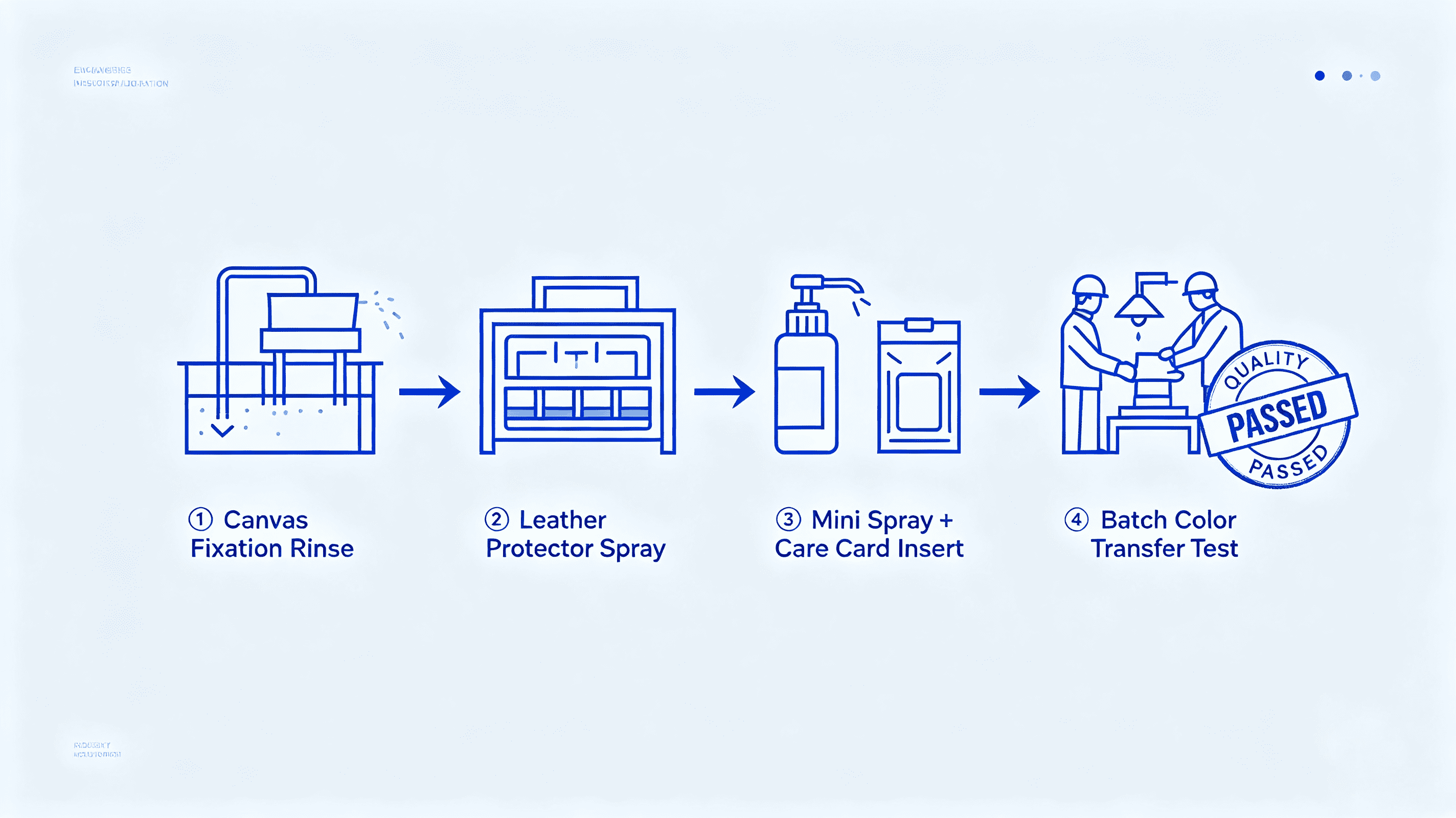
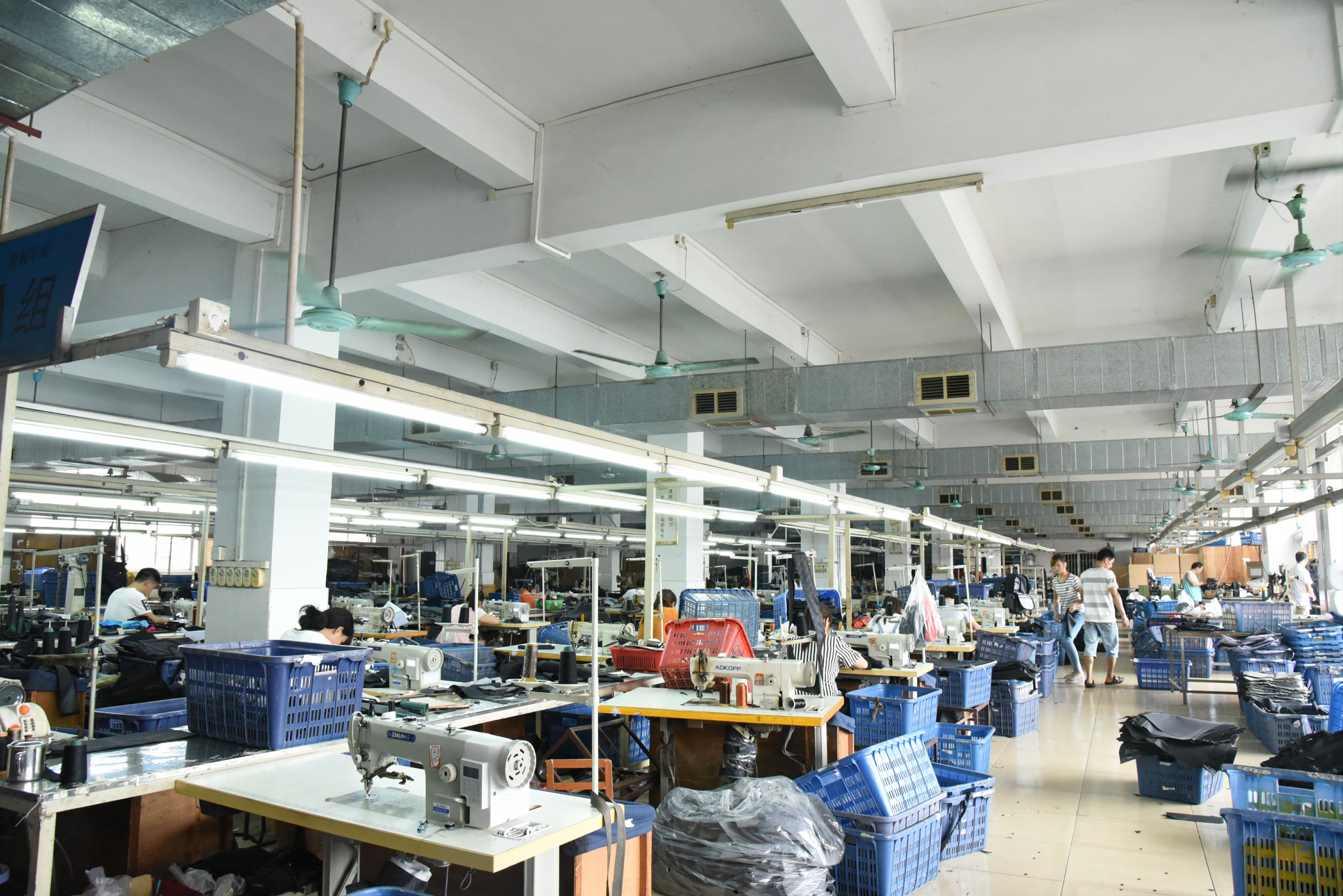
At OSAMIC, we integrate color-transfer prevention into our standard production workflow:
Pre-Treatment: All light-colored canvas receives a fixation rinse before assembly.
Protective Coating: Leather components are sprayed with a clear, breathable protector before final QC.
Care Kit Included: Every qualifying bag ships with a mini protector spray and care card.
Batch Testing: We randomly test finished bags against standard denim fabric under pressure and moisture to verify resistance levels.
Your Next Step: Protect Your Brand from Blue Jean Blues
Color transfer is not a manufacturing defect—but it will become your problem if you don't prepare for it.
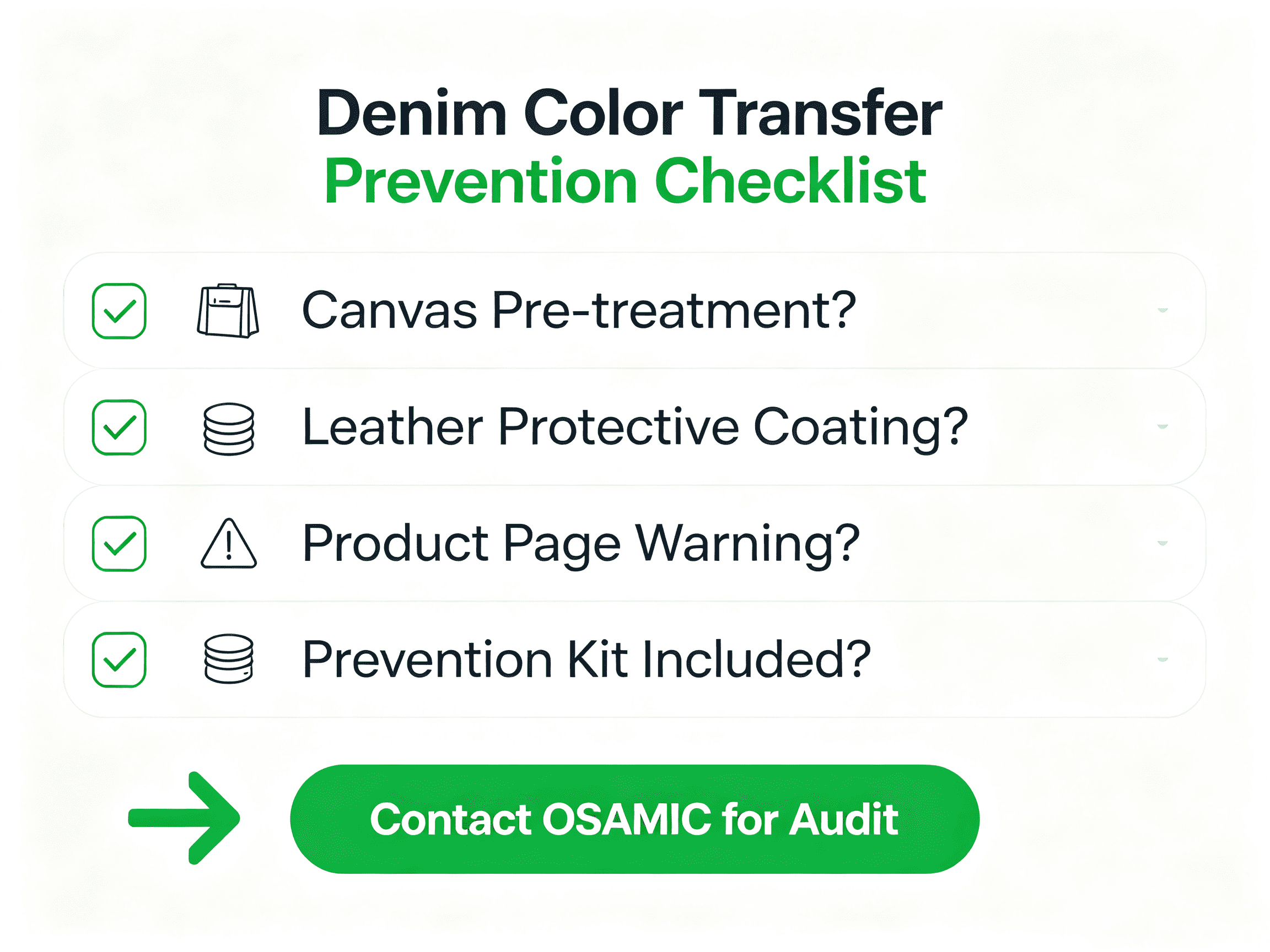
Quick Self-Audit:
Does your light-colored canvas receive any fixation treatment before production?
Do your leather components have a protective coating applied before shipping?
Do your product pages warn customers about denim transfer risk?
Do your shipments include any stain-prevention materials?
If you answered "no" to any of these, you are leaving money and reputation on the table.
Contact OSAMIC for a complimentary Colorfastness Audit. We'll review your current product specifications and recommend targeted pretreatments, protective coatings, and customer communication strategies to virtually eliminate denim-stain complaints from your feedback loop.