Why Does Your Leather Bag Smell Strange? Supply Chain Secrets of Odor Control
Meta Description: A strange smell in your leather bag isn't always a defect. Learn the root causes of leather odor and how OSAMIC controls it from tannery to delivery.
Introduction: The First Impression That Goes Wrong
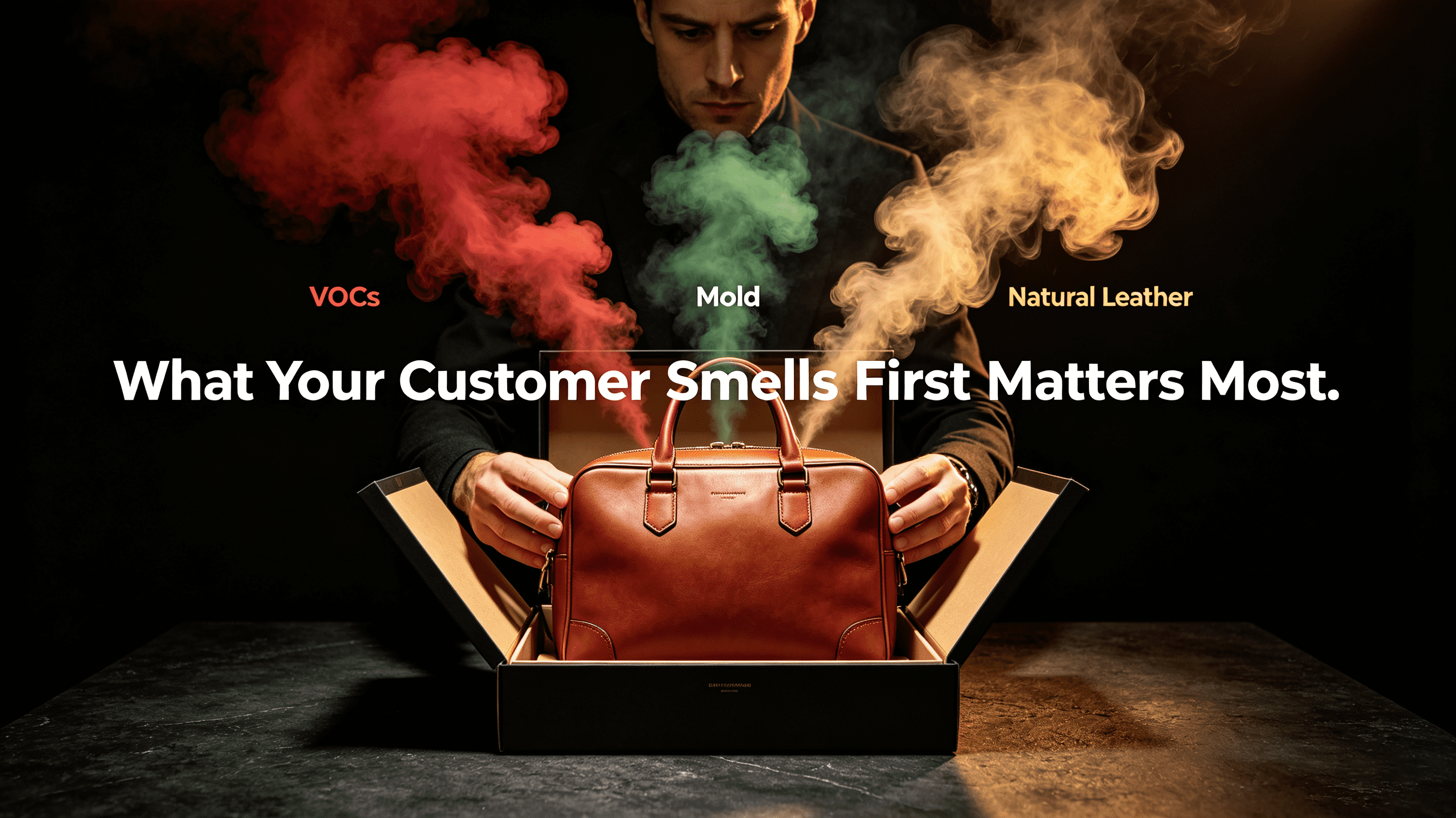
Imagine this: your customer unboxes their new leather bag. The design is perfect. The stitching is flawless. But the moment they open the bag, they recoil. A sharp, chemical smell hits them. Within minutes, they're reaching for their phone to request a return.Odor complaints are among the most frustrating issues for small and mid-size bag brands. They feel subjective, unpredictable, and difficult to trace. But the truth is that most leather odors have identifiable root causes—and they can be controlled with the right supply chain practices.This guide explains where leather bag odors come from, how to prevent them at each stage of production, and what to do when a complaint arises.
Part 1: The Three Sources of Leather Bag Odor
1. Residual Tanning Chemicals (Most Common)
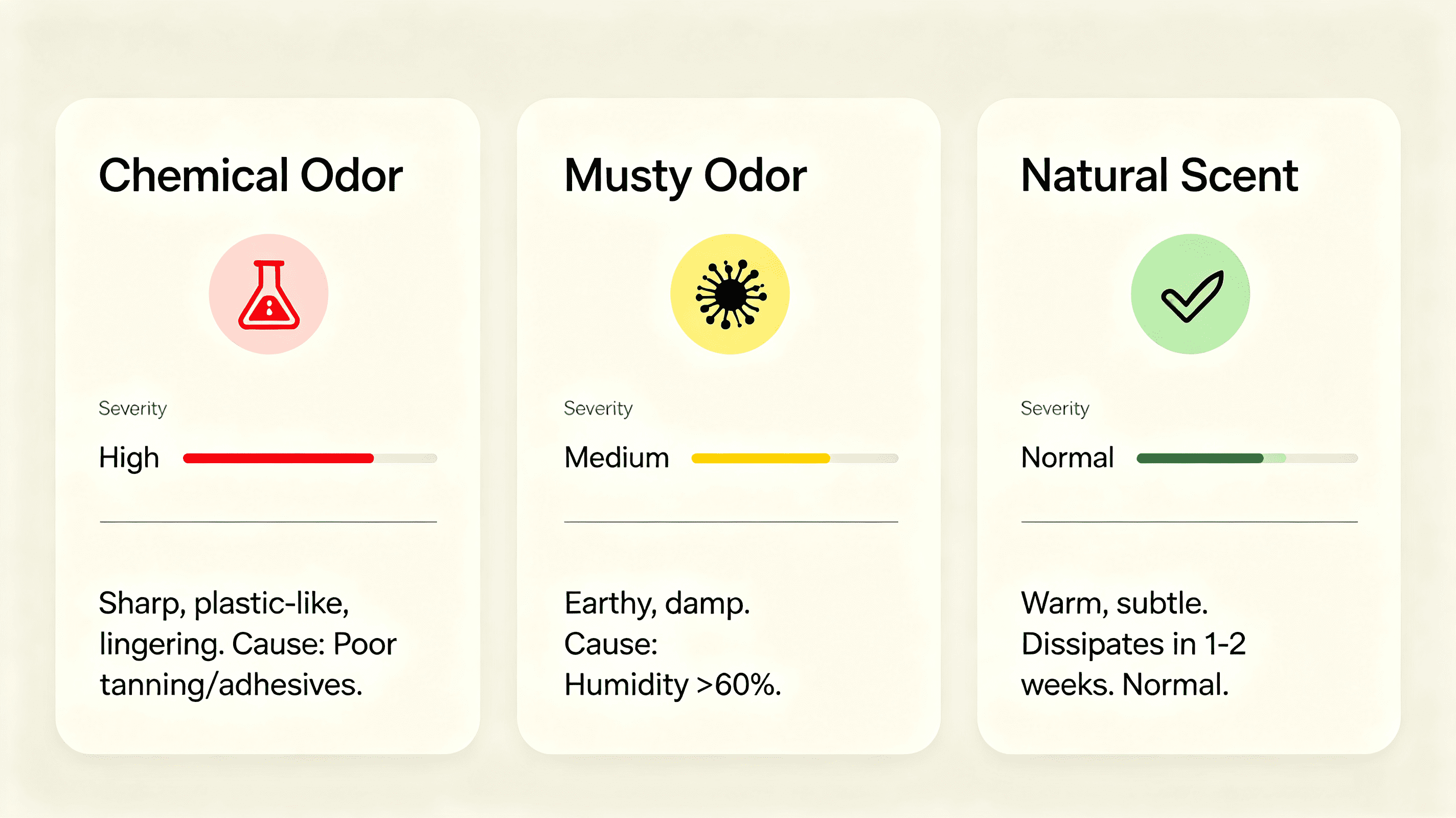
Low-quality tanning agents, synthetic adhesives, and excessive finishing coats release volatile organic compounds (VOCs). These produce a sharp, plastic-like or glue-like smell that consumers find offensive.
- Typical Cause: Low-cost chrome tanning with insufficient washing, or heavy pigment coatings applied to mask low-grade leather.
- Detection: The smell is chemical, pungent, and lingers even after airing.
2. Storage Environment Contamination
Leather is hygroscopic—it absorbs moisture and odors from its surroundings.
- Mold Growth: Storing leather in humid conditions (>60% relative humidity) promotes fungal growth, producing a musty, earthy smell.
- Absorbed Odors: Leather stored near smoke, perfume, or industrial chemicals will absorb those smells.
- Detection: Musty smells suggest mold; mixed chemical smells suggest contamination from adjacent products.
3. Natural Leather Scent (Not a Defect)
High-quality full-grain and top-grain leather has a natural, subtle animal fat or vegetable tannin scent.
- Characteristics: Earthy, warm, non-offensive. Often described as "the smell of real leather."
- Duration: This scent dissipates naturally within 1-2 weeks of normal use and air exposure.
- Important: This is NOT a quality issue. Educating your customers about this natural characteristic prevents unnecessary returns.
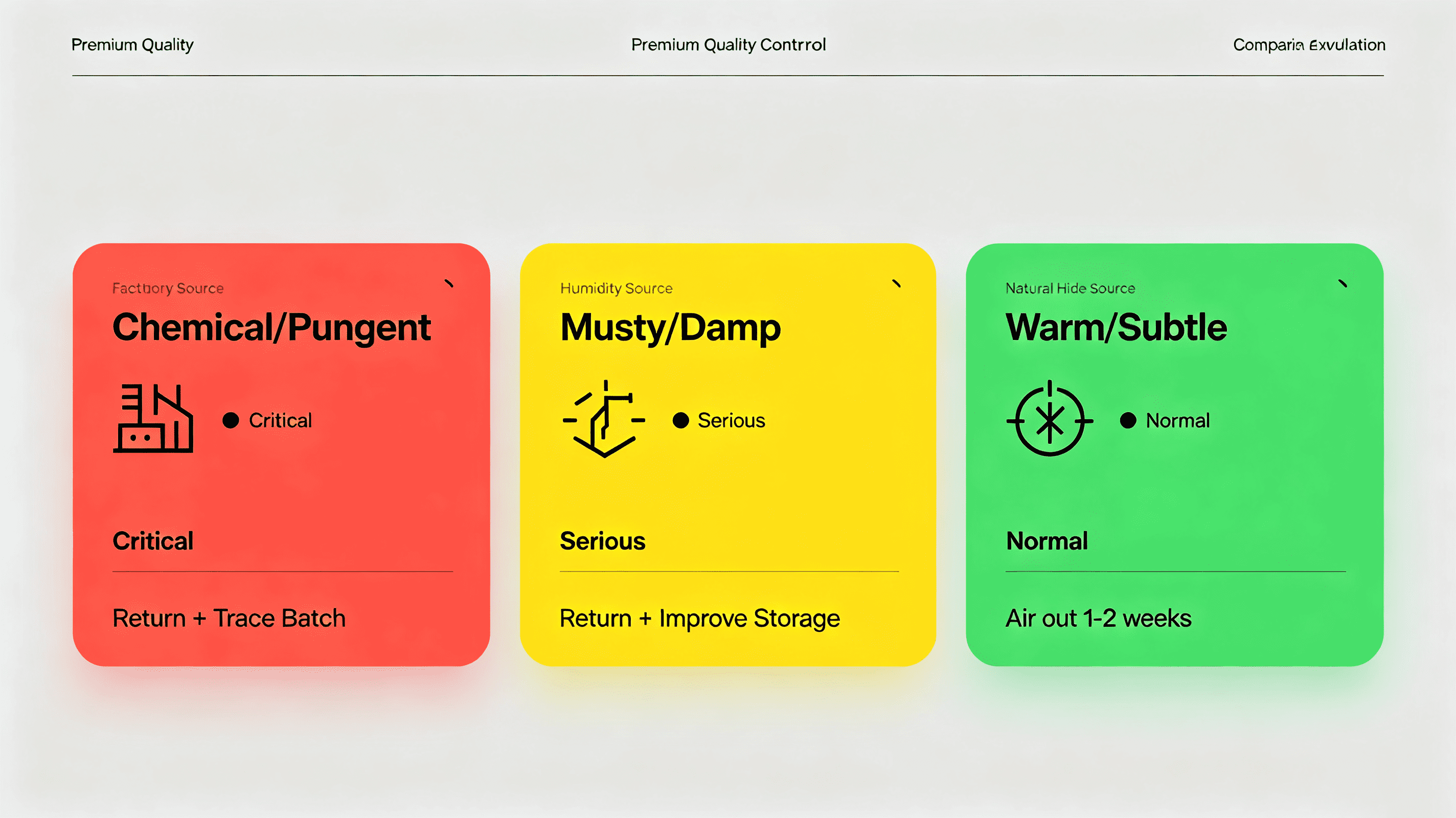
| Odor Type | Source | Severity | Resolution |
|---|
| Sharp, chemical, plastic-like | Poor tanning / adhesives | Critical | Return, trace batch |
| Musty, damp, earthy | Mold from humidity | Serious | Return, improve storage |
| Warm, subtle, natural | Genuine leather character | Normal | Air out 1-2 weeks |
Part 2: Supply Chain Odor Control Solutions
Effective odor management requires intervention at every stage of the supply chain.
1. Raw Material Control (The Tannery Level)
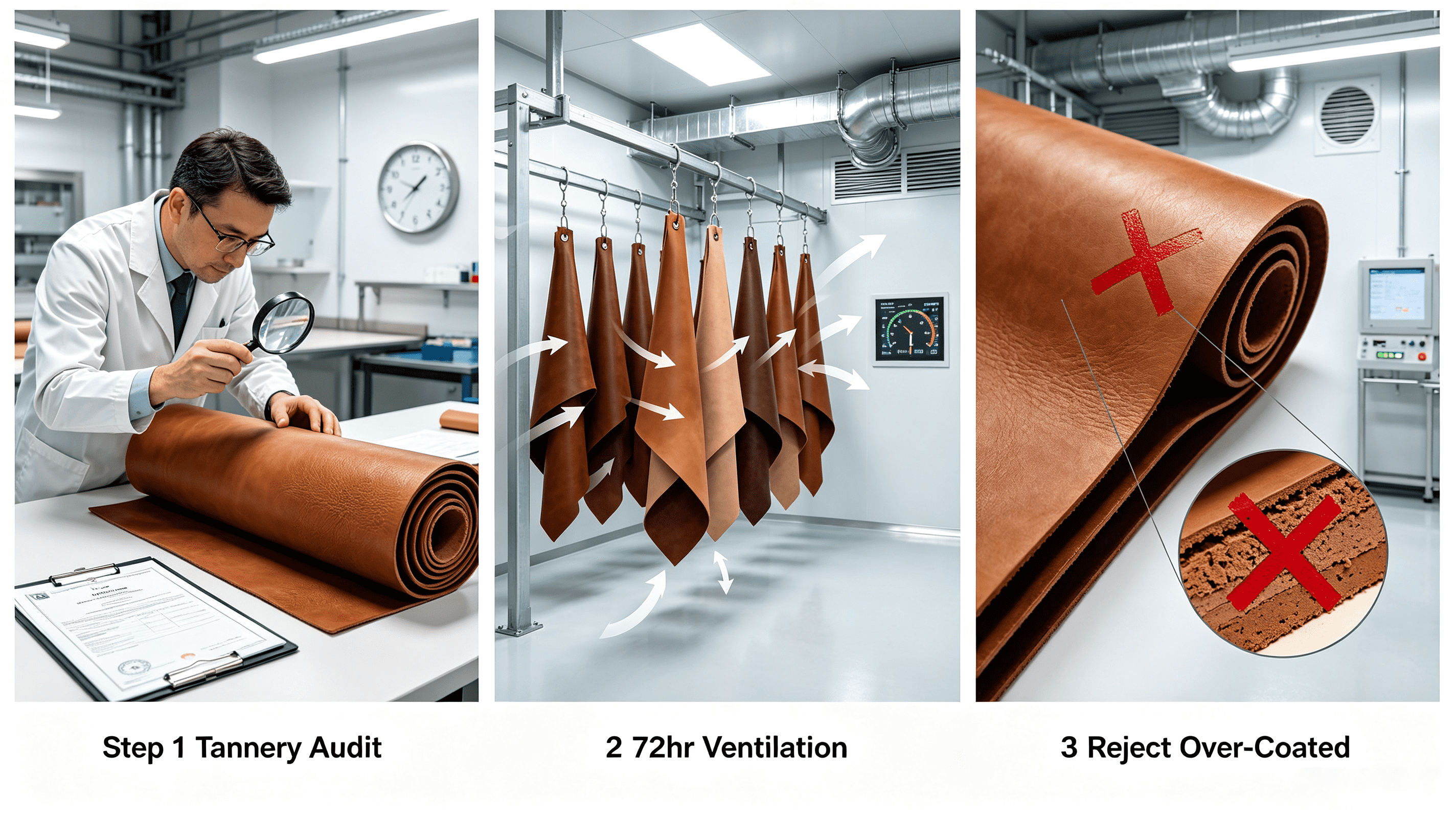
- Specify Eco-Friendly Tanning: Require chrome-free or vegetable-tanning processes. These produce significantly lower VOC residues.
- Pre-Treatment Ventilation: Upon receiving leather rolls, allow 72 hours of open-air ventilation in a dry, clean space before cutting.
- Reject Over-Coated Leather: Heavy pigment coatings are often used to conceal poor-quality splits. These trap chemicals and emit odors.
2. Production Control (The Factory Level)
- Low-VOC Adhesives: Use water-based or solvent-free adhesives with minimal residual odor. Avoid cheap rubber cement or neoprene glues.
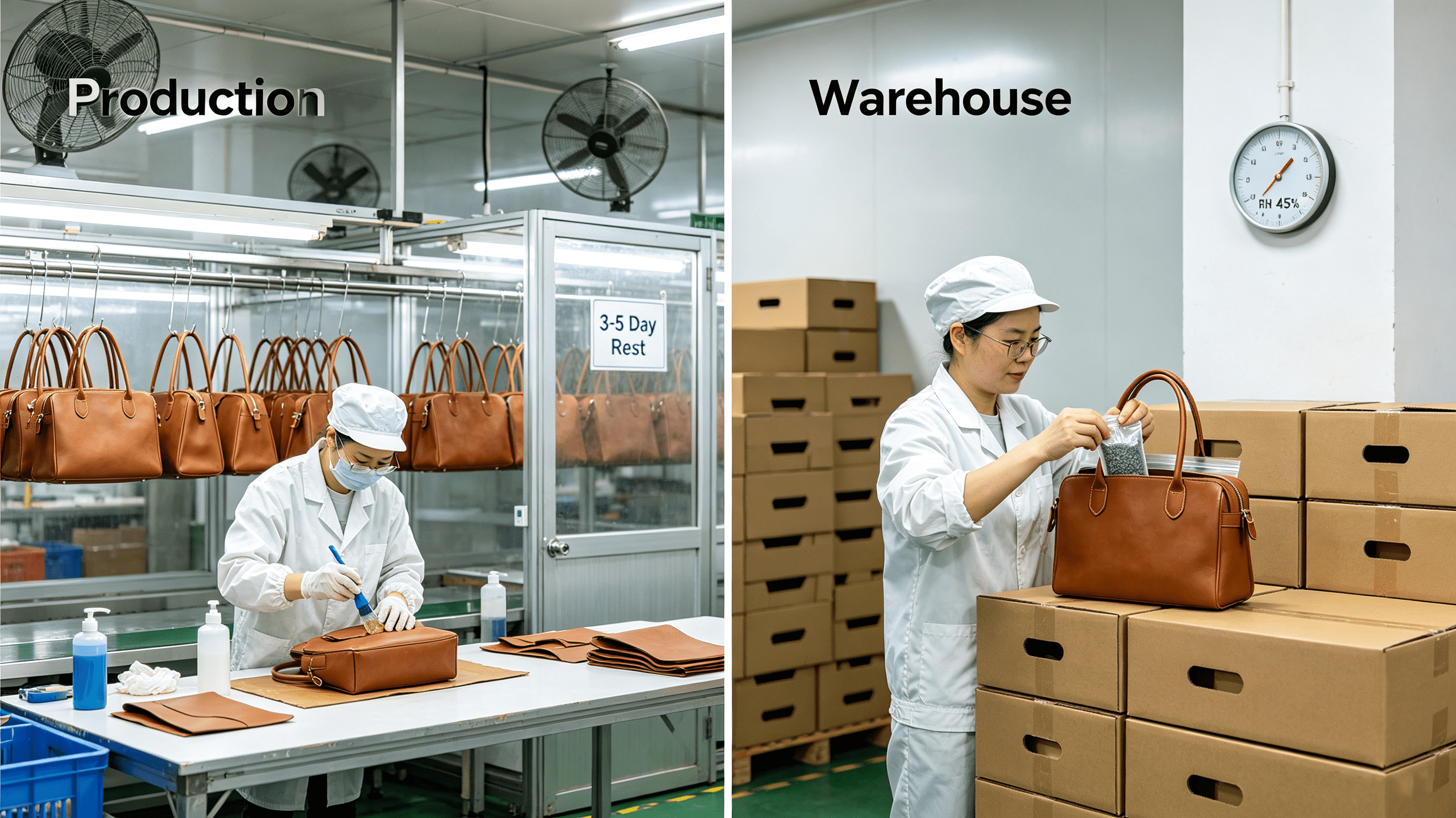
- Workshop Ventilation: Maintain continuous airflow in cutting, assembly, and finishing areas.
- Post-Production Rest Period: Allow finished bags to rest in a ventilated curing room for 3-5 days before packing. This allows trapped fumes to escape.
3. Storage & Packaging Control (The Warehouse Level)
- Humidity Management: Maintain warehouse humidity below 50%. Use dehumidifiers in high-risk seasons.
- Activated Carbon Inserts: Place individual activated carbon sachets inside each bag before sealing. These absorb residual VOCs during transit.
- Avoid Airtight Stacking: Allow gaps between packed cartons for air circulation. Do not seal bags in plastic for extended periods.
Part 3: Handling Customer Odor Complaints
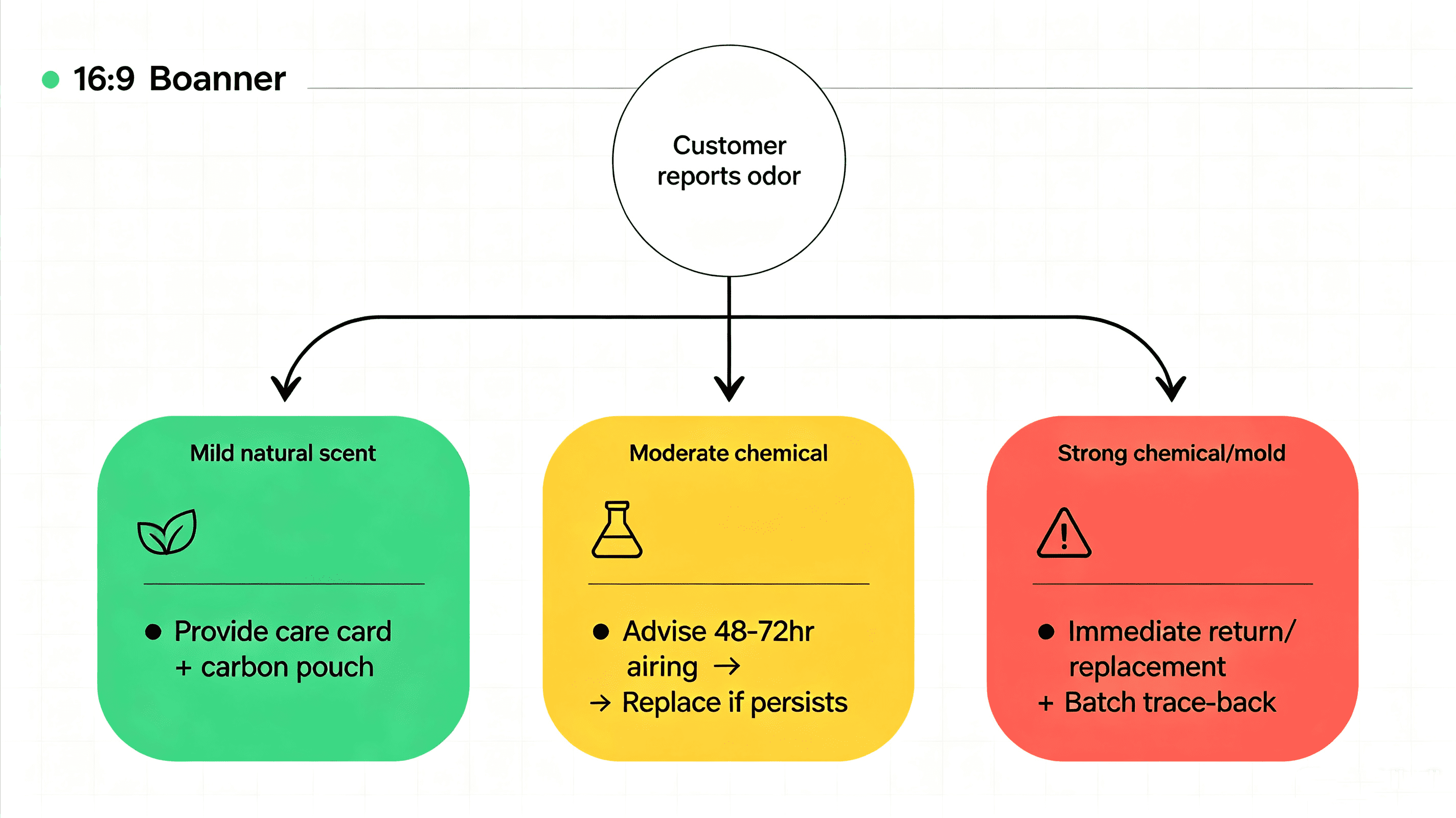
Despite best efforts, occasional complaints may arise. Here is a tiered response protocol.
| Situation | Recommended Action |
|---|
| Mild natural leather scent | Provide a care card explaining that the scent is normal and will dissipate in 1-2 weeks. Optionally include a free activated carbon pouch. |
| Moderate chemical smell | Advise airing in a shaded, ventilated area for 48-72 hours. If persists, offer replacement. |
| Strong, irritating chemical or mold smell | Immediately offer return or replacement. Initiate batch trace-back to identify root cause (tannery lot, adhesive batch, storage period). |
Building an Odor Quality Log
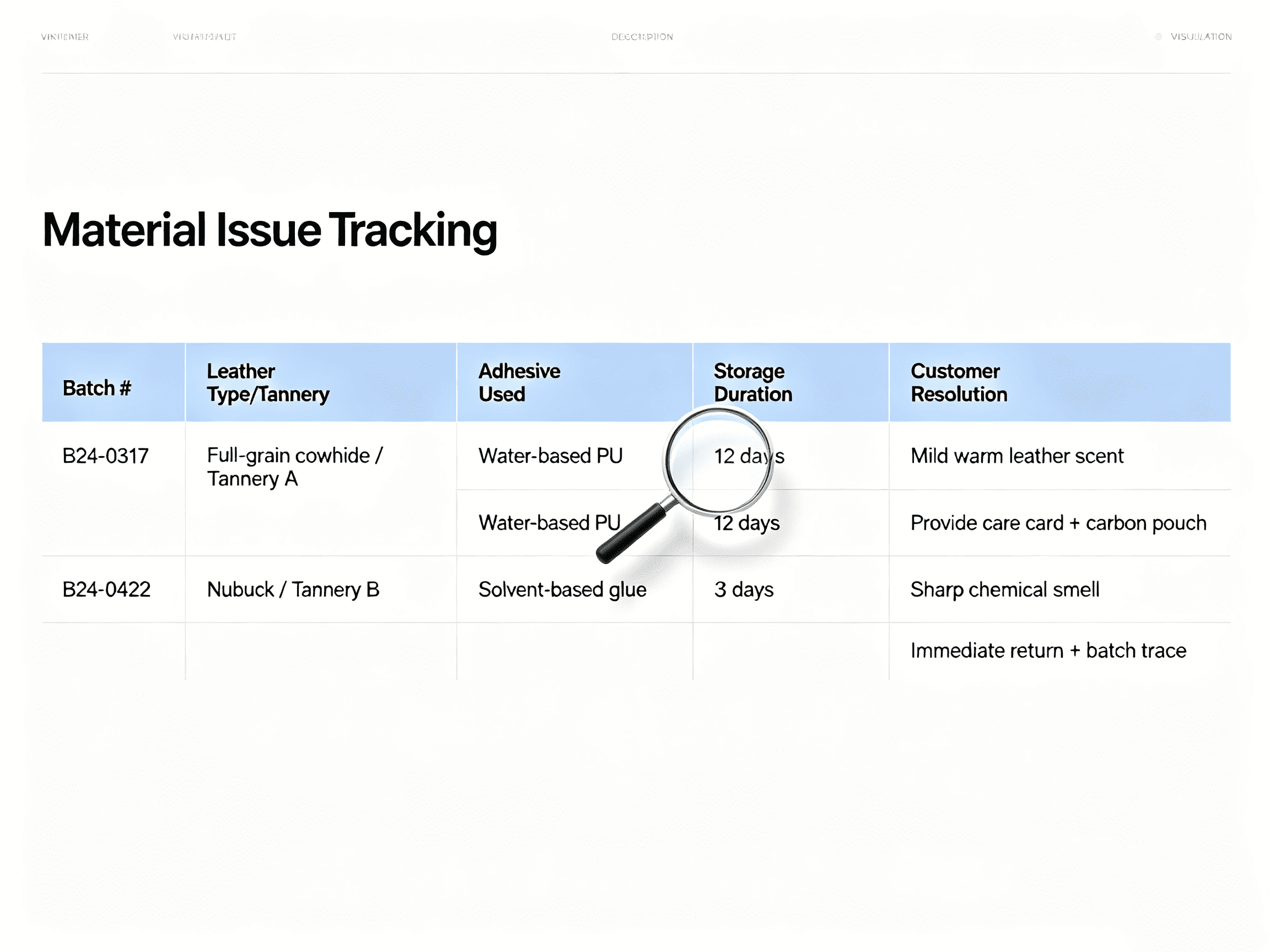
Track every odor-related complaint with these fields:
- Batch Number
- Leather Type & Tannery
- Adhesive Used
- Storage Duration
- Customer Description of Odor
- Resolution
Over time, this log reveals patterns and enables proactive prevention.
The OSAMIC Standard: Odor-Free by Design
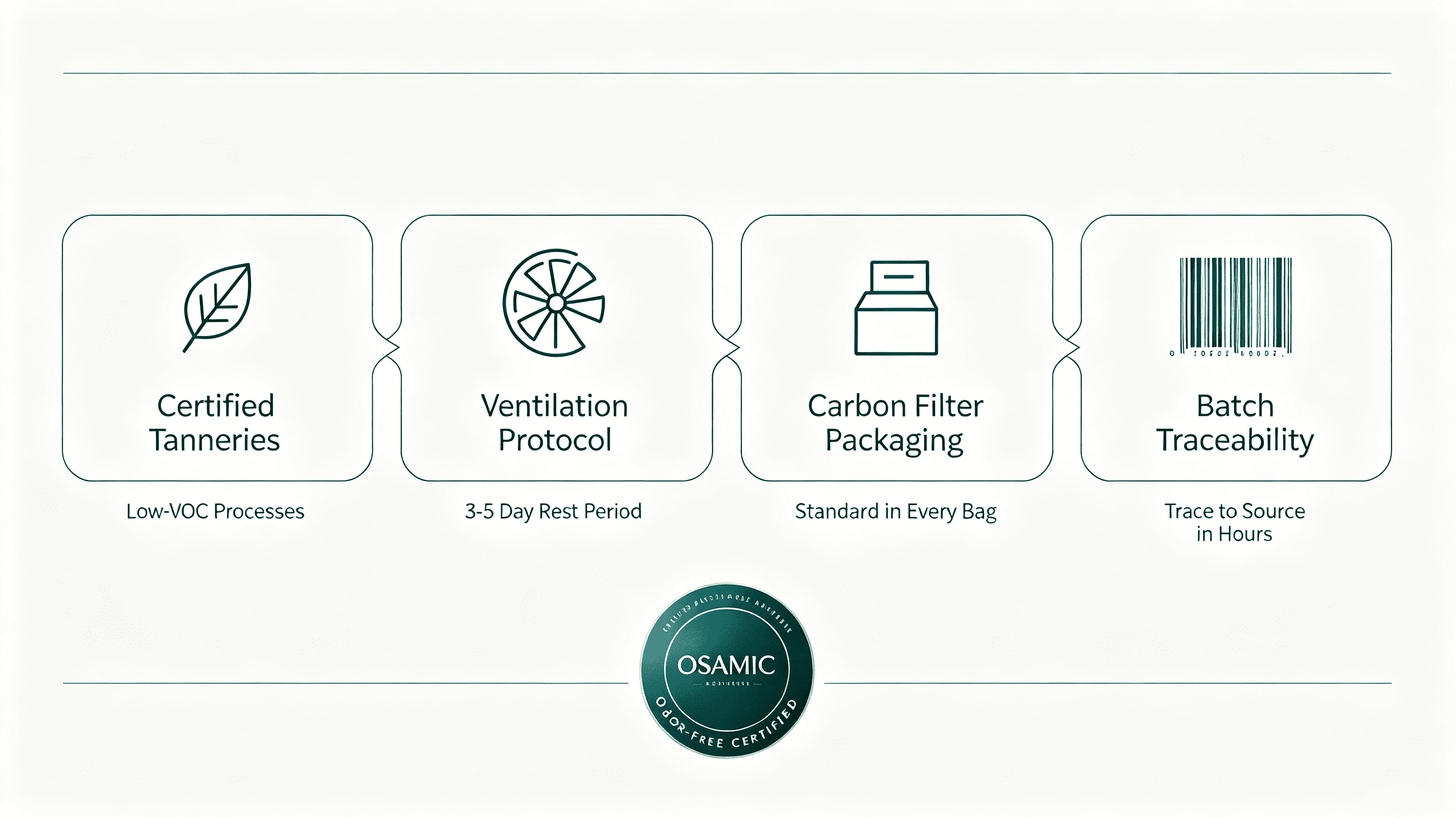
At OSAMIC, we treat odor control as a measurable quality parameter, not an afterthought.
- Certified Leather Partners: We source only from tanneries using eco-friendly, low-VOC processes.
- Built-In Ventilation Protocol: Every batch undergoes a mandatory 3-5 day resting period in our climate-controlled curing room.
- Carbon Filter Packaging: Each OSAMIC-produced bag ships with an activated carbon sachet as standard.
- Batch Traceability: Every production run is logged by leather lot, adhesive batch, and production date. Odor issues can be traced to source within hours.
Your Next Step: Eliminate Odor as a Complaint Driver
You don't need to become a leather chemist. But you do need a supply chain partner who understands the chemistry of smell.Start with this quick audit of your current process:
- Do you know the tanning method used for your leather? (Chrome vs. vegetable?)
- Is there a ventilation period between production and packaging?
- Do your bags include any odor-absorbing material in the packaging?
If any answer is "no" or "I'm not sure," there is room for improvement.Contact OSAMIC for a complimentary Odor Risk Assessment. We'll review your current material specifications, production flow, and packaging process, and recommend targeted improvements to eliminate odor complaints from your customer feedback loop.