Why China’s Supply Chain Remains Irreplaceable: Beyond the Labor Cost Myth
In the current global trade environment, the "China Plus One" strategy has become a central theme for procurement officers worldwide. As low-end manufacturing for garments and bags migrates to Southeast Asia, a critical question arises: Can these emerging hubs truly replace the "World’s Factory"?
The short answer is: In a globalized economy, nothing is strictly "irreplaceable," but the real focus should be on the cost of substitution. When you factor in time, infrastructure, and management stability, China remains the most economically efficient choice for most businesses.
1. The Agility Gap: High Volume vs. High Flexibility
It is undeniable that massive, repetitive orders for basic styles have shifted to regions with lower labor costs. However, for startups and growth-stage brands, China is the ultimate incubator.
Low MOQs & Customization: Unlike Southeast Asian giants that prefer millions of units of a single SKU, Chinese SMEs are masters of "Flexible Manufacturing." They welcome diverse styles and friendly Minimum Order Quantities (MOQs).
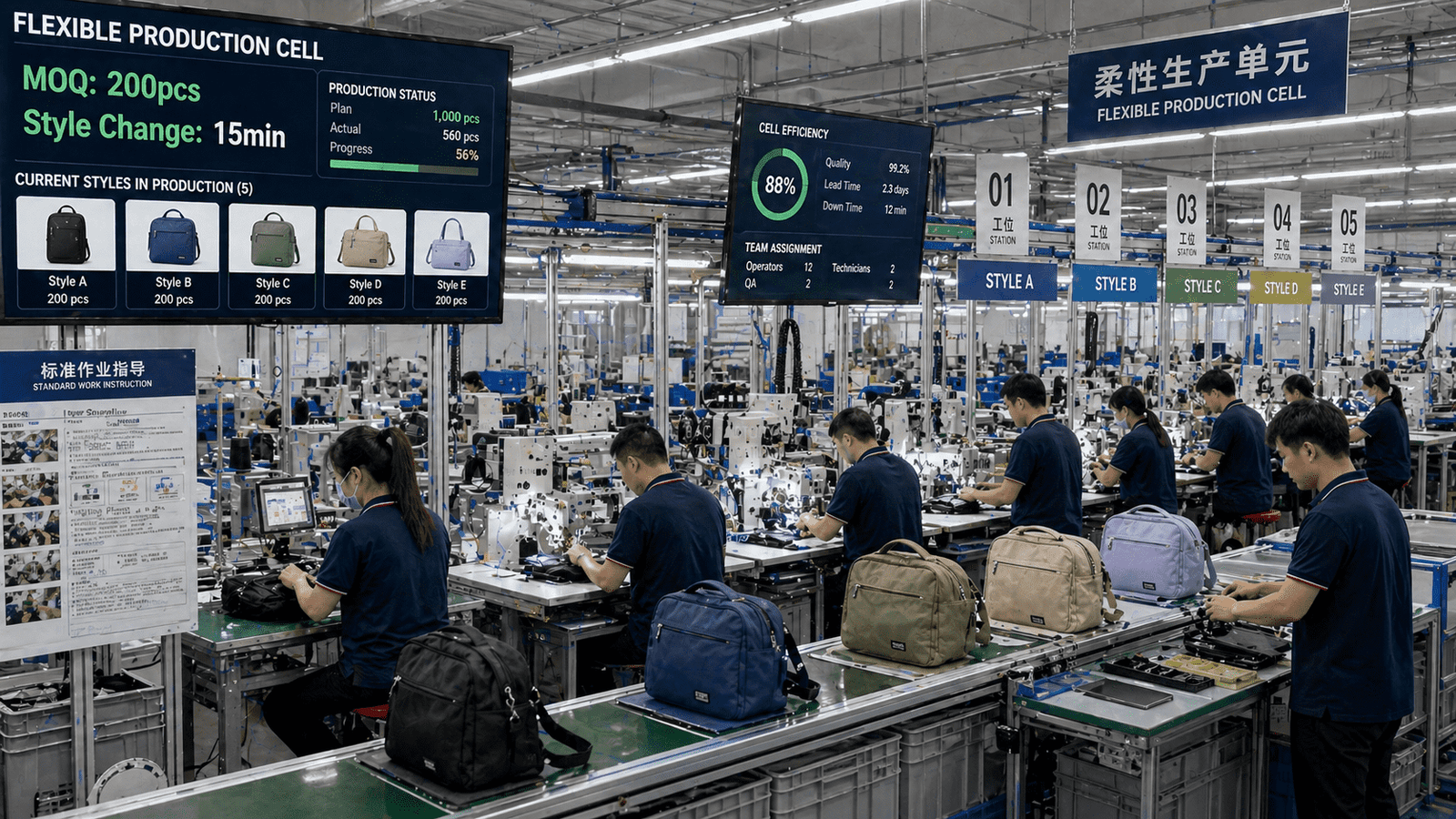
Rapid Prototyping: In China’s specialized hubs, a sketch can become a physical sample in 3-7 days. In regions lacking a local ecosystem, this process can take weeks due to material sourcing delays.
2. The Power of "1-Hour Industrial Circles"
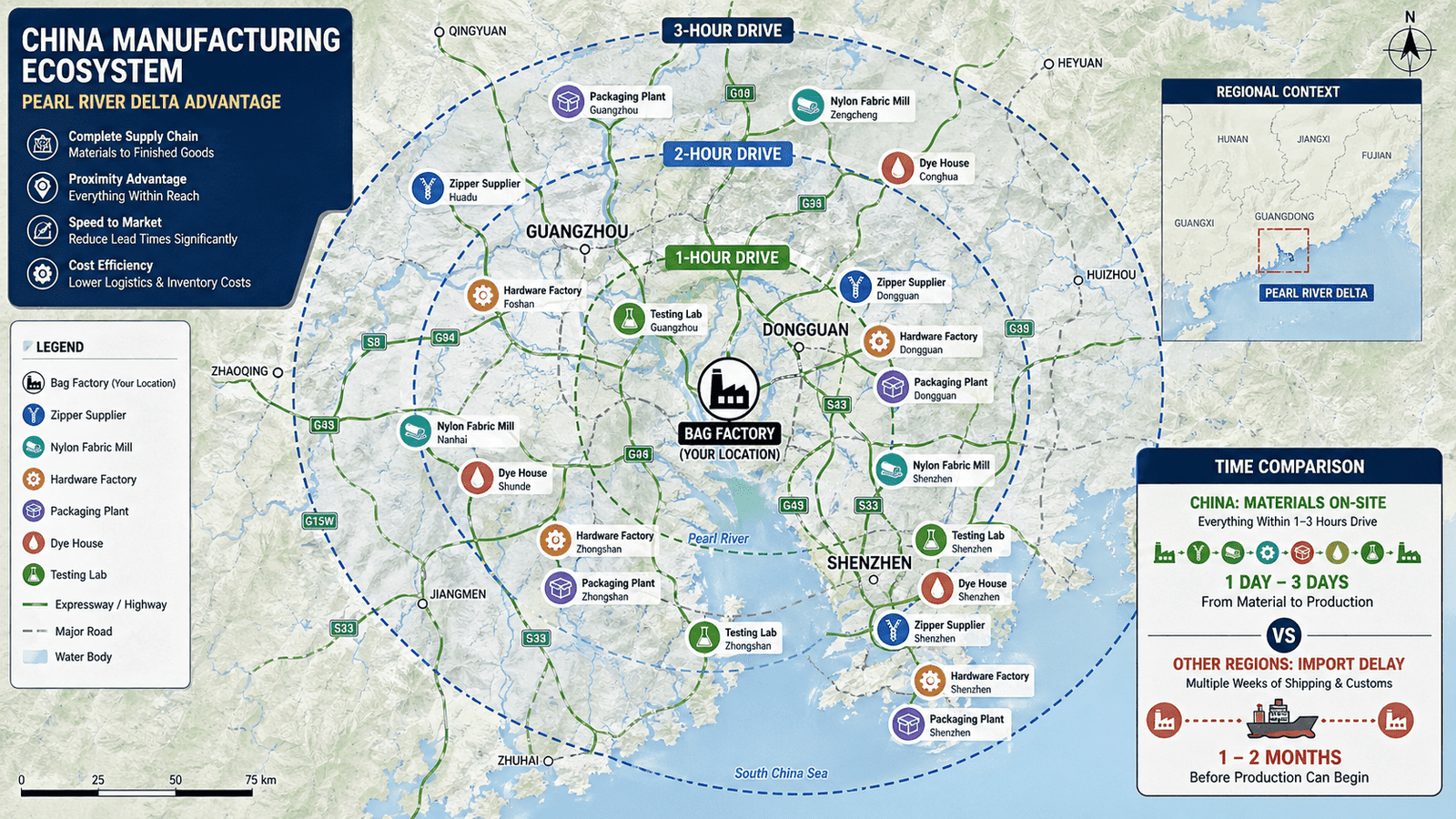
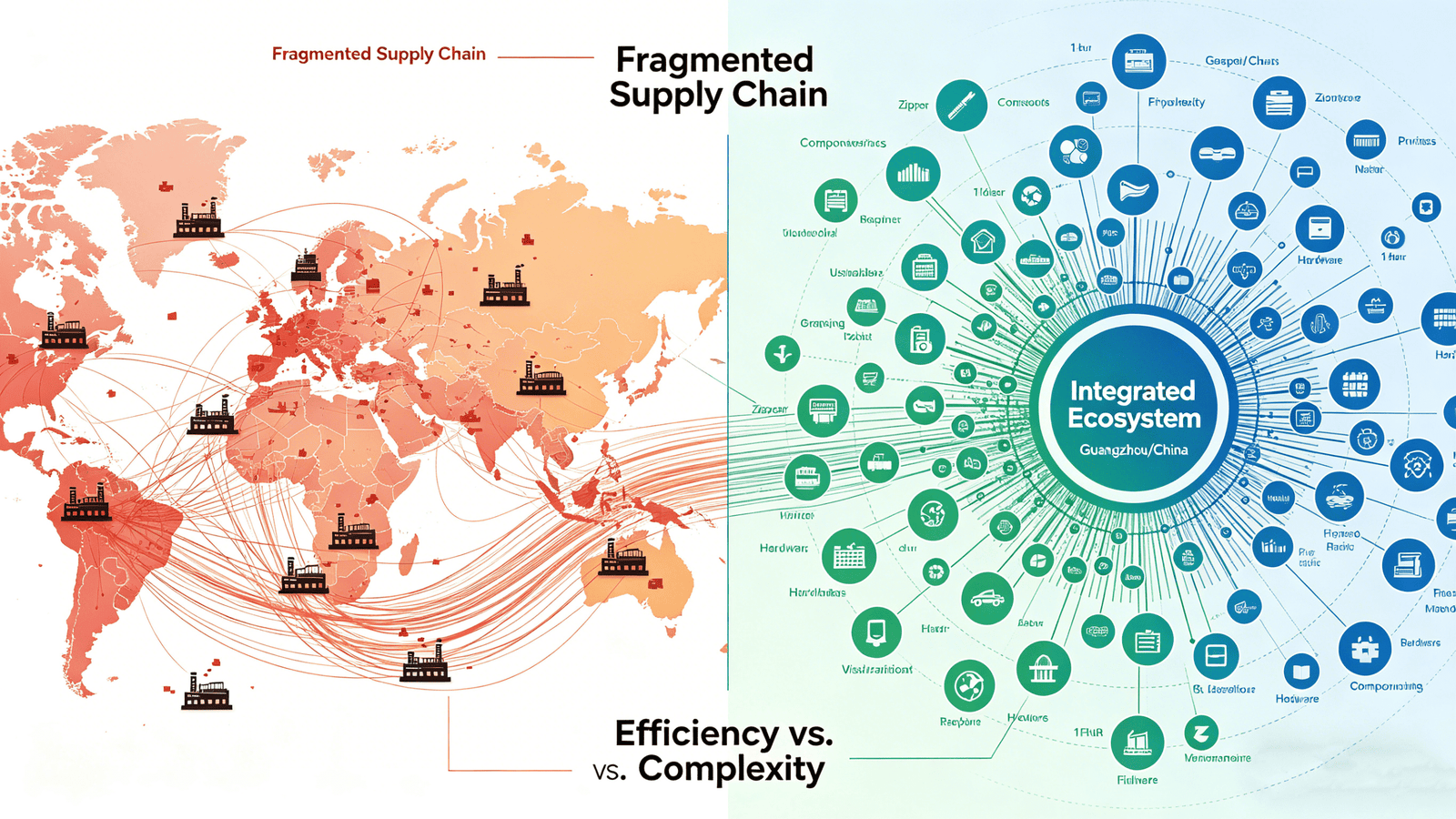
The secret to China’s resilience isn't just the factory floor; it’s the ecosystem. In a typical Chinese manufacturing hub (like Guangzhou for bags), every component—zippers, high-performance nylon, buckles, and packaging—is available within a 1-hour drive.
The "Lead Time" Reality Check:
If you place an order for 1,000 bags in Southeast Asia, the factory often must import raw materials from China first. This adds a "hidden" 1-2 months to your timeline. A project that takes 1 month from sampling to shipping in China often takes 3 months elsewhere. In the fashion industry, a 60-day delay can mean the difference between a trend and a clearance sale.
3. Management Stability: Professionalism over "Cheap Labor"
A common pitfall in relocating production is focusing solely on the "per-piece labor cost" while ignoring management friction.
Reliability & Labor Relations: Unlike some regions where frequent strikes and high turnover disrupt production, the Chinese workforce is characterized by high professional literacy and a strong work ethic. Within the framework of national labor laws, Chinese workers are highly disciplined and goal-oriented.
The BSCI Advantage: Modern Chinese factories are veterans of international social responsibility audits. We prioritize BSCI compliance, ensuring fair wages and safe environments. We achieve high output not through excessive overtime, but through process optimization and technical proficiency.
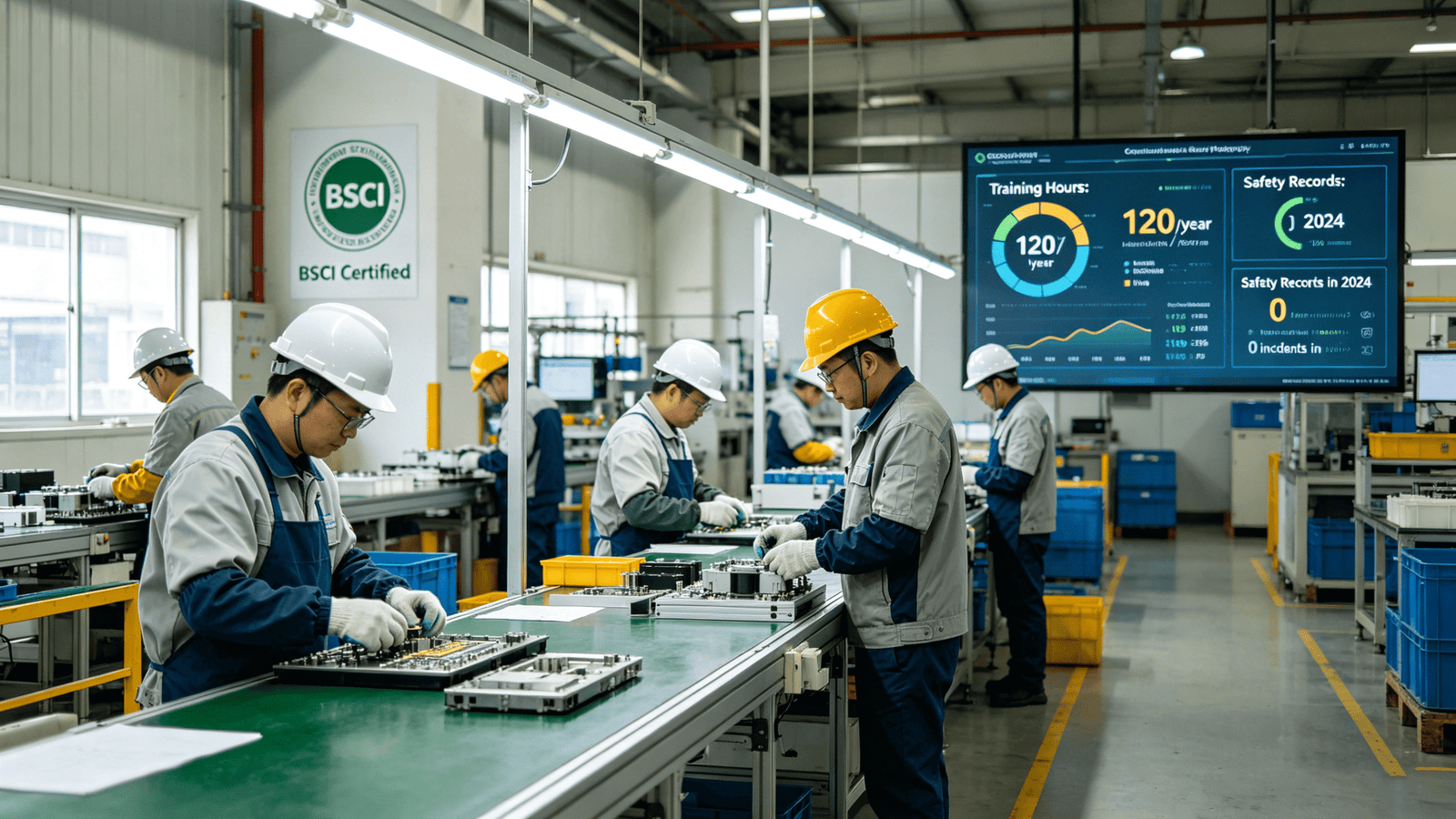
Predictability: For a buyer, "certainty" is the most valuable asset. China offers a stable regulatory and social environment where your production schedule isn't at the mercy of sudden local unrest.
4. The "One-Stop" Service Culture
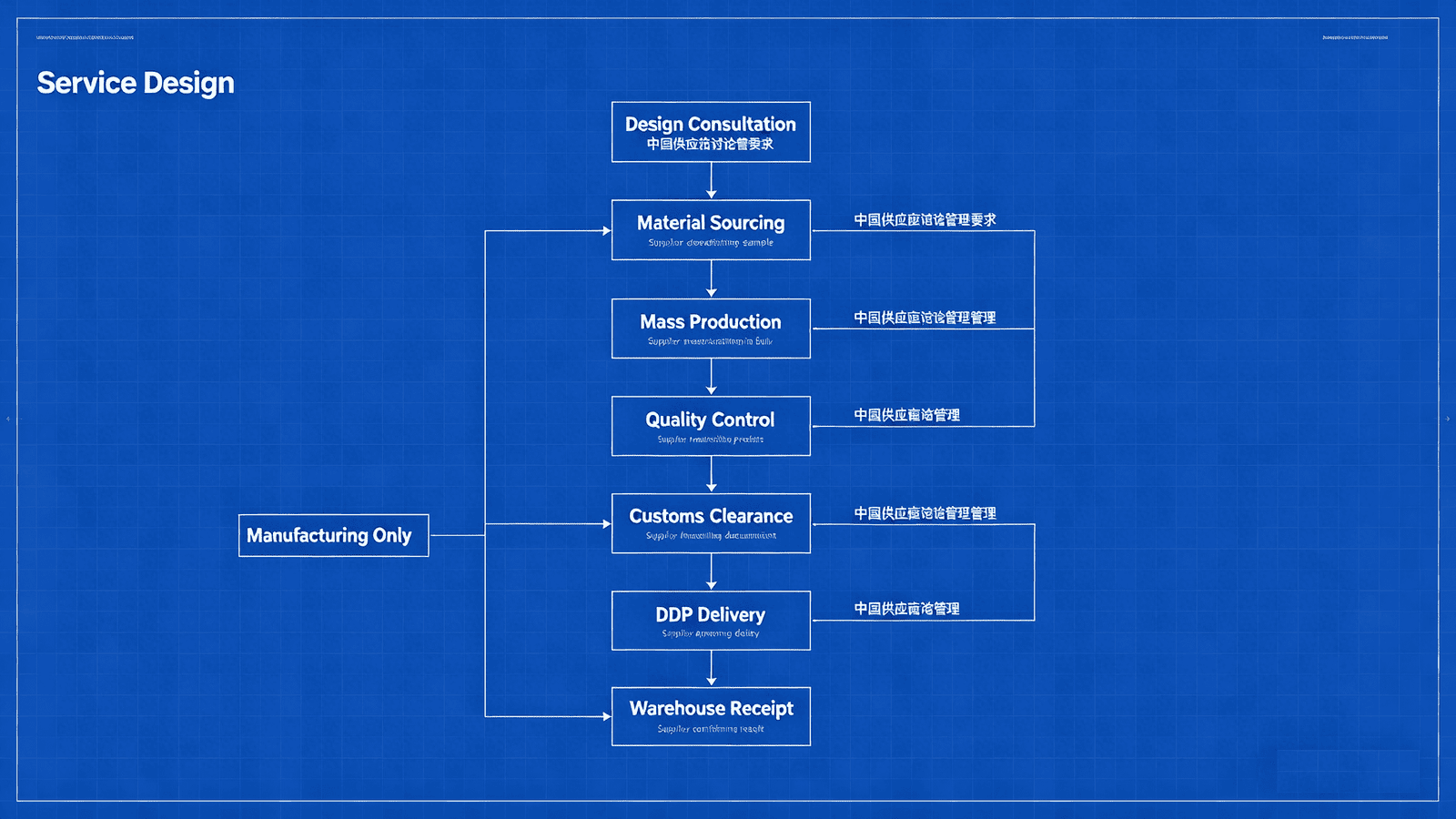
Chinese suppliers have evolved from simple manufacturers into comprehensive service providers. For many SMEs, the level of responsiveness from a Chinese partner is a game-changer:
End-to-End Logistics: Most Chinese suppliers offer DDP (Delivered Duty Paid) services. They handle everything from prototyping and mass production to customs clearance and final delivery to your warehouse.
Proactive Communication: In an era of 24/7 commerce, the "always-on" service mindset of Chinese export teams ensures that technical adjustments or logistics queries are resolved in real-time, significantly reducing the buyer’s administrative burden.
5. Technology Integration: From "Made in China" to "Smart Design"
As China invests heavily in mid-to-high-end tech, even traditional industries like bag manufacturing are being upgraded. With automated cutting, intelligent sorting, and eco-friendly material R&D (such as recycled PET fibers), China provides a level of quality consistency that manual-labor-heavy markets cannot yet match.
Conclusion: Synergy is the Best Strategy
Every region has its strengths and weaknesses. While Southeast Asia offers lower entry-level labor costs, China offers a risk-mitigated, high-speed, and fully integrated ecosystem.
The most economically sound strategy for 2026 and beyond is not "replacing" China, but leveraging its efficiency to scale your business. By combining Chinese supply chain depth with global market insights, brands can achieve the ultimate goal: getting the right product to the right market at the right time.