


New Product Series

Product Classificaiton
Meta Description: Leather has an environmental reputation problem. But sustainable options exist. Learn how small brands can source eco-friendly leather without breaking the bank.
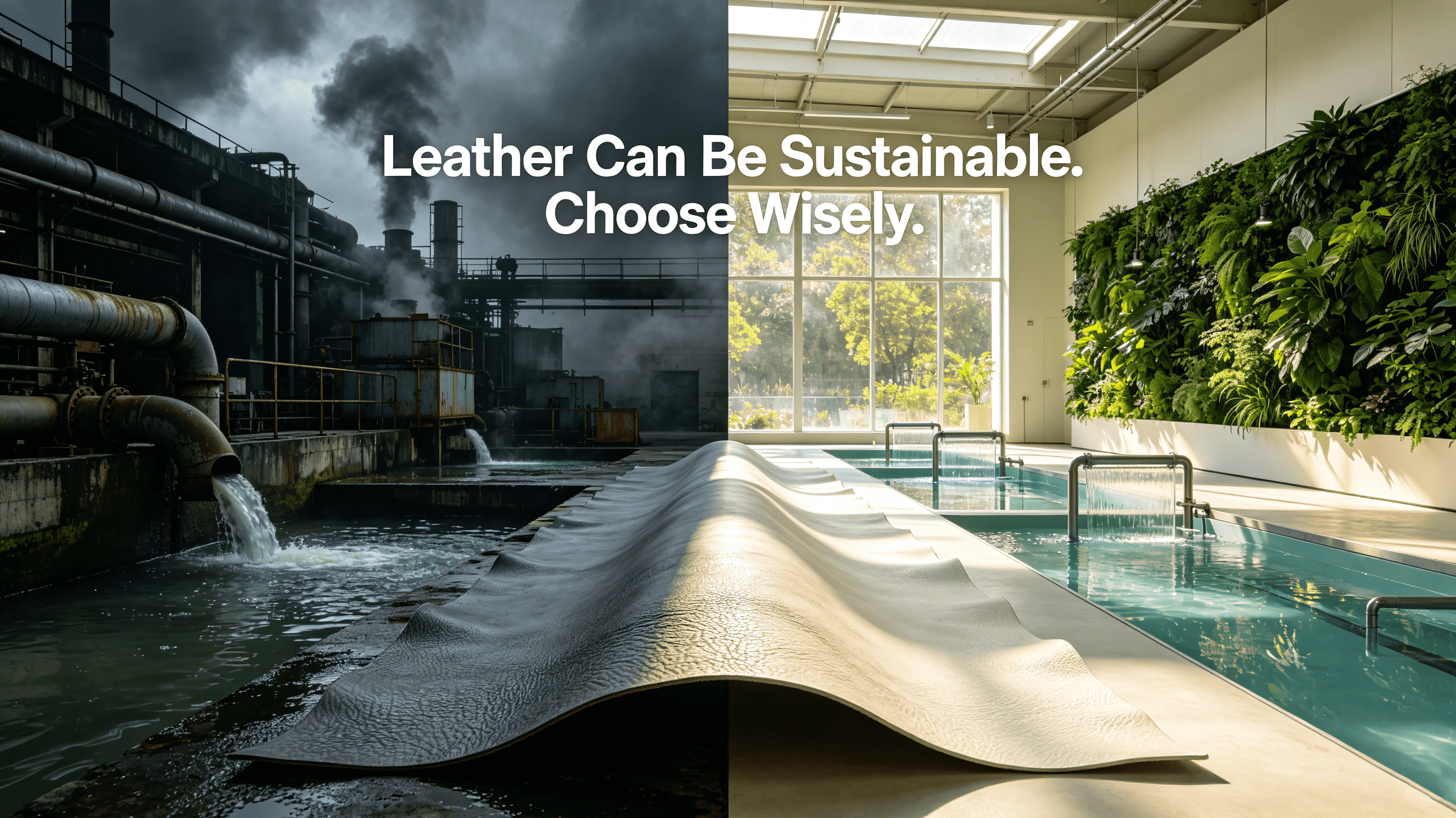
Walk into any trade show or scroll through industry forums, and you'll hear the same message: "Leather is bad for the environment. Go vegan. Go synthetic."But the reality is more nuanced. Yes, traditional leather tanning has significant environmental impacts. But modern, certified production methods have transformed what's possible. The question isn't whether leather can be sustainable. It's which leather you choose.For small and mid-size brands, the challenge is navigating this landscape without the resources of a multinational corporation. This guide cuts through the noise, explaining the real environmental trade-offs and presenting three practical, certified options that allow you to keep leather in your collection while meeting evolving sustainability standards.
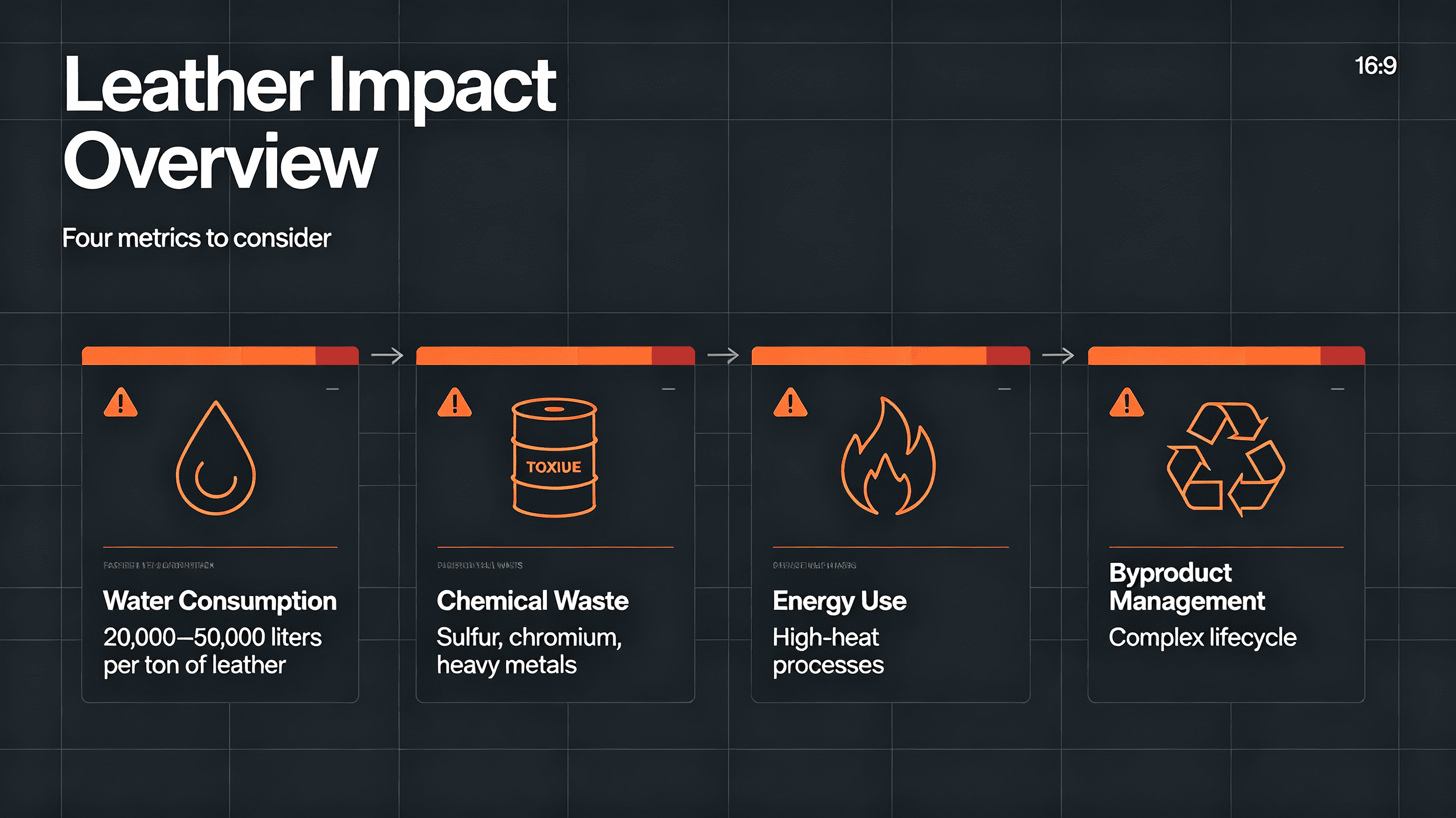
Understanding the criticism is the first step to addressing it.
| Environmental Factor | Conventional Chrome Tanning | Impact |
|---|---|---|
| Water Consumption | 20,000-50,000 liters per ton of finished leather | Massive freshwater withdrawal, especially in water-stressed regions |
| Chemical Waste | Sulfur, chromium, and heavy metals in effluent | If untreated, contaminates groundwater and soil |
| Energy Use | High-heat processes for drying and finishing | Significant carbon footprint |
| Byproduct Management | Hides are a byproduct of the meat industry, but tanning adds environmental cost | Complex lifecycle assessment |
Many consumers—and unfortunately many buyers—assume that all leather production follows the worst-case scenario. They don't realize that:
European and North American retailers are increasingly requiring sustainability documentation from their suppliers. For small brands, this creates a dilemma:
The solution is not to abandon leather. It's to source smarter.
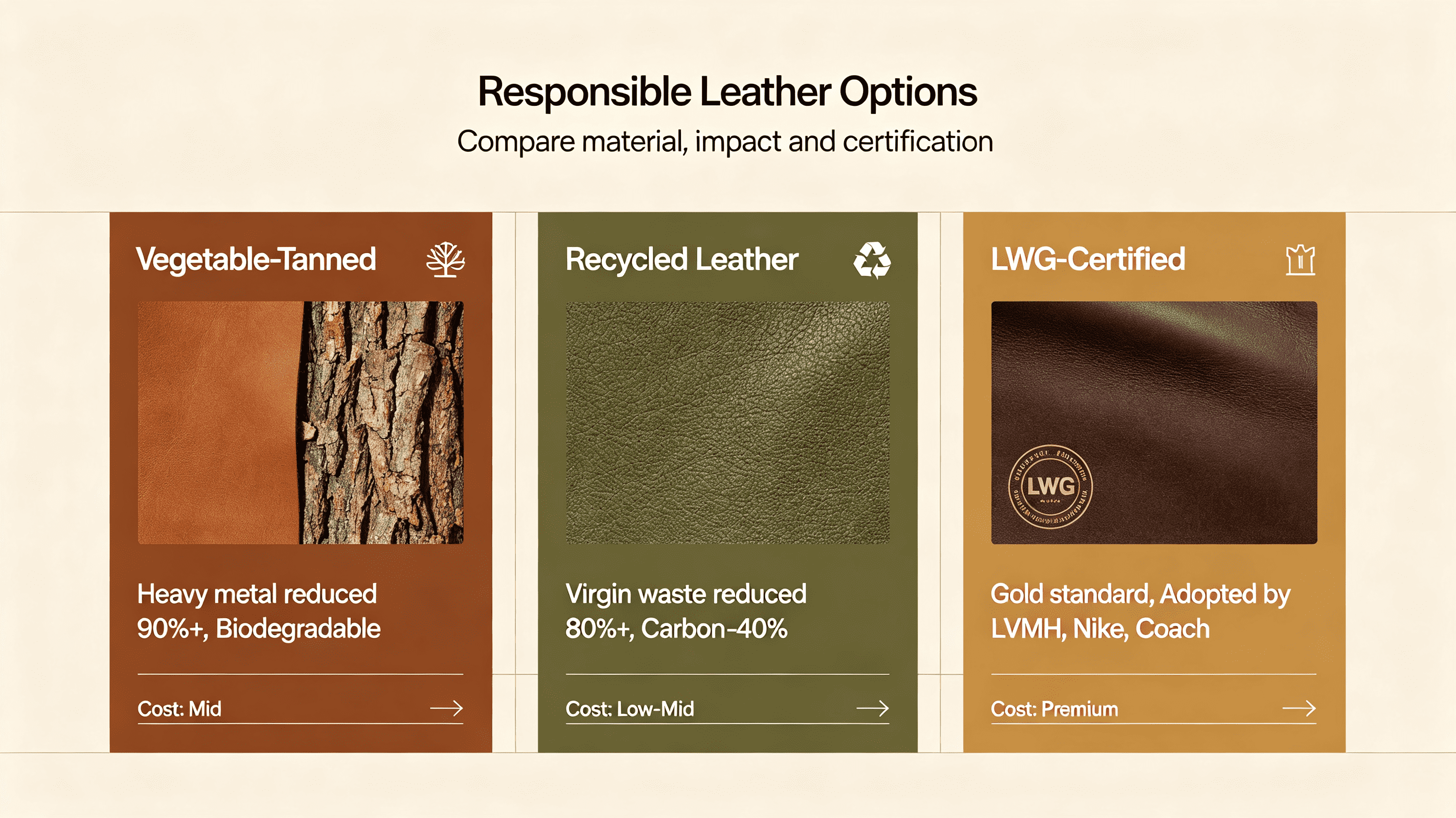
| Aspect | Details |
|---|---|
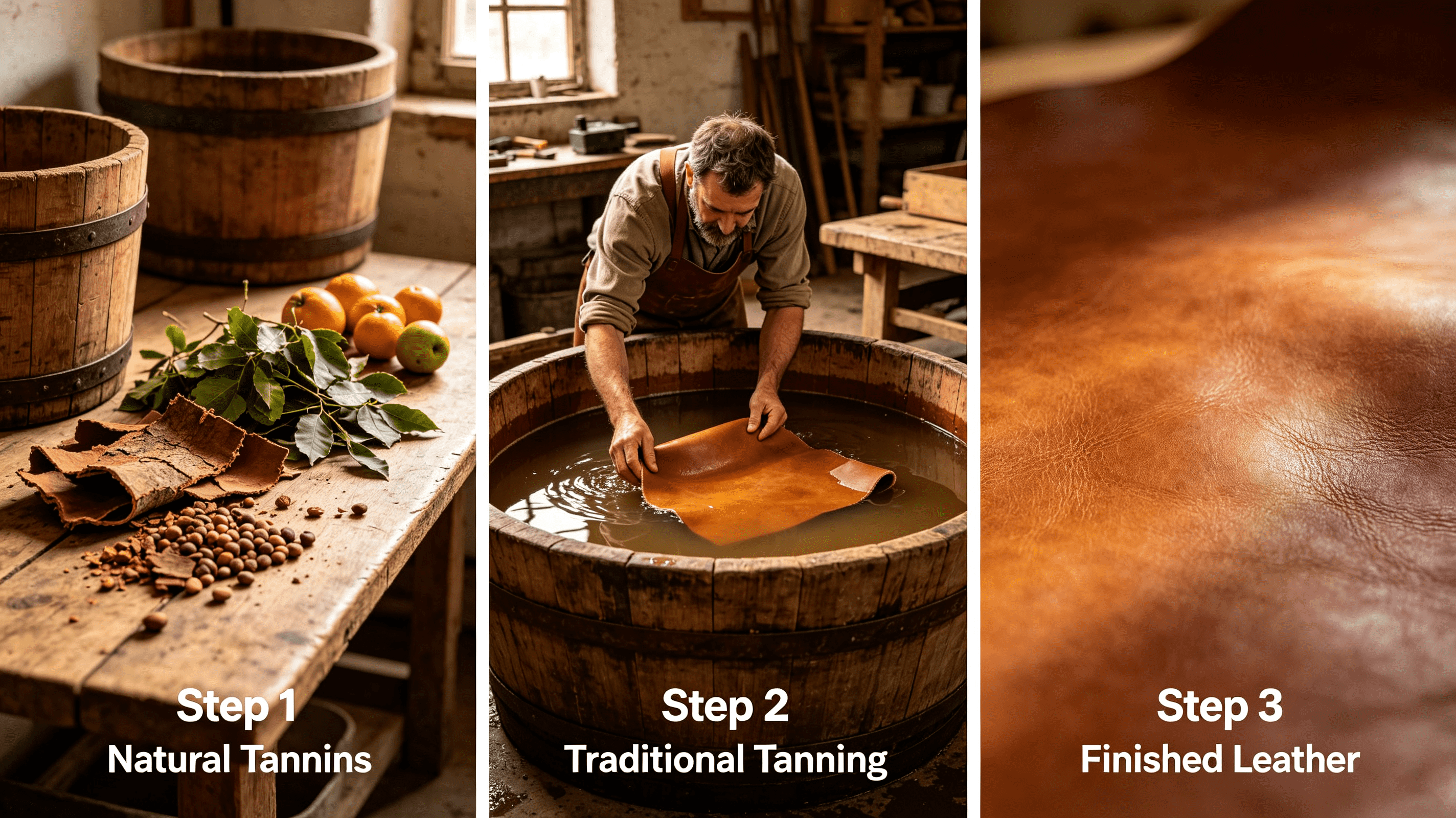
| How It Works | Uses natural tannins from tree bark, leaves, and fruit extracts instead of chromium salts. A traditional method refined with modern process control. |
| Environmental Benefit | Heavy metal usage reduced by 90%+. Fully biodegradable at end of life. |
| Best Application | Vintage-style bags, natural-color designs, artisan collections. The leather develops a beautiful patina over time. |
| Cost Premium | 15-30% above standard chrome-tanned leather. |
| Small Brand Tip | Order small batches directly from specialty tanneries. Avoid minimum order quantities designed for mass production. |
Marketing Angle: "Tanned with tree bark, not toxic chemicals. Naturally biodegradable."
| Aspect | Details |
|---|---|
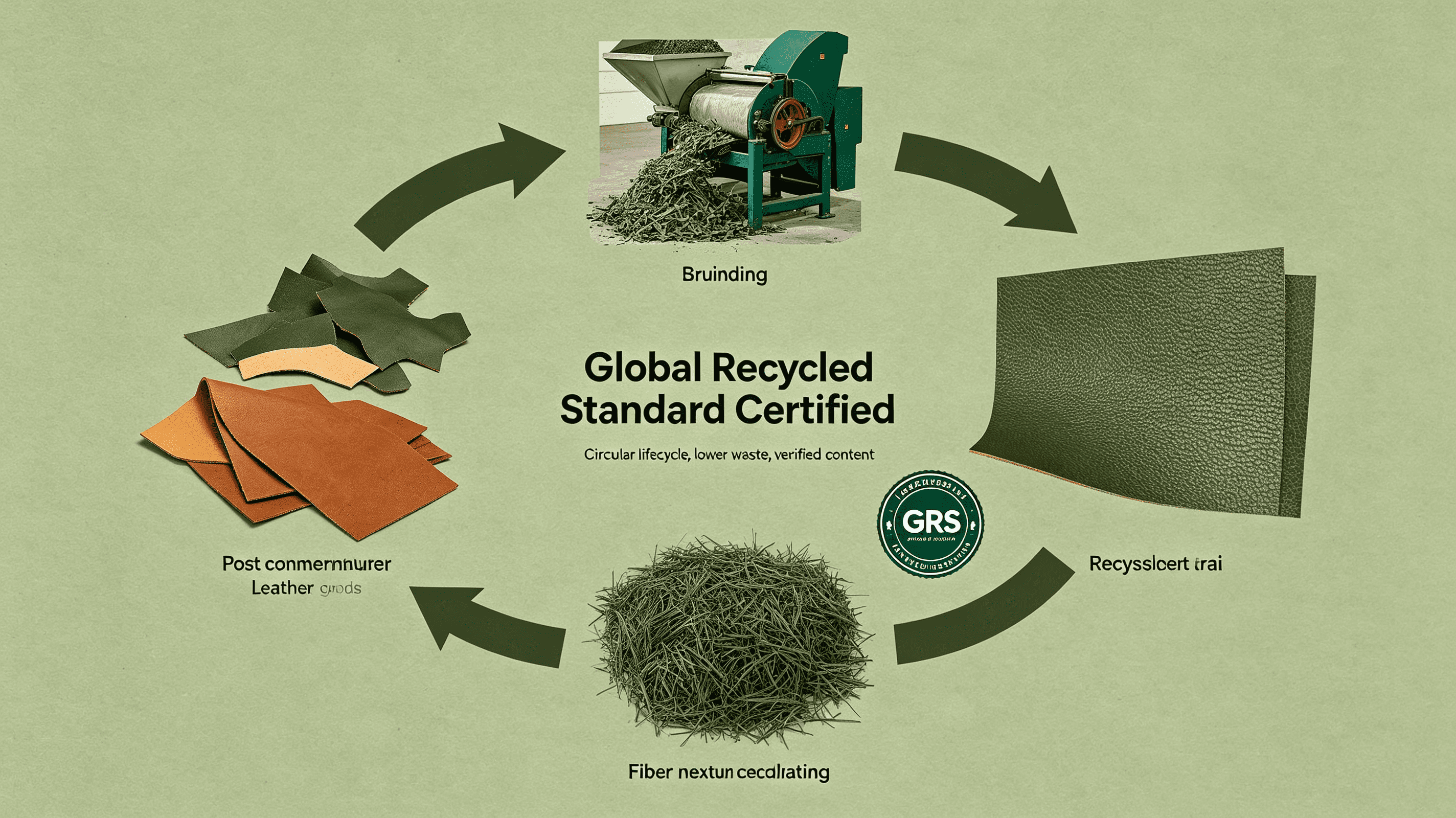
| How It Works | Made from leather cutting scraps and post-consumer leather goods, ground and reconstituted with binders. |
| Environmental Benefit | Reduces virgin hide waste by 80%+. Carbon footprint 40% lower than conventional leather. |
| Required Certification | Global Recycled Standard (GRS) — verifies recycled content and supply chain traceability. |
| Best Application | Everyday backpacks, affordable accessories, linings and accent panels. |
| Cost Position | Comparable to entry-level genuine leather. |
Compliance Note: GRS certification is essential for selling to European brands that require verified recycled content. Ensure your supplier provides a valid GRS certificate with each batch.
| Aspect | Details |
|---|---|
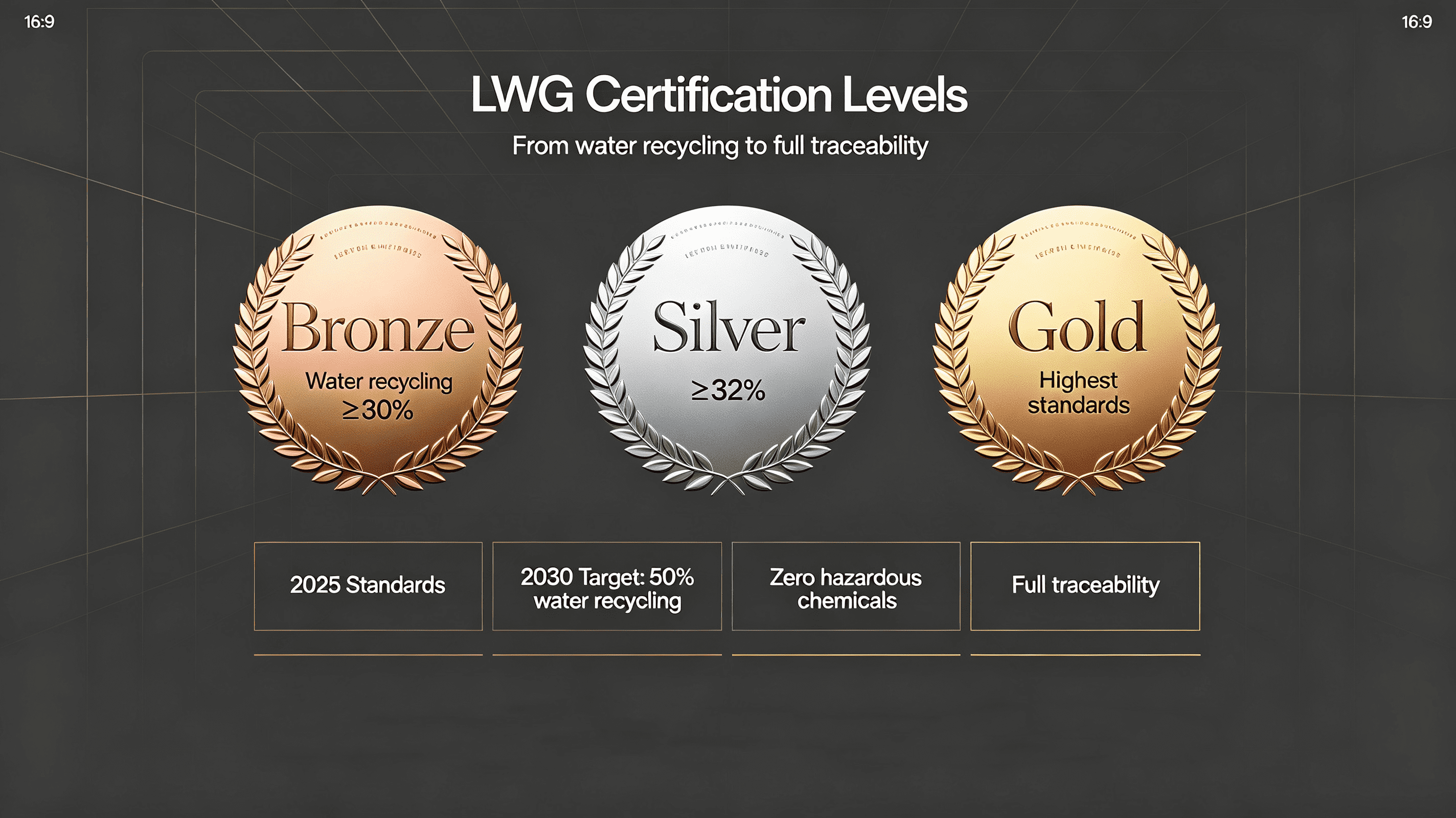
| What Is LWG? | The Leather Working Group is the global gold standard for environmental certification in leather production. Adopted by LVMH, Nike, Coach, and major automotive brands. |
| Rating Levels | Bronze, Silver, Gold — based on water recycling, energy efficiency, chemical management, and traceability. |
| Key 2025 Standards | Bronze: ≥30% water recycling. Silver/Gold: ≥32%. Target: 50% by 2030 for all certified facilities. |
| Best Application | Any bag targeting retail partners who require sustainability credentials. |
| Cost Position | Premium, but accessible through strategic sourcing. |
Small Brand Hack: You do NOT need to certify your own factory. Simply purchase leather from an LWG-certified tannery, and you can reference their certification in your marketing and compliance documentation. This gives you instant credibility without the six-figure certification investment.
China's leather industry clusters in Zhejiang and Guangdong provinces now host multiple LWG-certified tanneries. Key advantages:
Small batch support: Many accept orders as low as 50-100 square feet
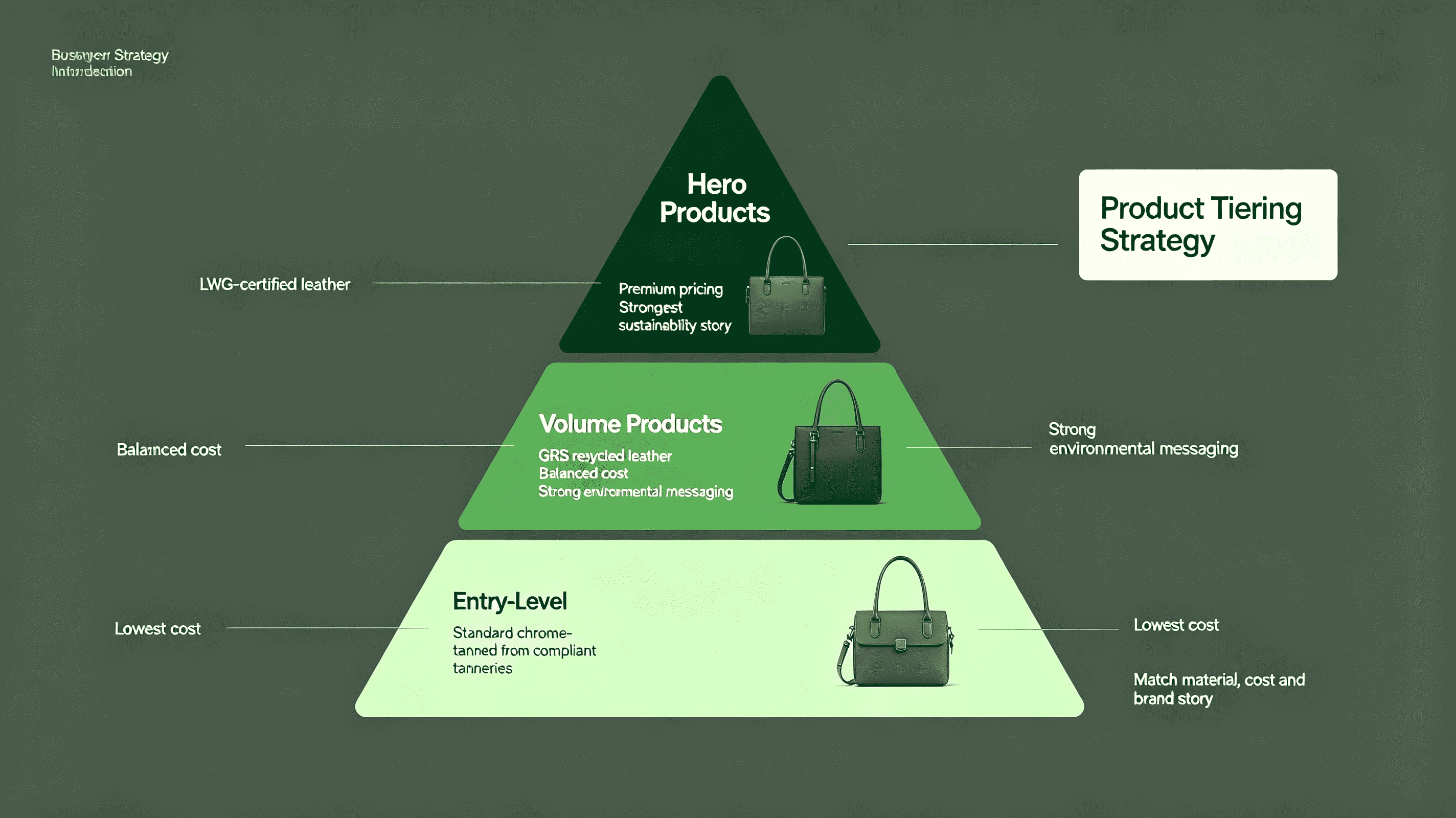
Don't put all your eggs in one basket. Use a portfolio approach:
| Product Tier | Recommended Material | Cost Strategy |
|---|---|---|
| Hero / Flagship Products | LWG-certified leather (Silver or Gold rated) | Higher material cost, justified by premium pricing and sustainability story |
| Volume / Core Products | Recycled (GRS-certified) leather | Balanced cost with strong environmental messaging |
| Entry-Level / Promotional | Standard chrome-tanned (from compliant tanneries) | Lowest cost, acceptable for non-sustainability-focused SKUs |
Once you have certified materials, leverage them effectively:
What to say: "Our leather is sourced from an LWG Silver-rated tannery. Here's their latest audit report showing 35% water recycling and zero hazardous chemical discharge."What NOT to say: "Our leather is eco-friendly." (Too vague. Buyers want specifics.)
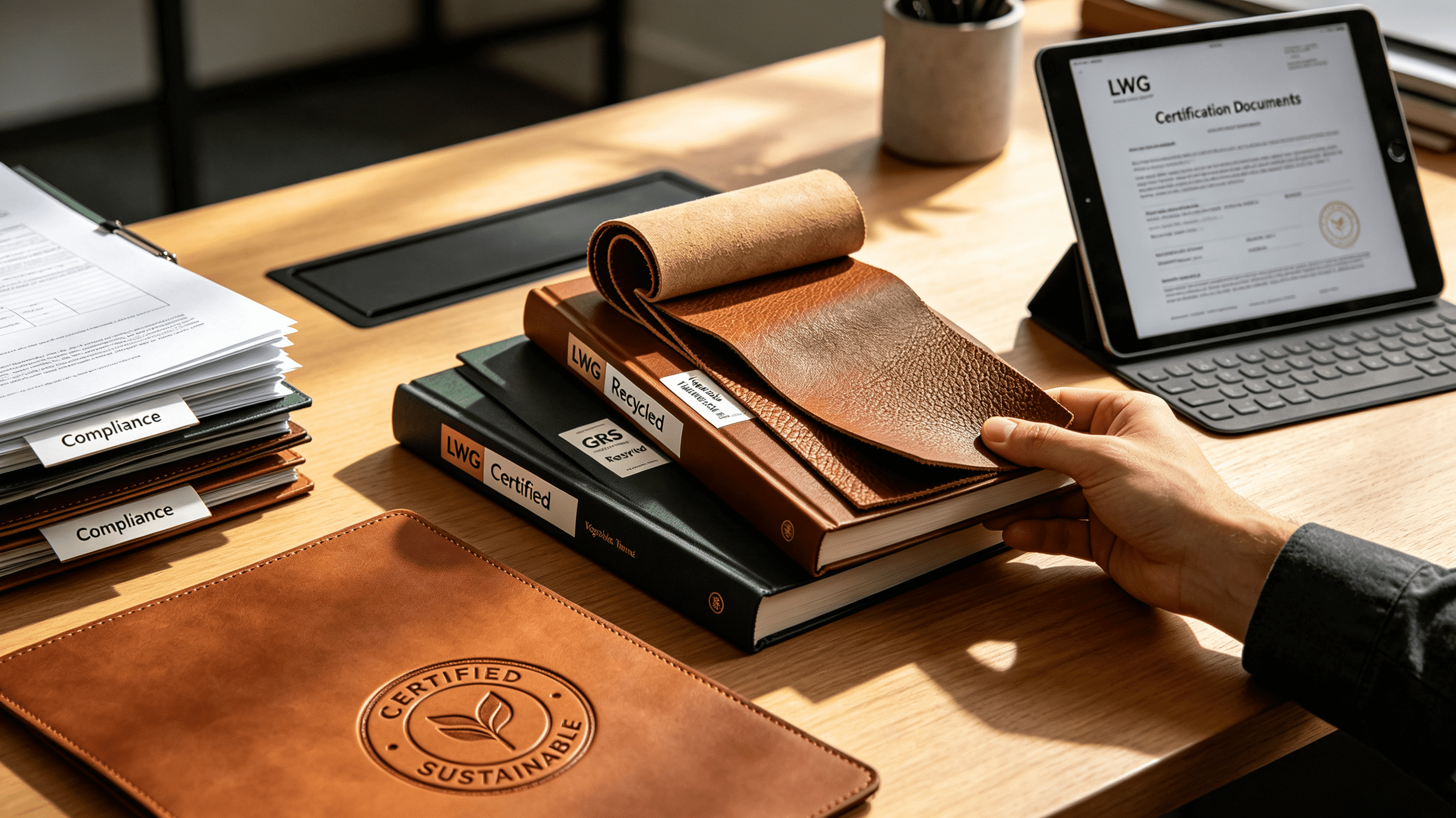
At OSAMIC, we have built relationships with a curated network of certified tanneries so you don't have to.
| Service | What We Provide |
|---|---|
| LWG-Certified Leather Library | Pre-qualified inventory from Bronze, Silver, and Gold-rated tanneries. Available for small-batch cutting. |
| GRS Recycled Leather Stock | Verified recycled content with full traceability documentation. |
| Vegetable-Tanned Specialty | Direct partnership with artisanal Italian and Chinese vegetable tanneries. |
| Documentation Package | Every order includes certification copies, test reports, and compliance statements ready for your buyers. |
| Hybrid Sourcing Advice | We help you design a tiered material strategy that optimizes cost and sustainability impact. |
The leather sustainability debate is not going away. But for small brands, it represents an opportunity to differentiate.Quick Self-Assessment:
If you answered "yes" to any of these, it's time to upgrade your sourcing strategy.Contact OSAMIC for a complimentary Sustainable Leather Consultation. We'll review your current material mix, budget constraints, and target market requirements, and recommend a certified leather sourcing plan that fits your brand size and ambitions.