


New Product Series
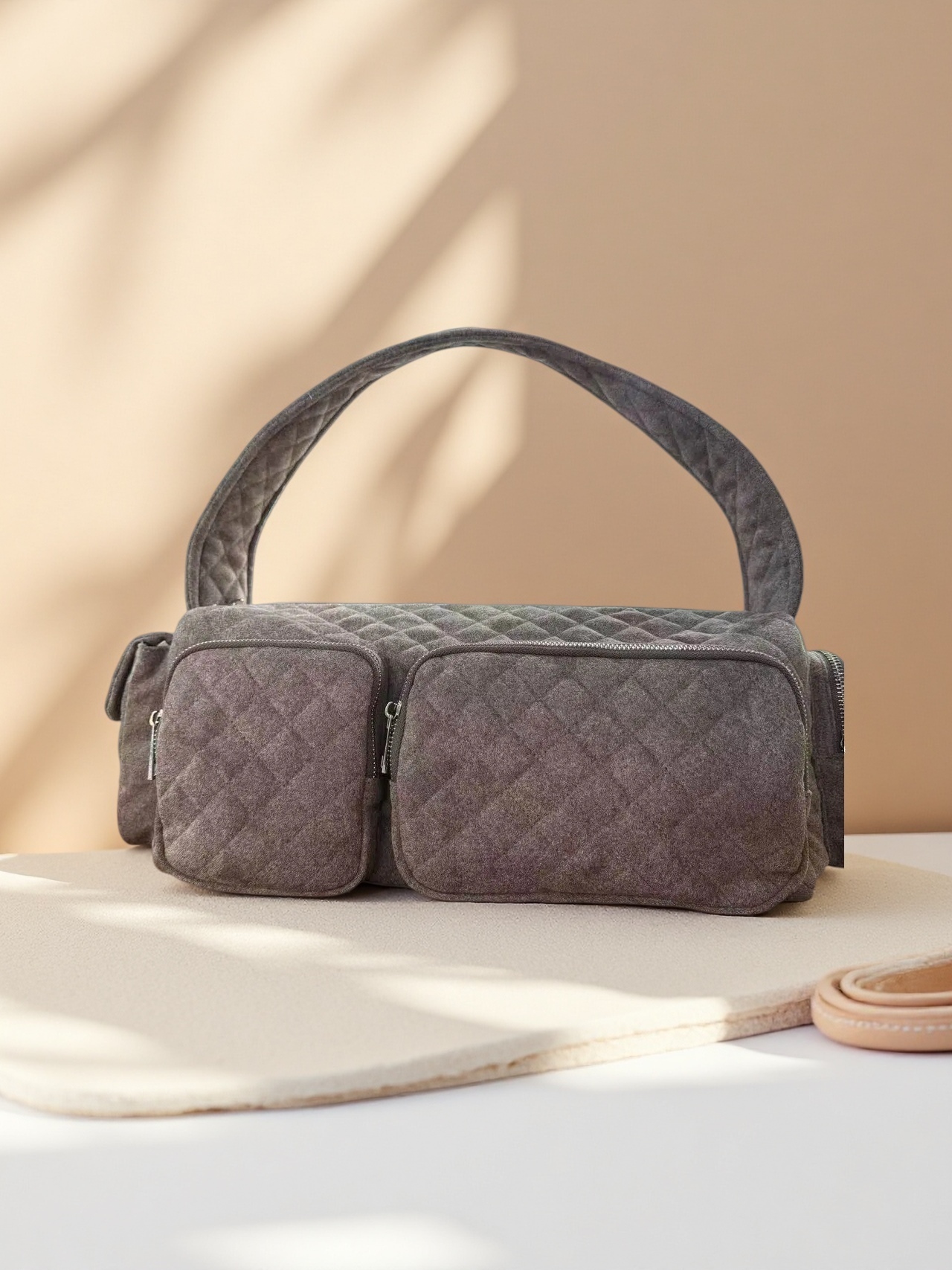
Product Classificaiton
Meta Description: Can a $50 bag really be genuine leather? Probably not. Learn how small brands identify real leather, avoid bonded/faux materials, and vet suppliers for quality and honesty.
You see it everywhere: a sleek leather tote priced at $49.99. The listing says "genuine leather." The photos look premium. Your customers are interested. But your instincts—and your margins—tell you something is off.Here's the uncomfortable truth: a $50 "leather" bag is almost never what it claims to be. In most cases, it is either bonded leather (recycled scraps pressed with adhesive), heavily coated split leather, or a synthetic material masquerading as the real thing. These materials look acceptable in photos but fail rapidly in real use—peeling, cracking, and delaminating within months.For a growing brand, a single batch of fake or low-grade leather can destroy your reputation. This guide provides a practical framework for vetting leather suppliers and selecting materials that deliver genuine quality at a fair price.
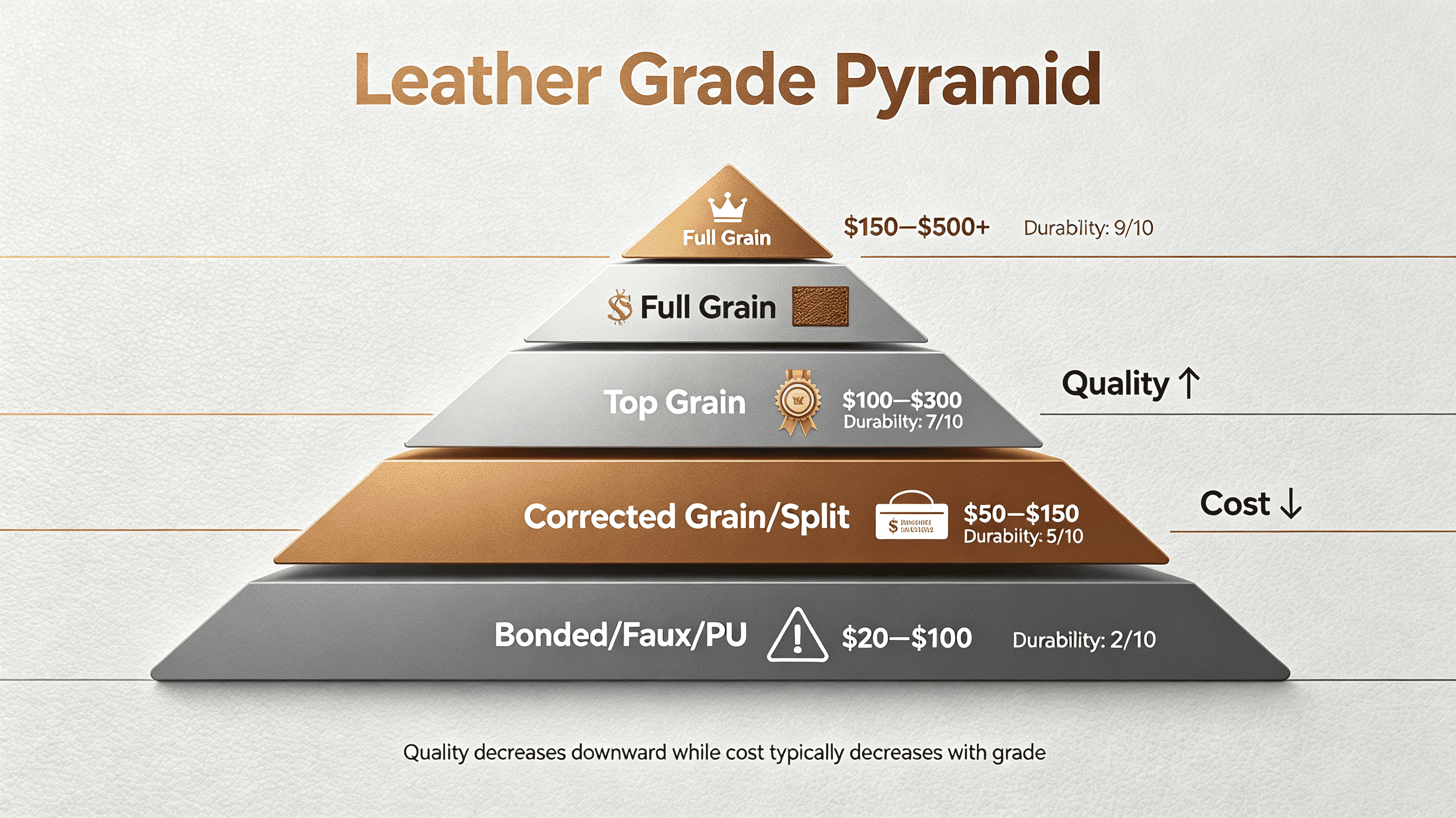
Understanding the grade system is the first defense against deception.
| Grade | Description | Typical Use | Relative Cost |
|---|---|---|---|
| Full Grain | The highest quality. The natural grain is intact, retaining the hide's strength and unique character. Develops a beautiful patina over time. | Premium luxury bags, heritage brands | $$$$ |
| Top Grain | The surface is lightly sanded to remove imperfections. Still genuine leather, slightly thinner but more uniform. | Mid-range to premium bags | $$$ |
| Corrected Grain / Split | The surface is heavily buffed and an artificial grain is embossed. Often coated with polyurethane. | Entry-level "genuine leather" products | $$ |
| Bonded Leather | Made from shredded leather scraps mixed with latex or polyurethane. Contains as little as 10-20% leather fiber. | Budget belts, cheap accessories | $ |
| Faux / PU / Vegan | 100% synthetic. No animal hide content whatsoever. | Fast fashion, vegan brands | $-$$ |
Key Insight: Many products labeled "genuine leather" technically qualify (they contain some animal hide) but are actually low-grade split or bonded leather. The label is legally accurate but practically misleading.
| Tactic | How It Works | How to Detect It |
|---|---|---|
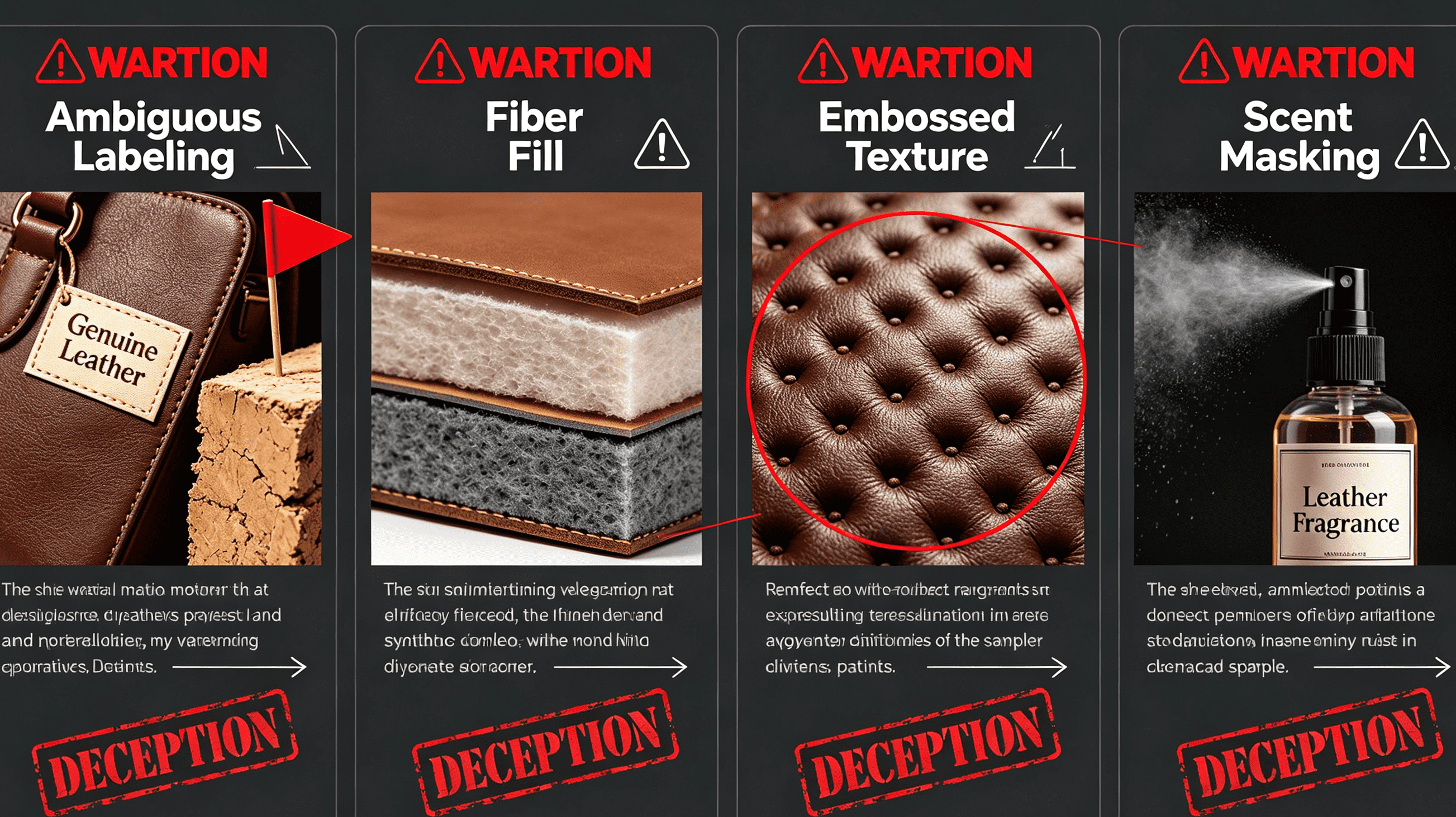
| "Genuine Leather" Ambiguity | Uses the broadest legal definition; product may be bonded or split leather. | Ask for the exact grade: full grain, top grain, or split. |
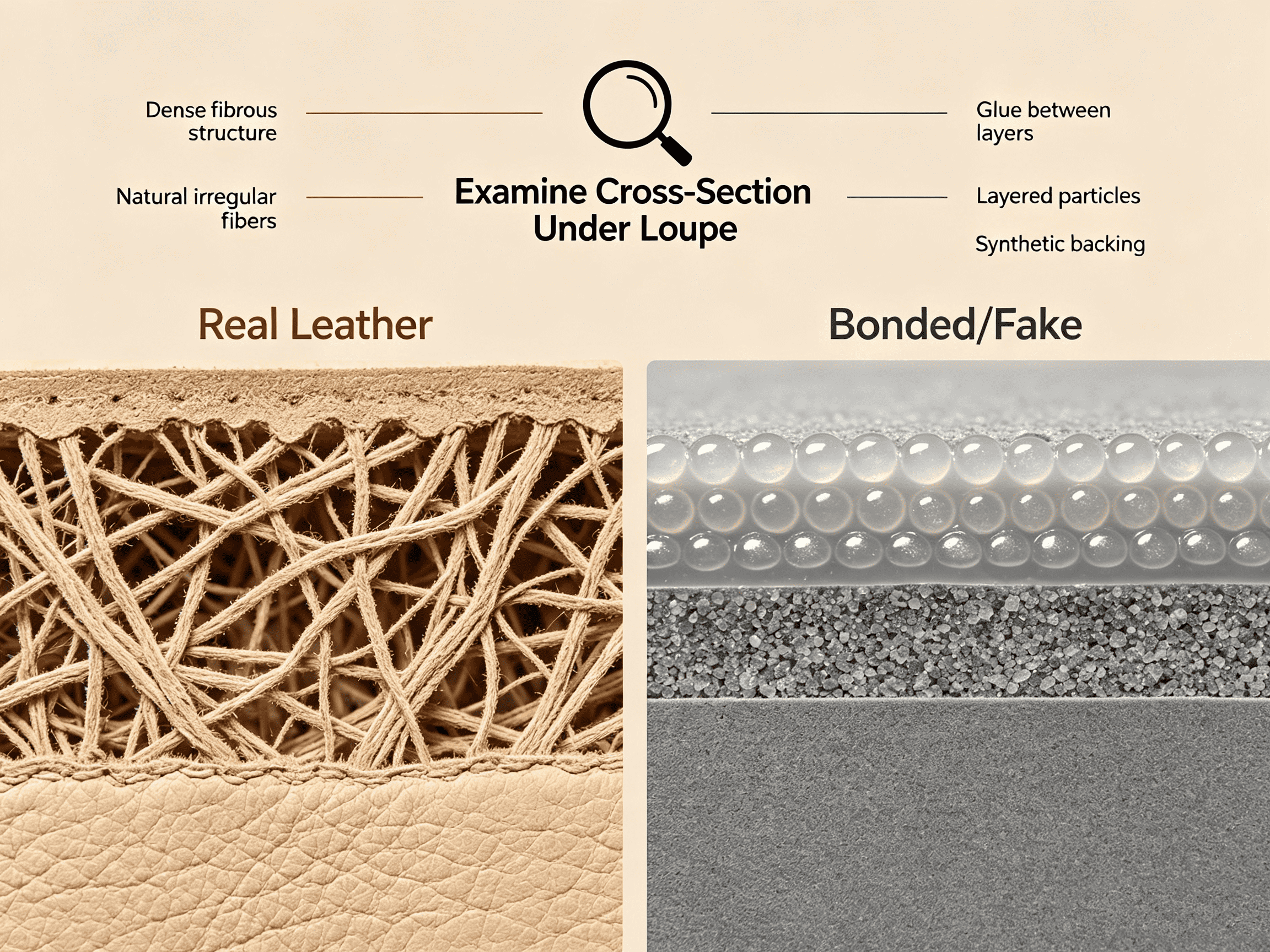
| Fiber Fill Coating | A thin layer of genuine leather is laminated over a synthetic or fibrous core. | Examine the cross-section with a loupe. Real leather has a dense, fibrous structure throughout. |
| Embossed Texture | Artificial grain is stamped onto split leather to mimic full grain. | Look for perfectly repeating patterns. Natural grain varies. |
| Weight Deception | Heavier materials are treated to feel substantial, masking poor quality. | Check flexibility and fold crease. Real leather folds softly; bonded leather cracks. |
| Scent Masking | Chemical fragrances are added to simulate the smell of leather. | The scent fades quickly. Real leather has a distinctive, persistent natural odor. |
Use this framework when evaluating potential leather suppliers.
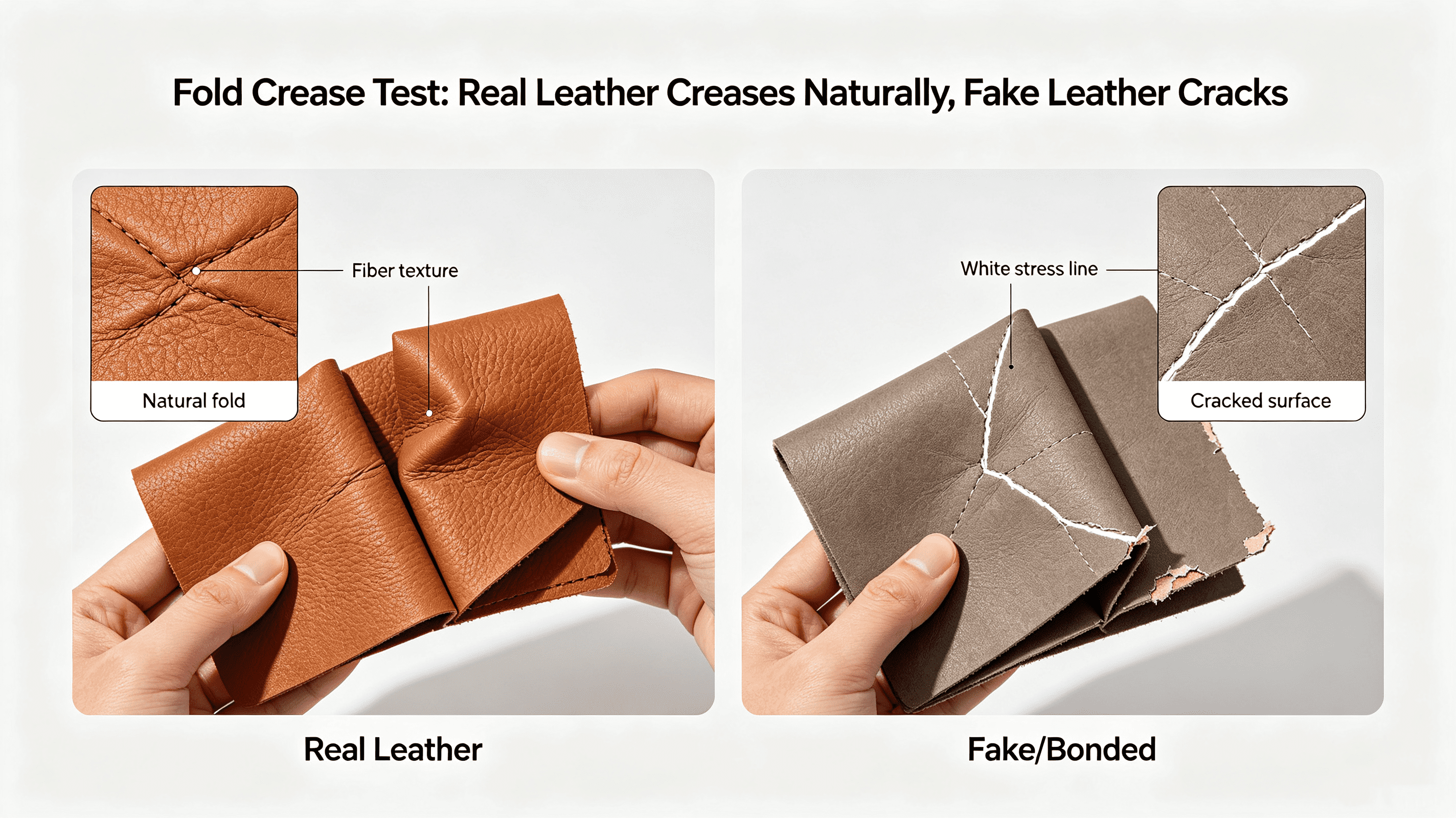
Never commit to a large order without first testing a small production run. Order 10-20 units and monitor:
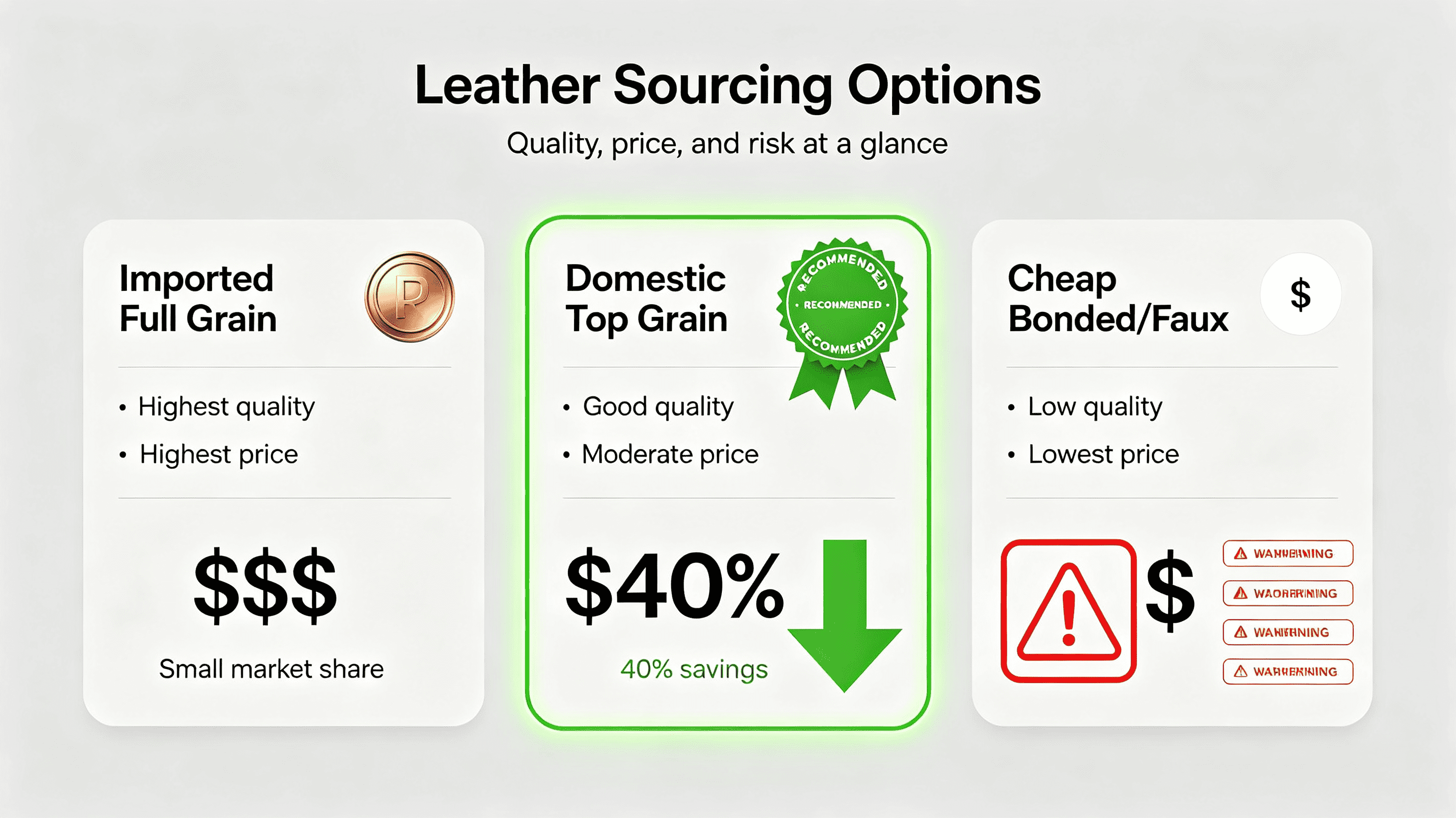
For small and mid-size brands, the optimal approach is rarely the cheapest or the most expensive option.
Chinese-produced top grain leather offers an excellent balance of quality and cost. It is genuine, durable, and consistent—typically 40% less expensive than imported full grain equivalents.Why it works for small brands:
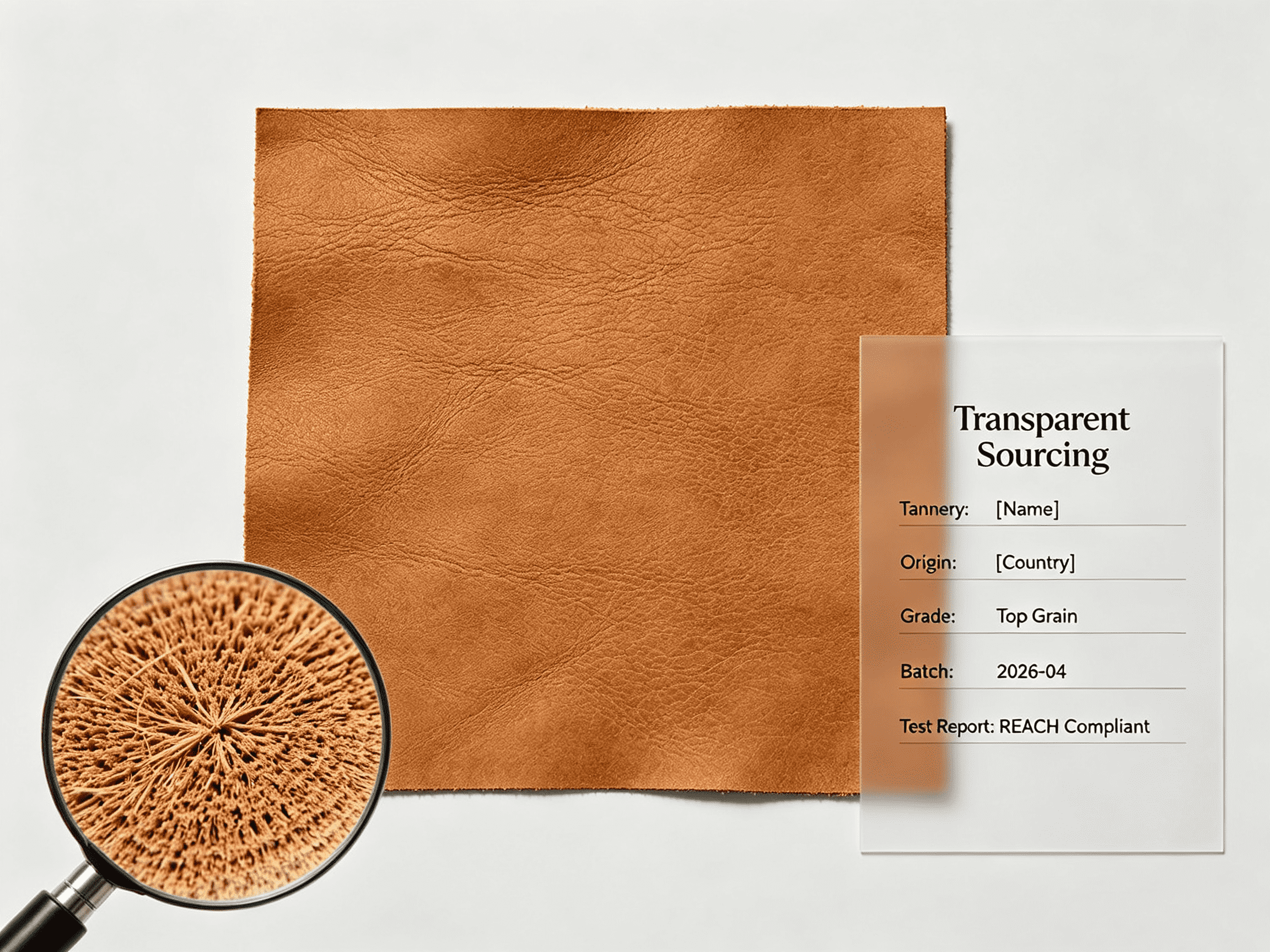
At OSAMIC, we maintain direct relationships with vetted tanneries and carry a curated inventory of certified leathers. When you partner with us:
You don't need to become a leather expert overnight. But you do need a systematic approach to supplier evaluation.Start with this simple test on your current or prospective leather:
If the answers are unclear or the tests reveal concerns, proceed with caution.Contact OSAMIC for a complimentary Leather Sourcing Consultation. We'll review your current material specifications, budget targets, and quality requirements, and recommend the optimal leather grade and supplier approach for your brand.