Customs Holding Your Shipment? The Complete Compliance Guide for EU/US Bag Imports
Meta Description: Avoid costly customs holds. OSAMIC's complete guide to REACH, CPSIA, HS codes, and documentation for smooth EU/US bag imports. Essential for brand owners.
Introduction: The $5,000 Mistake
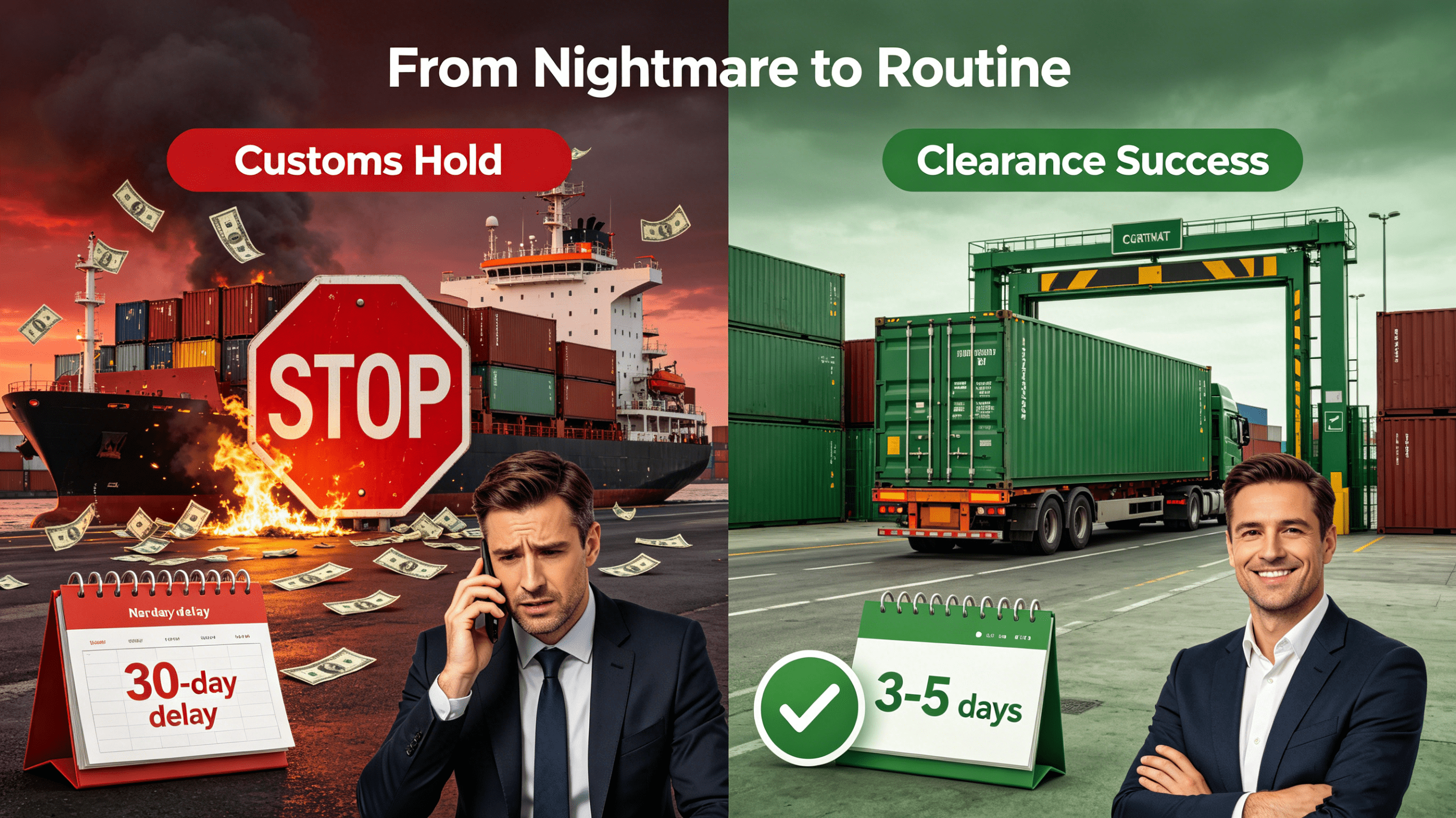
Your container just arrived at the port. You're expecting a smooth release. Instead, you get a notice: Customs Hold – Documentation Insufficient / Restricted Substance Suspected. The costs begin to accumulate immediately—demurrage fees of 100–500/day, potential testing delays of 2–4 weeks, and the devastating blow of having your goods destroyed or returned if they fail to meet local regulations. For a small brand, a single customs hold can erase an entire season's profit.The good news? Nearly every customs-related delay or seizure in the bag industry is preventable. It stems from incomplete documentation, mis-declared HS codes, or untested materials—not bad luck. This guide distills the essential compliance framework for importing bags into the EU and USA, and explains how OSAMIC builds compliance into every shipment.
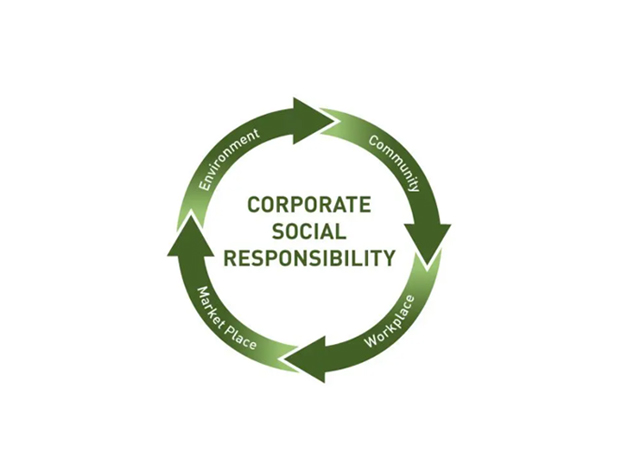
The 5-Step Compliance Loop: From Design to Clearance
Think of compliance not as a final hurdle, but as an integrated process starting at the design stage.
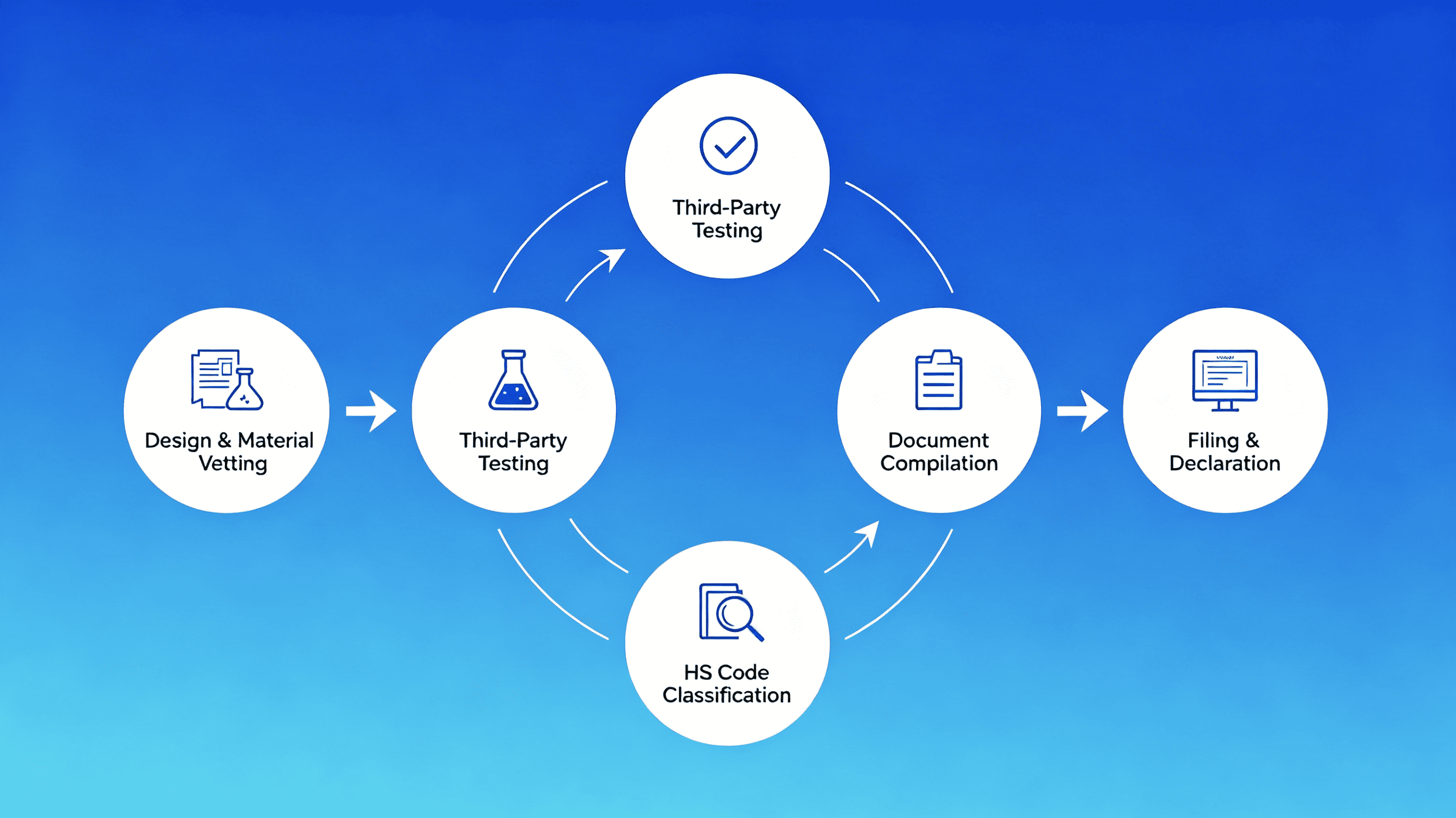
Step 1: Design-Phase Material Vetting

Compliance begins with your Bill of Materials (BOM). We proactively screen all components:
- REACH SVHC Screening: Ensure no Substances of Very High Concern (SVHC) exceed the 0.1% w/w threshold (e.g., DEHP/phthalates, UV-328, certain azo dyes, lead/cadmium in hardware).
- CPSIA Alignment (USA): For children's products (backpacks included if marketed to kids), verify lead content <100 ppm in substrate, phthalates <0.1% in accessible plastic components.
- Documentation: All materials are traceable to certificates of conformity.
Step 2: Pre-Shipment Third-Party Testing
Before bulk production completes, we recommend sending 2–3 finished samples to an accredited lab (SGS, Intertek, TÜV) for verification:
- EU Focus: REACH Annex XVII restricted substances, azo dyes, formaldehyde, PAHs (if applicable), heavy metals.
- USA Focus: CPSIA (lead, phthalates), 16 CFR 1500/1501 (small parts/flammability for children's items), CA Prop 65 (if selling to California).
- Result: A formal Test Report valid for 1 year (or per batch if materials change).
Step 3: Compile the Compliance Dossier
Every OSAMIC shipment includes a complete document package:
- Commercial Invoice & Packing List (detailing material composition per item)
- Certificate of Origin (CO)
- REACH Compliance Statement / Test Report
- CPC (Children's Product Certificate) & GCC (General Conformity Certificate) for USA
- EPR Registration Proof (e.g., German LUCID, French ADEME for packaging)
- GPSR-Compliant Label Photos (showing manufacturer, importer/EU Rep, batch No., fiber content)
- EU Representative (EC Rep) Confirmation Letter (if acting as your rep)
Step 4: Precise HS Code Classification
Incorrect HS codes are a top cause of customs delays and over/under-payment of duties. Common bag classifications:
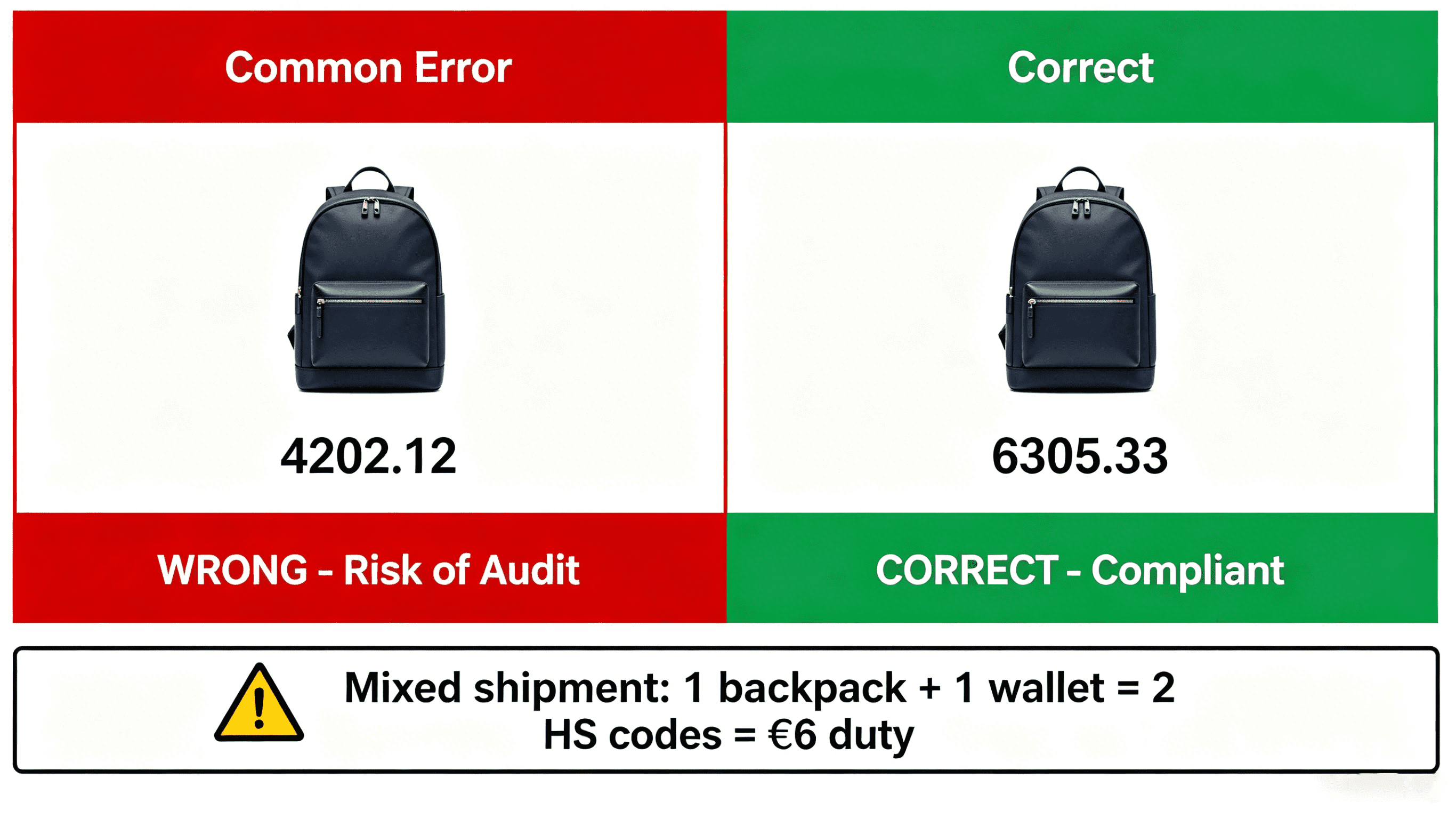
- 6305.33: Travel bags/suitcases of textile (nylon/polyester) — NOT 4202
- 4202.12: Handbags of leather/composition leather/plastic sheeting/textiles — use if primary material is leather or heavy coated textile
- 4202.92: Other bags (e.g., toiletry kits, small pouches) of textile — use if not a travel bag per 6305
- 3923.29: Trunks, suitcases, vanity cases of plastics (hard-shell luggage)
- ⚠️ Critical: Each distinct item in a mixed shipment may require its own HS code. Bundling a backpack + wallet = 2 codes = 2 x €3 fixed duty (EU <€150 from July 2026) — declare separately.
Step 5: Filing & Declaration
Essential Document Checklist (2026 Ready)
| Document | Key Content | Language | Validity |
|---|
| Commercial Invoice | FOB/CIF value, HS code, origin, parties | EN | Per shipment |
| Packing List | Per-carton SKU breakdown, dims, wt. | EN | Per shipment |
| Certificate of Origin (CO) | "Made in China", issuer seal | EN | Usually 6–12 months |
| REACH Test Report | Accredited lab, SVHC <0.1%, compliance stmt | EN | 1 yr / per batch |
| CPC + GCC | Signed by importer, references test report | EN | Per model/batch |
| EU Rep Label + Info | Name, addr, tel of EC Rep; batch#, fiber% | Local EU lang | Permanent |
| EPR Registration | Packaging reg. No. (DE/FR/etc.) | EN/Local | Annual |
| GPSR Compliance Label | Manuf., Importer/EU Rep, Country of Origin, Batch No., Fiber Content (≥80% textile) | Local EU lang | Permanent |
The Cost of Non-Compliance vs. The Value of Readiness
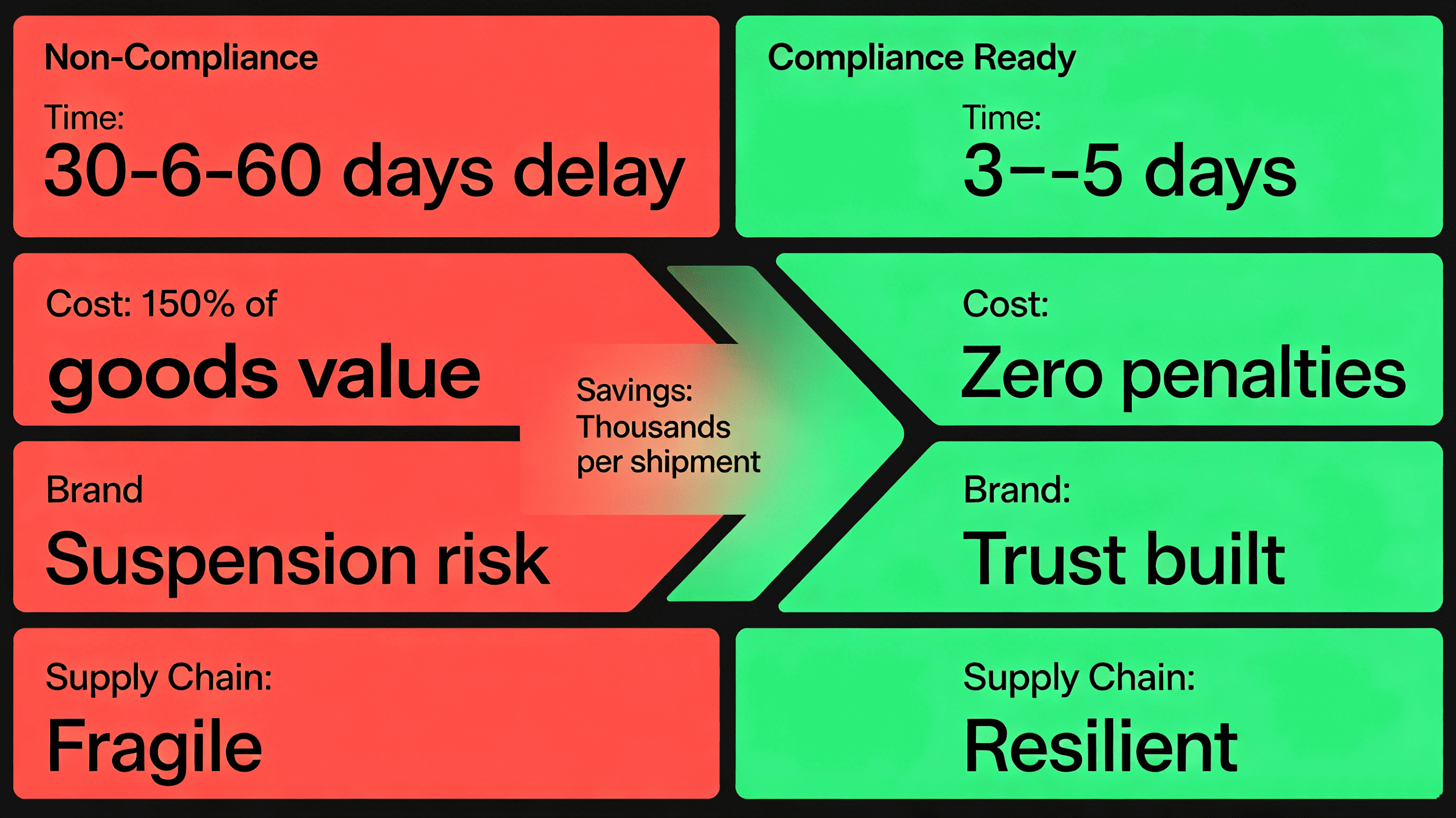
| Dimension | Non-Compliance Cost | Compliance Benefit |
|---|
| Time | Demurrage (100–500/day), delay 15–60 days | Release in 3–5 working days |
| Money | Fines, re-test fees, destruction (up to 150% of goods value) | Avoid penalties; IOSS may reduce VAT admin |
| Brand | Amazon suspension, platform blacklist, bad PR | Build trust; qualify for premium retailers |
| Supply Chain | Reactive firefighting | Proactive, predictable, insurable |
The OSAMIC Advantage: Compliance Built-In
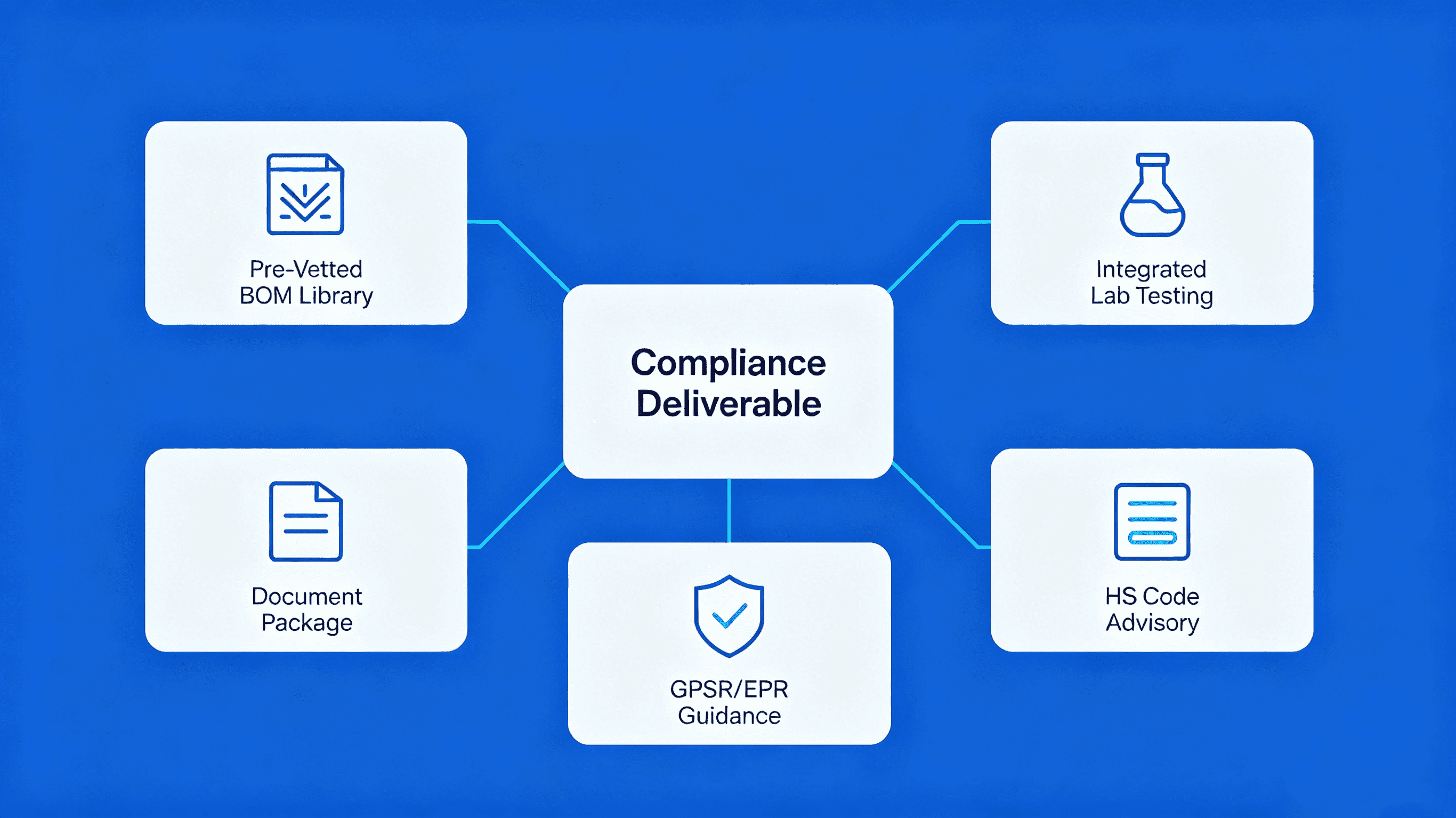
We don't treat compliance as an afterthought or an optional extra. It is a standard deliverable.
- Pre-Vetted BOM: Our material library is pre-screened for REACH/CPSIA compliance.
- Integrated Testing: We coordinate sample submission to labs as part of our production timeline.
- Document Package: Every shipment is accompanied by a complete, audit-ready compliance dossier.
- HS Code Advisory: We provide recommended classifications based on your product specs.
- GPSR & EPR Guidance: We help you understand and meet the latest EU General Product Safety Regulation (GPSR) requirements coming into full force in 2026.
Your Next Step: Don't Leave Compliance to Chance
Customs regulations are tightening, not relaxing. The EU's GPSR (2026) and evolving US CBP enforcement mean the margin for error is shrinking.Ask yourself:
- Has every material in your current line been tested for REACH SVHC and CPSIA limits?
- Do you have a current (≤1 year) test report from an accredited lab?
- Is your EU Representative appointed and labelled correctly?
- Are your HS codes verified by a customs broker?
If the answer to any is "I'm not sure," let's fix it before you ship.Contact OSAMIC for a Complimentary Compliance Audit of your upcoming shipment. We'll review your product specs, materials, and destination, and ensure your documentation and labelling are 100% market-ready. Ship with confidence. Clear customs the first time.