Small Budget, Premium Feel: How Small Brands Achieve Luxury Bag Quality
Meta Description: Think luxury requires a luxury budget? Think again. OSAMIC reveals how small brands can achieve premium bag quality through smart material choices and precision craftsmanship.
Introduction: The Myth of the Luxury Price Tag
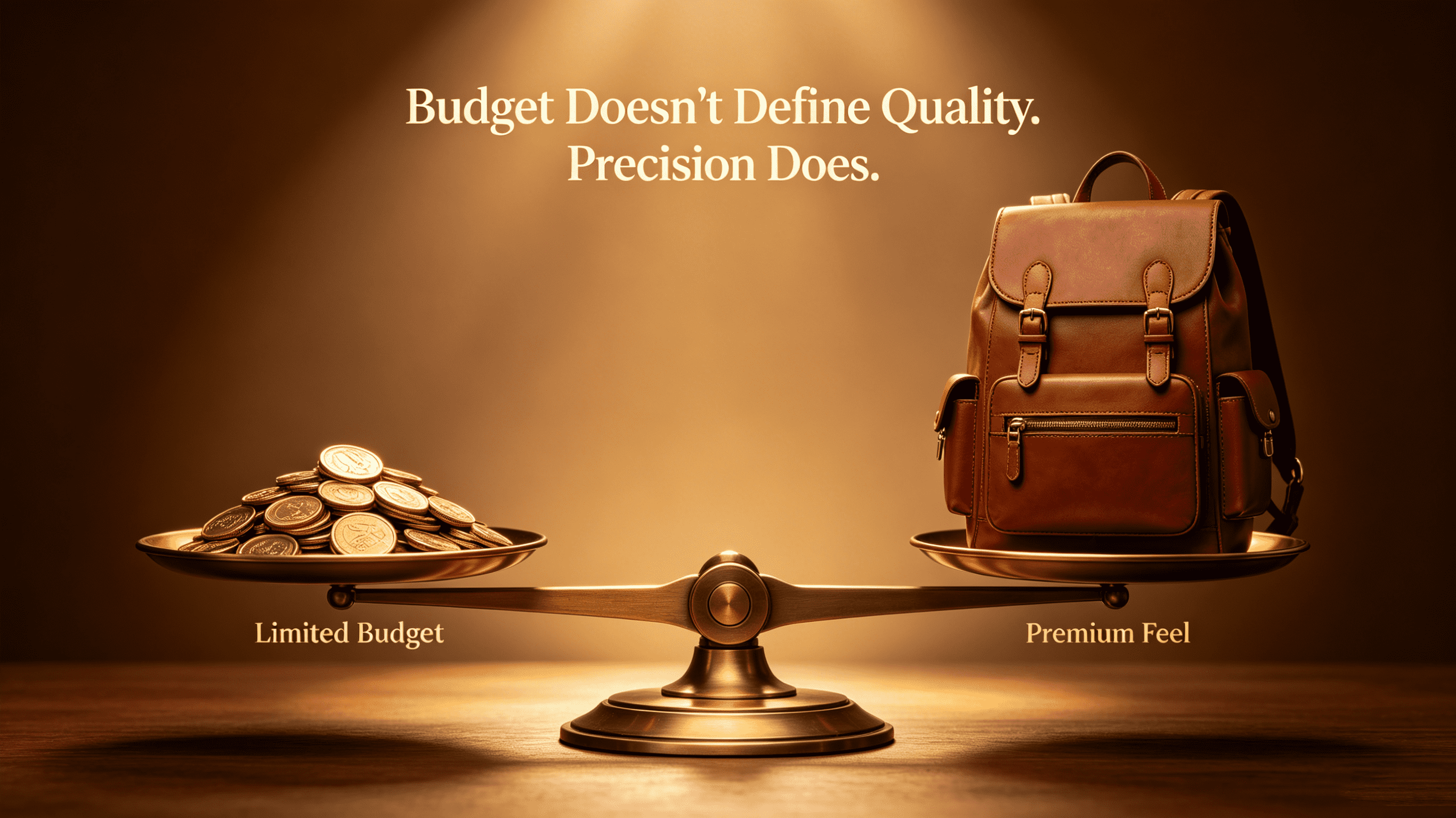
Many emerging bag brands face a frustrating paradox: they want to create products with a premium feel, but fear the costs will destroy their margins. They look at luxury houses and assume the secret is in impossibly expensive materials. The truth is far more encouraging.
Luxury is not about the cost of raw materials. It is about precision, intention, and attention to detail. A 50bagcanfeelpremiumifeveryvisibleelementisthoughtfullychosenandexecuted.A500 bag can feel cheap if the stitching is crooked and the hardware scratches on day one.
This guide outlines a practical, budget-conscious approach to achieving luxury-level quality. It is designed for brands that refuse to compromise on feel, even when working within real-world financial constraints.
Strategy 1: Smart Material Selection—Spend Where the Customer Feels
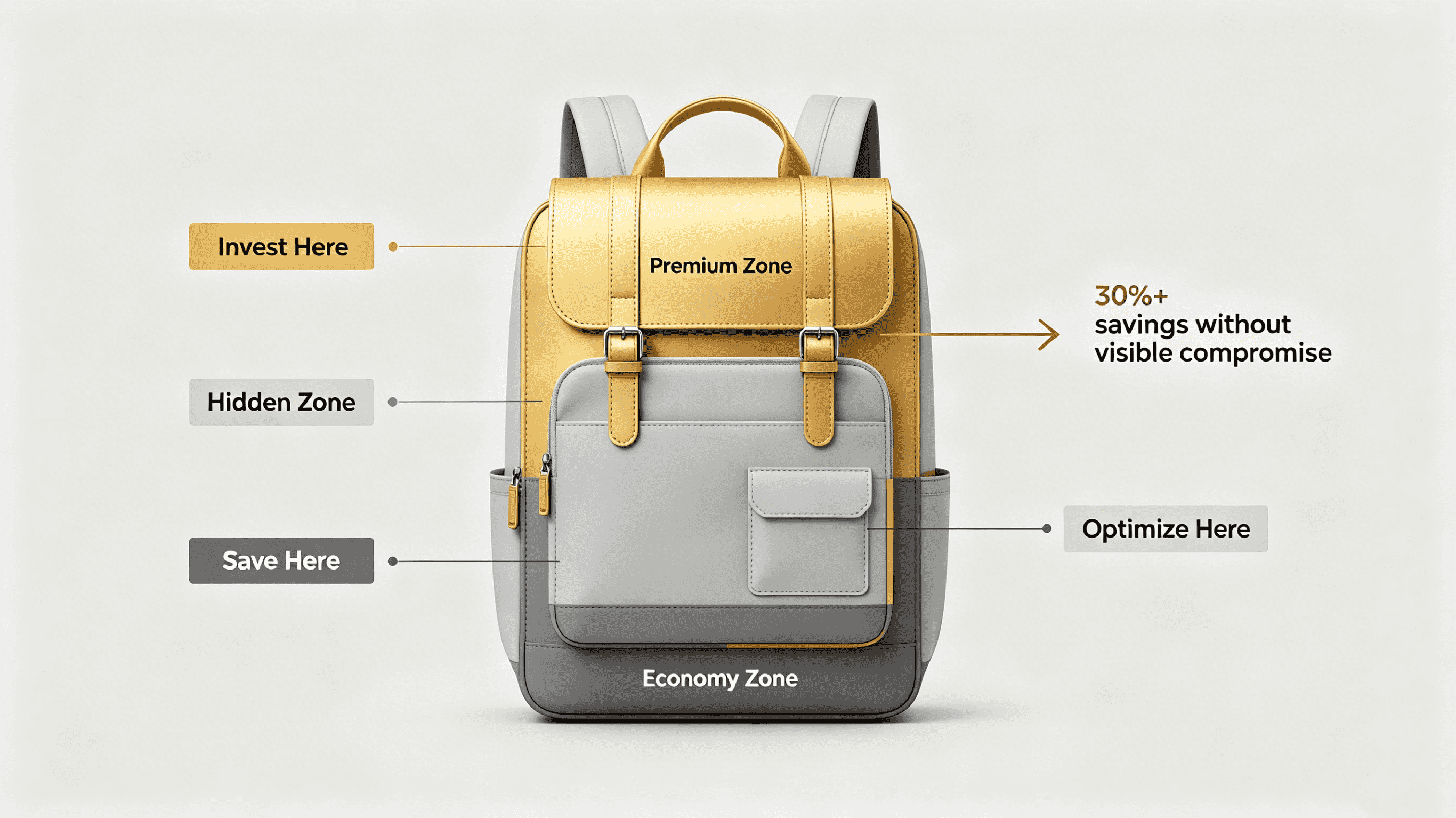
The golden rule of budget-conscious luxury: invest in surfaces the customer touches, economize where they don't.
Outer Fabric: Prioritize Touch and Appearance
The outer material is the first and most powerful signal of quality. Spend here, but spend wisely.
Leather Strategy: You do not need full-grain leather everywhere. Use premium top-grain or full-grain leather on the visible, touchable surfaces (front panels, handles, flaps). Use a high-quality, corrected-grain or responsibly sourced split leather on hidden areas (backs, interior pockets). The customer sees and feels the premium face; the cost savings are invisible.
Synthetic Strategy: For PC luggage, specify 1.2mm thick, virgin-grade polycarbonate (e.g., Covestro material). It offers twice the impact resistance of standard ABS and can be matte-finished for a sophisticated, scratch-resistant look at only a modest cost premium.
Textile Strategy: Consider small-batch, handwoven or artisanal textiles for limited runs. The uniqueness and "human touch" create a premium story that mass-produced fabrics cannot match.
Hardware: Your Most Cost-Effective Upgrade
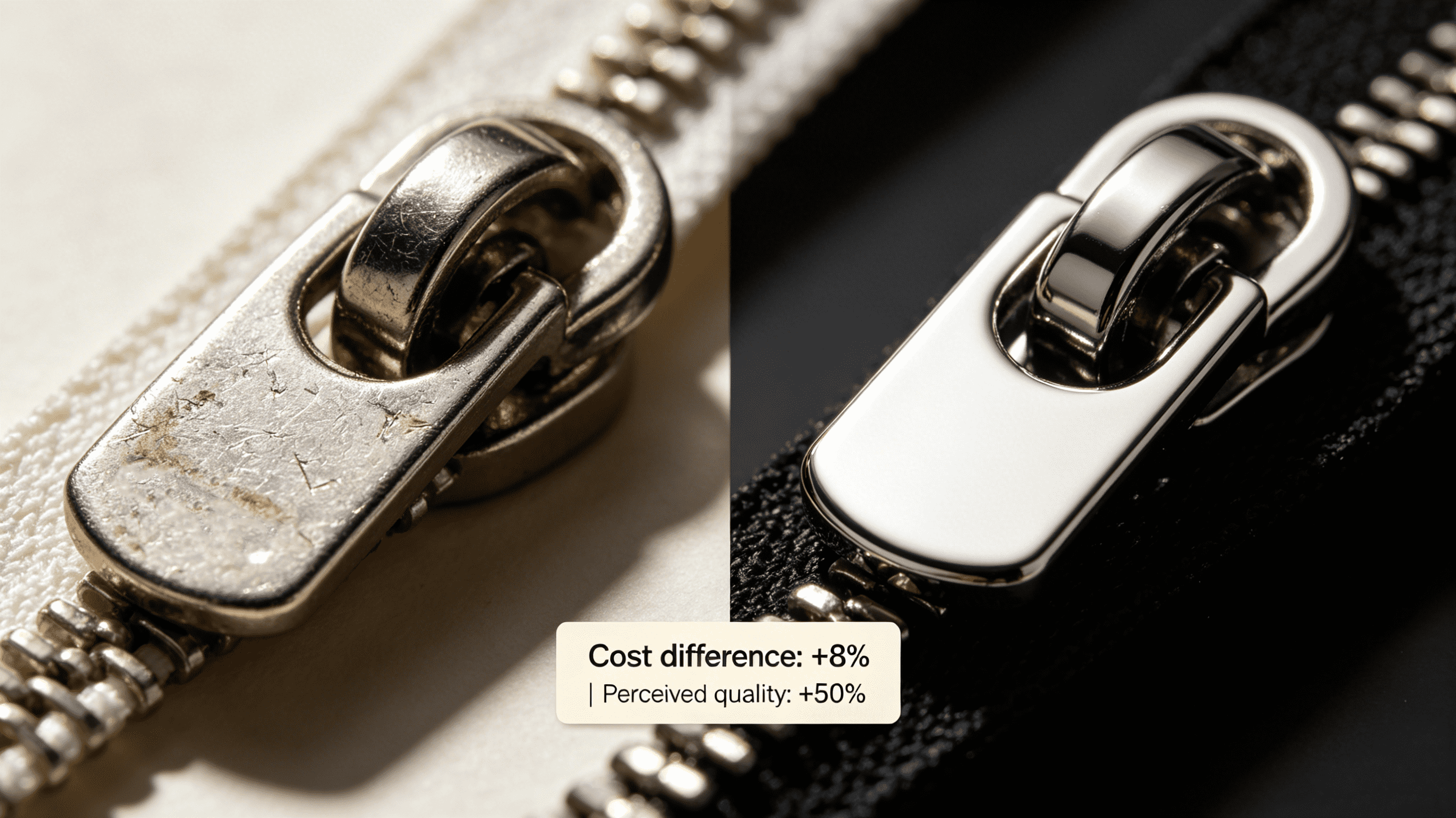
Hardware is the jewelry of a bag. This is the single most impactful upgrade you can make for a relatively small cost increase.
Finish Over Material: You do not need solid brass for every component. Specify 304 stainless steel with a high-quality vacuum plating (e.g., PVD or real gold plating at 98.8% purity). This delivers exceptional scratch and corrosion resistance—thousands of cycles without fading—for a fraction of the cost of solid precious metal hardware.
Zippers: Invest in a reliable, smooth-operating zipper from a trusted brand like YKK. Even their standard line outperforms generic alternatives in smoothness and durability. The cost difference is negligible; the user experience difference is significant.
Interior Linings: Tactile Quality Without Breaking the Bank
The interior is a hidden pleasure. It does not need to be silk, but it should feel deliberate.
For Backpacks & Commuter Bags: Use a high-density nylon ripstop. It is lightweight, durable, water-resistant, and feels noticeably more premium than standard polyester.
For Totes & Handbags: Use microfiber suede for small, high-touch areas (slip pockets, card slots). Use a high-density brushed polyester for the main body. This combination delivers a luxurious tactile experience at a controlled cost.
Strategy 2: Hybrid Craftsmanship—Machine Precision, Human Touch
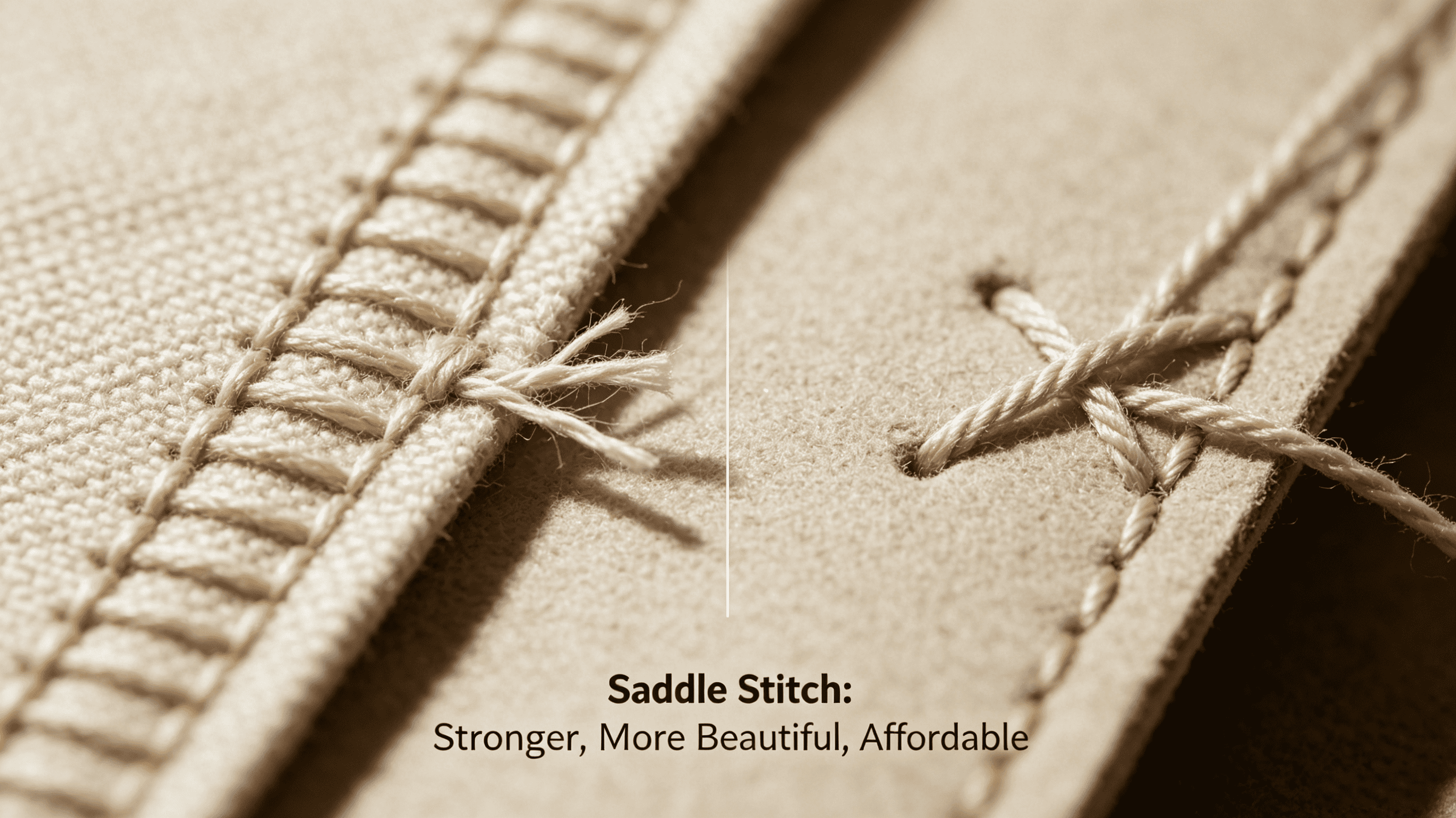
Premium feel comes from precision. You do not need full handcrafting. You need the righttasks done by hand.
Automated for Accuracy, Manual for Distinction
Cutting: Use CNC or laser cutting for precise, repeatable panel shapes. This eliminates human error and waste.
Assembly: Use hand-finishing for critical visible seams. A saddle-stitch, done by hand, is stronger and more aesthetically pleasing than a machine lockstitch. It signals quality.
Edge Finishing: This is the single most important detail for leather goods. Invest in a three-stage sanding and burnishing process with a final beeswax seal. A properly finished edge is smooth, rounded, and durable. It costs pennies more per bag but transforms the perception of quality.
Embrace Artisanal Techniques for Differentiation
Instead of expensive imported machinery, explore traditional techniques that create unique textures.
Vintage Drum-Dyed Leather: A drum-tumbled finish creates a soft, naturally wrinkled texture. It is supple yet structured, and the organic variation makes every piece unique. The process is a fraction of the cost of exotic leathers but delivers a comparable aesthetic.
The 1mm Rule: Calibrate Every Visible Detail
The difference between "premium" and "cheap" is often a single millimeter. A misaligned buckle, an asymmetrical corner, a slightly crooked logo—these destroy the illusion of quality.
Implement a Manual Alignment Check: Before final assembly, add a simple step: verify symmetry of corners, alignment of hardware, and straightness of seams. The cost is a few seconds of labor. The impact on perceived quality is enormous.
Strategy 3: Design & Packaging—Zero-Cost Upgrades
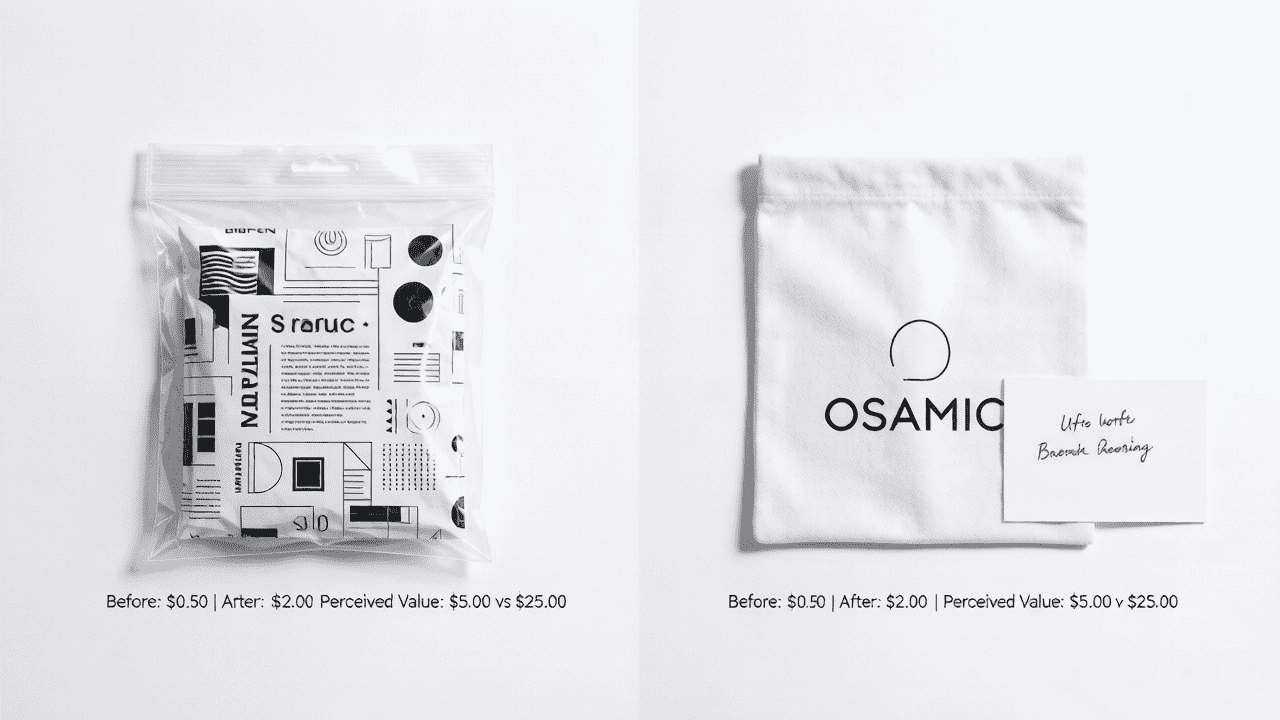
Some of the most powerful premium signals cost almost nothing to implement.
Design Principles for Instant Elegance
Master the "Less is More" Principle: Limit your color palette to low-saturation neutrals: sand, deep brown, olive, charcoal. These colors are universally associated with timeless luxury.
Perfect Your Proportions: The Golden Ratio applies to bags. The length of the strap relative to the body, the width of the base relative to the height—these proportions subconsciously signal quality. Study classic luxury silhouettes and calibrate yours accordingly.
Make Your Logo Discreet: A large, loud logo screams "mass market." A small, embossed or debossed logo whispers "luxury." Subtle branding is a powerful premium signal.
Packaging: The First Touchpoint
The unboxing experience sets the expectation for the product inside. Small upgrades yield outsized returns.
Minimalist Graphic Design: Use a single color palette (1-2 colors max). Clean typography. Generous white space. This instantly elevates perceived value.
Tactile Finishes: Replace glossy lamination with a soft-touch matte finish. Add a single, small-area blind emboss or foil stamp. These details cost cents but feel like dollars.
The "Little Extra": A custom cotton dust bag, a handwritten thank-you card, or a care instruction booklet. These items cost under $5 but create an emotional connection that justifies a 15-20% price premium.
Strategy 4: Brand Storytelling—The Ultimate Value Amplifier
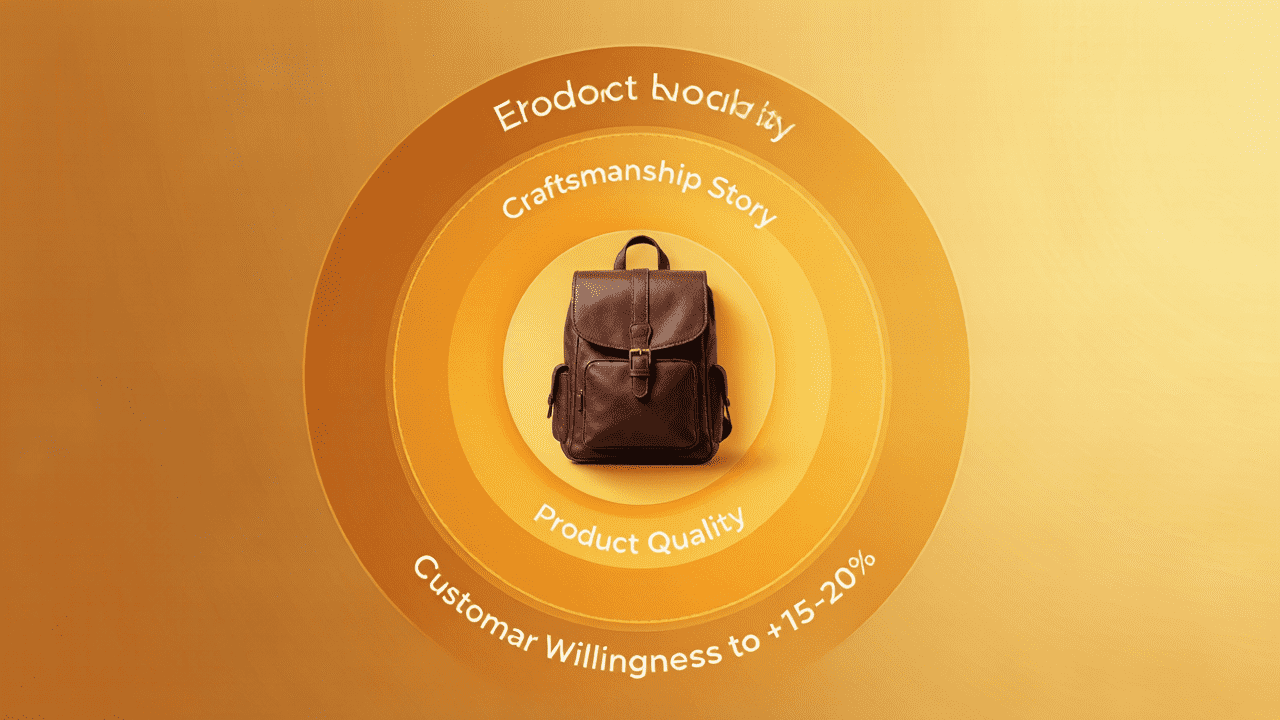
Premium is ultimately a perception, and perception is shaped by story. You do not need a heritage dating back a century. You need an authentic, compelling narrative.
Tell the Truth About Your Craft: "Each bag is personally inspected by the artisan who made it."
Highlight Ethical Choices: "We use carbon-neutral leather supply chain."
Embrace Longevity as a Value: "Designed to be repaired, not replaced. Made to last a decade."
A bag made with care, from thoughtfully sourced materials, with a story rooted in honesty and skill—this is the definition of modern luxury. And it is achievable at any scale.
The OSAMIC Advantage: Your Partner in Accessible Excellence
At OSAMIC, we specialize in helping brands like yours achieve premium quality without a premium budget. We understand where to invest and where to save. We offer:
Material Guidance: We help you select the optimal materials for your target price point and aesthetic.
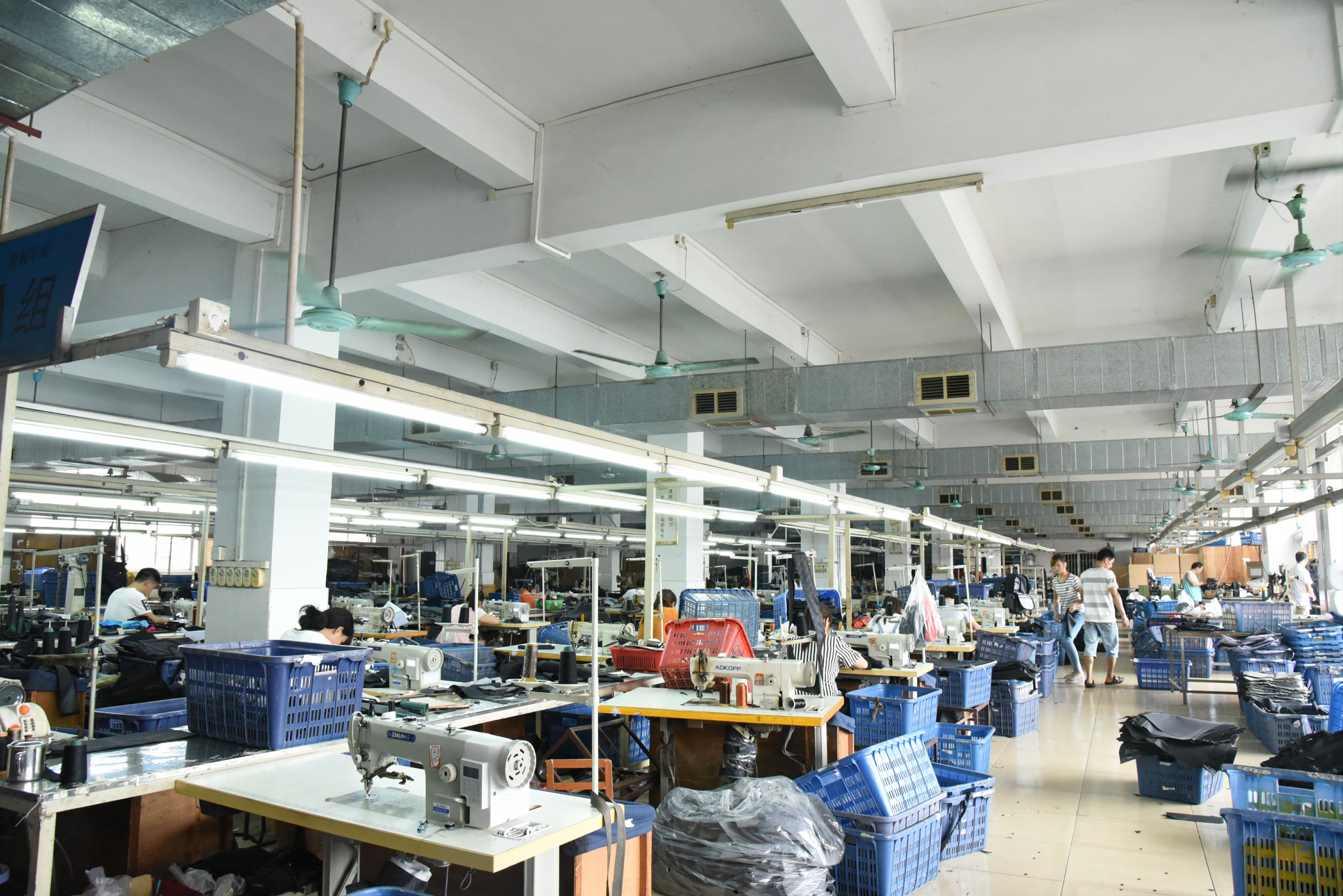
Hybrid Manufacturing: We combine automated precision with hand-finishing expertise.
Cost Transparency: We show you exactly where every dollar goes, so you can make informed trade-offs.
Ready to build a premium brand on a realistic budget? Let's talk about your next collection.
Contact OSAMIC for a complimentary Value Engineering Consultation. We will review your current designs and identify specific opportunities to enhance perceived quality while controlling costs.